SoftBank posts $7.1 billion quarterly loss as AI investment concerns mount

Synopsis
SoftBank's $7.1 billion quarterly loss isn't just a bad earnings print — it is a stress test for the entire AI investment thesis. With shares down more than 50% from their peak, credit default swaps at multi-year highs, and a 13% stake in an unlisted OpenAI sitting at an unverifiable market price, Masayoshi Son's debt-fuelled AI bet is now being questioned by the very markets he has long courted.
Key Takeaways
SoftBank Group posted a net loss of 1.12 trillion yen ($7.1 billion) in Q2 FY2026 — its first quarterly loss in nearly two years .
Results missed analyst consensus by a wide margin; the market had expected a profit of 129 billion yen .
Declines in Arm Holdings , Intel , and Coupang were key contributors; the Vision Fund reported a separate loss of 81.6 billion yen .
SoftBank shares have fallen more than 50% from their record high set in June 2026 .
The company held roughly a 13% stake in OpenAI as of early October 2026 .
Credit default swap costs on SoftBank debt have risen to their highest levels in years amid concern over its debt-financed AI strategy.
SoftBank Group, the Japanese investment conglomerate, has reported a net loss of 1.12 trillion yen ($7.1 billion) in the second quarter of its current financial year — its first quarterly net loss in nearly two years — as falling valuations across key technology holdings and deepening concerns over its aggressive artificial intelligence bets weighed heavily on results. The figure came in sharply below analyst expectations, with market watchers polled by the company projecting an average profit of 129 billion yen.
What Drove the Loss
Sliding share prices in semiconductor companies Arm Holdings and Intel, as well as South Korean e-commerce platform Coupang, were among the primary contributors to the quarterly deterioration. These holdings form a significant portion of SoftBank's investment portfolio, and their simultaneous decline amplified the damage to the balance sheet.
The company's Vision Fund division — which manages stakes in hundreds of technology startups globally — separately reported a loss of 81.6 billion yen for the quarter, adding further pressure to the group's consolidated numbers.
AI Exposure and Debt Concerns Under Scrutiny
SoftBank has increasingly become a bellwether for investor sentiment toward OpenAI and the broader generative AI industry, given its outsized exposure to the sector. The company held an approximately 13 per cent stake in OpenAI as of the beginning of October 2026.
Notably, the company's shares have fallen more than 50 per cent from their record high in June, reflecting mounting concern over the debt burden associated with its AI investment strategy and uncertainty over the timeline and magnitude of returns. The cost of insuring SoftBank's debt against default — reflected in credit default swaps — has risen to its highest levels in years, while the company's bonds have come under increased market scrutiny.
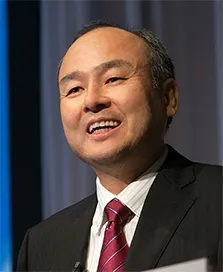
Founder Masayoshi Son's growing dependence on debt markets to fund expanding AI commitments has become a focal point for critics and analysts alike. 'The market is pricing the chance that the next mark — or the next headline about OpenAI's revenue — changes the value of an asset that cannot be sold at a screen price,' independent researcher Nico Rosti wrote in a note ahead of SoftBank's earnings release.
Broader Signal for AI Valuations
The results have amplified a wider debate about the sustainability of private-market AI valuations. Much of SoftBank's AI portfolio consists of assets that are not publicly traded, making real-time pricing difficult and leaving valuations susceptible to sudden sentiment shifts. The changing valuation expectations, according to analysts, have heightened questions about the risk profile of unlisted AI-era assets.
This comes amid a broader recalibration in global technology markets, where high-multiple growth investments — particularly those with long payback periods — are facing rising scrutiny as interest rates remain elevated.
What to Watch Next
Investors will be monitoring SoftBank's next quarterly results for signals on whether the AI valuation reset is temporary or structural. Any material development regarding OpenAI's revenue trajectory or a shift in Arm Holdings' stock performance could meaningfully alter SoftBank's net asset value in the months ahead. The trajectory of Masayoshi Son's debt-financed AI strategy will remain a closely watched indicator for the global technology investment landscape.
Point of View
For now, is sceptical. The core problem is structural: Masayoshi Son has built a portfolio loaded with illiquid AI assets whose 'value' is whatever the last funding round said it was, financed by debt that the bond market is now pricing with growing alarm. The 50% share-price decline from June highs is not a market overreaction; it reflects a genuine repricing of the assumption that AI returns are both large and near-term. What mainstream coverage underplays is the contagion risk: if SoftBank is forced to defend its balance sheet, it could become a forced seller in private rounds, resetting AI startup valuations globally at a moment when the sector has never been more crowded.
NationPress
10 Nov 2026
Frequently Asked Questions
Why did SoftBank report a loss in Q2 2026?
SoftBank posted a net loss of 1.12 trillion yen ($7.1 billion) in Q2 FY2026 due to falling share prices in key holdings including Arm Holdings, Intel, and Coupang, combined with a 81.6 billion yen loss in its Vision Fund division. Growing market concerns about the sustainability of its debt-financed AI investments also weighed heavily on sentiment and valuations.
How significant is SoftBank's stake in OpenAI?
SoftBank held approximately a 13% stake in OpenAI as of early October 2026, making it one of the company's largest shareholders. Because OpenAI is not publicly listed, the value of this stake cannot be priced on a live exchange, exposing SoftBank to significant valuation uncertainty.
How much have SoftBank shares fallen in 2026?
SoftBank shares have declined more than 50% from their record high recorded in June 2026, reflecting investor concern over its rising debt burden and the uncertain return timeline of its aggressive AI investment strategy.
What is SoftBank's Vision Fund and how did it perform?
The Vision Fund is SoftBank's investment arm that manages stakes in hundreds of technology startups globally. In Q2 FY2026, the Vision Fund reported a loss of 81.6 billion yen, contributing to the group's overall quarterly shortfall.
What are analysts watching for in SoftBank's future results?
Analysts are closely monitoring any updates to OpenAI's revenue trajectory, movements in Arm Holdings' stock, and SoftBank's ability to manage its debt obligations. A further deterioration in credit default swap costs or another round of portfolio markdowns could worsen SoftBank's financial position in coming quarters.