Starlink to bridge rural India's digital divide, says Elon Musk
Synopsis
Elon Musk directly weighed in on India's rural connectivity crisis, backing Starlink as the fix for the 11,256 villages still without 4G — even as the satellite service awaits regulatory clearance. With rural internet density less than half of urban India's, and BharatNet's operational rollout lagging its own targets, the pressure on New Delhi to greenlight Starlink is building.
Key Takeaways
Elon Musk said on 21 August that Starlink would help the 'least served' communities in India, particularly rural areas.
11,256 listed villages in India had no 4G coverage as of May 2026 .
Rural internet subscription density stood at 48.31 per 100 people , against 126.80 in urban areas, as of March 2026 .
BharatNet made 2,21,000 Gram Panchayats service-ready, but only 80,472 Points of Presence were operational as of June 2026 .
Starlink's India commercial launch is pending regulatory clearances and spectrum allocation.
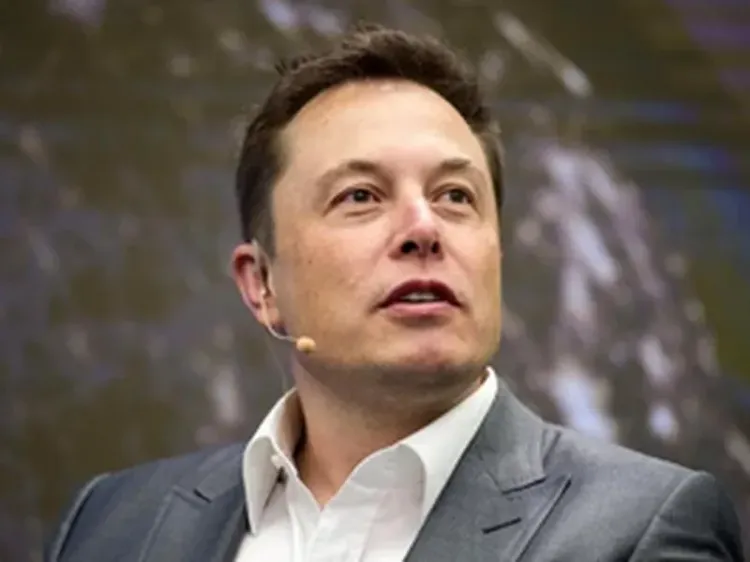
Elon Musk on Friday, 21 August said Starlink would serve the 'least served' communities in India, with a particular focus on rural areas, even as the satellite internet service awaits regulatory clearance for its commercial launch in the country.
What Musk Said
Posting on social media platform X, Musk wrote: 'Starlink would help the least served in India, especially in rural areas.' The remark came in response to a post that highlighted the persistent digital connectivity gap across the country, noting that 11,256 listed villages still had no 4G coverage as of May 2026.
The Connectivity Gap in Numbers
India recorded 1.093 billion internet subscriptions in March 2026, of which 440.87 million were from rural subscribers. Rural internet subscription density stood at just 48.31 per 100 people, compared with 126.80 per 100 in urban areas — a gap that underscores the structural challenge facing last-mile connectivity.
The post Musk responded to also pointed out that while BharatNet had laid more than 850,000 route-km of fibre and made approximately 2,21,000 Gram Panchayats service-ready, only 80,472 Gram Panchayat Points of Presence were reported operational as of June 2026. The gap between infrastructure laid and infrastructure actually active reflects the execution challenge that satellite services like Starlink could potentially bypass.
Where Satellite Has an Edge
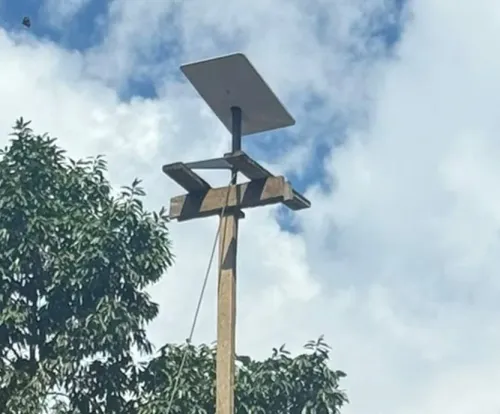
The post flagged by Musk argued that satellite connectivity is uniquely positioned to reach remote villages, mountainous terrain, island communities, and disaster-affected zones — geographies where conventional telecom infrastructure struggles with terrain constraints, limited commercial viability, and high rollout costs. Starlink's low-earth-orbit model is designed precisely for such scenarios, offering broadband speeds without the need for ground-level fibre or tower infrastructure.
Regulatory Status and Pending Clearances
Starlink's commercial launch in India remains contingent on the completion of regulatory clearances, spectrum allocation, and formal government approval. The post Musk engaged with specifically called for expediting these processes. Separately, a government official stated earlier in August that Musk's platform X would be required to comply with Indian law regarding content takedown requests made by public government bodies — signalling that New Delhi is keeping a close watch on Musk's broader India operations. Musk has also claimed that 'any censorship required by the governments is now clearly visible' following the rollout of a new transparency algorithm on X.
What Comes Next
With rural India's connectivity density less than half that of urban India, the pressure on regulators to fast-track Starlink's approvals is likely to intensify. Industry observers note that satellite internet could serve as a complement — not a replacement — to BharatNet, particularly in the roughly 11,000-plus villages where no ground-based 4G signal currently reaches.
Point of View
But its timing is pointed — it arrives as BharatNet's operational gap widens and over 11,000 villages remain 4G-dark. The real story is not Musk's enthusiasm for Starlink but India's regulatory pace: spectrum allocation and approvals that could fast-track last-mile connectivity have moved slowly while the rural-urban digital divide has hardened. Satellite internet is not a magic fix — Starlink's hardware costs and pricing will determine whether it actually reaches the poorest villages or merely adds a premium tier for better-connected semi-urban areas. New Delhi's handling of Starlink's clearances will signal whether the government sees satellite as a genuine rural tool or a bargaining chip in its broader negotiations with Musk's businesses.
NationPress
21 Aug 2026
Frequently Asked Questions
What did Elon Musk say about Starlink in India?
Elon Musk said on 21 August that Starlink would help the 'least served' communities in India, especially in rural areas. He made the remark in a post on X in response to data highlighting India's rural-urban digital divide.
How many villages in India lack 4G coverage?
As of May 2026, 11,256 listed villages in India had no 4G coverage, according to the data cited in the post Musk responded to. Rural internet subscription density stood at 48.31 per 100 people, compared with 126.80 in urban areas.
What is the current status of Starlink's India launch?
Starlink's commercial rollout in India is pending regulatory clearances, spectrum allocation, and formal government approval. No official launch date has been announced.
What is BharatNet and why does it matter here?
BharatNet is the government's flagship fibre connectivity programme for rural India. It has laid over 850,000 route-km of fibre and made around 2,21,000 Gram Panchayats service-ready, but only 80,472 Gram Panchayat Points of Presence were reported operational as of June 2026 — highlighting an execution gap that satellite services could help address.
Why is satellite internet considered suitable for rural India?
Satellite connectivity can reach remote villages, mountainous regions, islands, and disaster-affected zones where conventional telecom infrastructure faces terrain constraints and limited commercial viability. Low-earth-orbit services like Starlink can deliver broadband without requiring ground-level fibre or tower buildout.