PM e-Vidya: 5 channels support learning in Uttar Pradesh
Synopsis
Five PM e-Vidya channels offer Uttar Pradesh students lessons from Balvatika to Class 12, with programmes available through DTH and YouTube. The material spans early language and number skills as well as higher-secondary subjects.
Key Takeaways
Five PM e-Vidya channels provide educational programmes in Uttar Pradesh .
The material covers learners from Balvatika through Class 12 and is also available on YouTube.
Channel 173 features pre-primary content, while Channel 174 serves Classes 3 to 5 .
Channels 175 , 176 and 177 cover Classes 6 to 8 , 9 to 10 , and 11 to 12 , respectively.
SCERT Director Ganesh Kumar said early-grade programmes emphasise foundational language and mathematics.
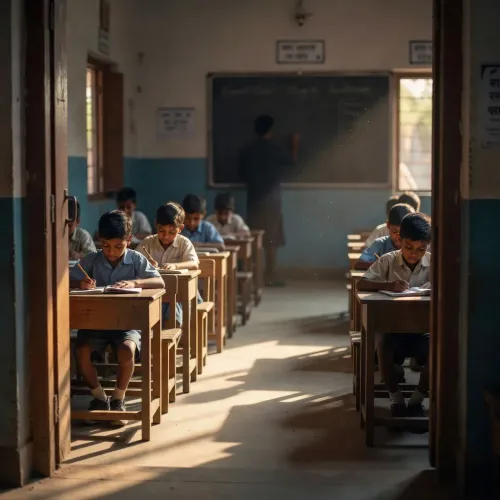
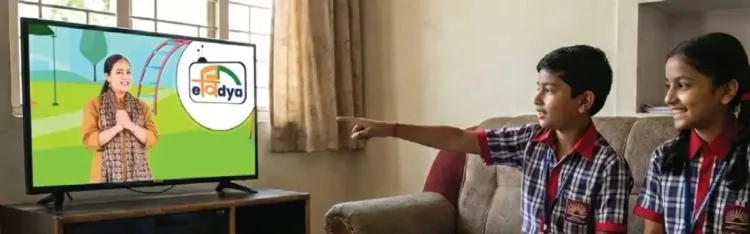
PM e-Vidya provides lessons for children from Balvatika to Class 12 through five educational channels in Uttar Pradesh, with programmes also available on YouTube. The broadcasts supplement classroom teaching with subject-specific audio-visual material that students can revisit at home.
The channels operate under the State Council of Educational Research and Training (SCERT), Uttar Pradesh, and are arranged by grade group, according to Pawan Sachan, Joint Director (SSA). The initiative is intended to integrate technology into education and make learning material available through digital platforms.
Lessons for preschool and primary classes
Ganesh Kumar, Director of SCERT, said programmes for early-grade students place particular emphasis on foundational language and mathematics. For pre-primary children, Channel 173 covers expressing thoughts in their own words, pre-numerical concepts and forming words by combining letters.
Broadcasts for Classes 1 and 2 include counting, identifying small and large numbers, recognising shapes and colours, alphabet-based songs and stories. These topics give younger pupils access to material presented through sound and visuals alongside their textbooks.
Channel 174 carries lessons for Classes 3 to 5 in Hindi, English, mathematics and environmental studies. Its programmes use stories, dialogues and examples, with titles including 'The Big Laddu', 'Badal aur Moti', 'Talking Toys', 'Hidden Treasure', 'Varanasi ki Yatra', 'Aam ka Ped' and 'Lal Bahadur Shastri'.
Content for middle and secondary school
Students in Classes 6 to 8 can access Hindi, English, social science and mathematics lessons on Channel 175. Channel 176 offers Hindi, English and mathematics material for Classes 9 and 10.
For Classes 11 and 12, Channel 177 covers subjects including chemistry, political science, sociology and English. The Class 12 programmes include 'Solid State', 'Challenges of Nation-Building' and 'Structural Change'.
Access through DTH and YouTube
All five channels are available through DTH broadcasts, while their educational programmes are also available on YouTube. The two routes give students, teachers and parents another way to access material beyond regular classroom instruction.
Students can use the available videos to review lessons at a convenient time. The material is supplementary to classroom teaching and offers an audio-visual alternative to learning from textbooks alone.
Education department's approach
Monica Rani, Director General of School Education, described the broadcasts as part of the state government's digital education initiative. She said the initiative aims to expand learning opportunities by using technology as an aid to teaching and learning.
The division of programmes by class and subject allows learners at different stages to find material suited to their studies, from early language and number concepts to higher-secondary subjects. Students and families can continue to use the broadcasts and available videos to revisit classroom lessons.
Point of View
But availability alone does not establish that children can access or benefit from the lessons. The key accountability questions are whether students have the necessary devices and connectivity, and whether the material improves learning outcomes. Public evidence on reach and learning would make it easier to assess the initiative.
NationPress
23 Nov 2026
Frequently Asked Questions
What are the PM e-Vidya channels in Uttar Pradesh?
They are five educational DTH channels offering class-specific and subject-specific programmes for students from Balvatika to Class 12. The programmes are also available on YouTube.
Which PM e-Vidya channel covers each class?
Channel 173 features pre-primary content, Channel 174 covers Classes 3 to 5, Channel 175 covers Classes 6 to 8, Channel 176 covers Classes 9 and 10, and Channel 177 covers Classes 11 and 12. Broadcasts also include material for Classes 1 and 2.
Can students watch the lessons on YouTube?
Yes, the educational programmes are available on YouTube as well as through DTH broadcasts. Students can use available videos to revisit classroom lessons at their convenience.
What subjects are covered for Classes 11 and 12?
Channel 177 offers higher-secondary material in subjects including chemistry, political science, sociology and English. Class 12 topics include 'Solid State', 'Challenges of Nation-Building' and 'Structural Change'.
Who operates the PM e-Vidya channels in Uttar Pradesh?
The channels operate under the State Council of Educational Research and Training, Uttar Pradesh. Joint Director Pawan Sachan said they are organised by grade group.