CM Yogi Orders Bal Shramik Vidya Yojana Rollout Across All 75 UP Districts
Synopsis
Chief Minister Yogi Adityanath has directed the Bal Shramik Vidya Yojana to be implemented with new provisions across all 75 districts of Uttar Pradesh, ordering special campaigns in child-labour-affected areas, effective rehabilitation, and a private-sector skill development plan to ensure no child is denied education due to economic hardship.
Key Takeaways
CM Yogi Adityanath has directed the Bal Shramik Vidya Yojana to be rolled out with new provisions across all 75 districts of Uttar Pradesh.
Special campaigns are to be launched in child-labour-affected areas to enrol children in schools.
The rehabilitation process for rescued child labourers is to be made more effective under the revised scheme.
A skill development action plan for child labourers is to be prepared in partnership with the private sector .
The directive reaffirms that no child should be denied education due to economic compulsion .
The move builds on national frameworks including the Child Labour Amendment Act 2016 and the Right to Education Act 2009 .
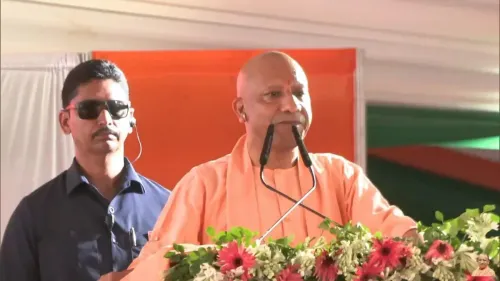
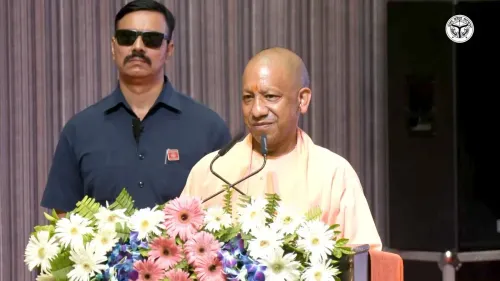
The Chief Minister's Office of Uttar Pradesh announced on Saturday, 23 May 2026 that Chief Minister Yogi Adityanath has directed the expansion of the Bal Shramik Vidya Yojana to all 75 districts of the state with new provisions, reinforcing the government's push to bring every child out of labour and into formal education.
The Chief Minister's Office posted in Hindi: 'मुख्यमंत्री जी ने बाल श्रमिक विद्या योजना को नए प्रावधानों के साथ प्रदेश के सभी 75 जनपदों में लागू करने के निर्देश दिए।' — translated: 'The Chief Minister has directed the implementation of the Bal Shramik Vidya Yojana with new provisions across all 75 districts of the state.'
What Was Directed
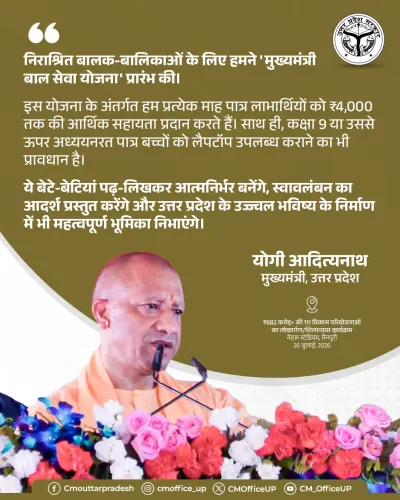
CM Yogi stated that no child should be denied education due to economic compulsion. The directions call for special campaigns in child-labour-affected areas to link children with schools and to make the rehabilitation process more effective. A skill development action plan for these children, to be prepared with private-sector cooperation, was also mandated. The Chief Minister's Office quoted him as saying: 'No child should remain deprived of education due to financial hardship. Special campaigns must be run in child-labour-affected areas to connect children with schools, and the rehabilitation process must be made effective.'Context
Uttar Pradesh, India's most populous state with 75 districts, has long grappled with child labour concentrated in areas with high poverty and low school-retention rates. The Bal Shramik Vidya Yojana is a state scheme designed specifically to mainstream children engaged in labour into formal education while providing rehabilitation support to their families. The directive to extend the scheme with 'new provisions' signals a revision of the programme's scope and delivery framework, though the precise details of those provisions were not specified in the announcement.Policy Backdrop
The expansion sits within a layered national and state policy architecture. The National Child Labour Project Scheme, launched in 1988, first established the model of withdrawing children from hazardous work and enrolling them in special schools. The Child Labour (Prohibition and Regulation) Amendment Act, 2016 strengthened the framework by banning employment of children below 14 years and regulating adolescent labour. The Right of Children to Free and Compulsory Education Act, 2009 mandates free schooling for children aged 6 to 14 and prohibits denial of admission. Uttar Pradesh governments have periodically intensified district-level campaigns that link the rescue of child workers with school enrolment and skill training. The current directive's emphasis on private-sector involvement in skill development reflects a convergence approach between the state's labour, education and social welfare departments — a model also adopted in other states following revisions to central child labour guidelines.Stakeholders and Impact
The primary beneficiaries are children currently engaged in labour across Uttar Pradesh, particularly those in economically distressed families who depend on child earnings for household survival. Families in child-labour-prone districts stand to receive rehabilitation support as part of the scheme's revised framework. Private-sector partners are explicitly drawn into the plan through the mandated skill-development action plan, broadening the circle of institutional responsibility beyond government agencies. Civil society organisations and school administration bodies at the district level will also be central to the campaign's execution.What's Next
Attention will now shift to district-level rollout reports, enrolment and retention data from child-labour-prone areas, and any cabinet or budget approvals that formalise the revised provisions. The success of the expansion will ultimately be measured by how many children are identified, enrolled and retained in schools — and whether the rehabilitation pipeline, including the private-sector skill plan, translates into durable outcomes for vulnerable families across all 75 districts.Point of View
Signalling that the government is treating child labour as a systemic governance priority rather than a district-level discretionary matter. The explicit inclusion of private-sector skill development is notable: it attempts to close the loop between rescue, schooling and long-term economic mobility, addressing a gap that purely school-enrolment drives have historically left open. However, the durability of such campaigns depends heavily on district administration capacity and sustained follow-through on rehabilitation, areas where past UP drives have shown uneven results. The announcement places Uttar Pradesh within a broader national pattern of states revising child labour convergence models, but the real test will be whether the 'new provisions' come with commensurate budgetary and institutional backing.
NationPress
9 Oct 2026
Frequently Asked Questions
What is the Bal Shramik Vidya Yojana in Uttar Pradesh?
The Bal Shramik Vidya Yojana is a Uttar Pradesh government scheme that mainstreams children engaged in labour into formal education while providing rehabilitation support to their families. CM Yogi has now directed it to be implemented with new provisions across all 75 districts of the state.
What did CM Yogi order regarding child labour on 23 May 2026?
CM Yogi Adityanath directed the expansion of the Bal Shramik Vidya Yojana to all 75 UP districts with new provisions, ordered special campaigns to enrol child labourers in schools, and mandated a private-sector skill development action plan for affected children.
How many districts does Uttar Pradesh have and will all be covered?
Uttar Pradesh has 75 districts, and the Chief Minister's directive explicitly covers all 75 for the revised Bal Shramik Vidya Yojana rollout.
What role will the private sector play in UP's child labour scheme?
Under CM Yogi's directive, the private sector is to collaborate on preparing a skill development action plan for children rescued from labour, aiming to provide them with vocational pathways beyond school enrolment.
What national laws back UP's child labour education drive?
The drive is underpinned by the Child Labour (Prohibition and Regulation) Amendment Act 2016, which bans employment of children below 14 years, and the Right of Children to Free and Compulsory Education Act 2009, which mandates free schooling for ages 6 to 14.