WhatsApp's new global head Kunal Shah maps out AI, payments and messaging revamp

Synopsis
WhatsApp's new global head Kunal Shah has laid out the most ambitious expansion of the platform's mandate since its founding — AI, in-app payments and richer messaging for 3 billion users. With Meta pushing WhatsApp toward super-app territory, the roadmap signals a direct challenge to fintech players and AI assistants alike, and raises fresh questions about data privacy across billions of conversations.
Key Takeaways
Kunal Shah , who became WhatsApp's global head in June 2026 , outlined a three-pillar growth roadmap on 10 November 2026 .
WhatsApp has more than 3 billion users worldwide, sending over 10 billion voice messages and 4 billion stickers daily.
Priority one: richer communication — improved voice notes , group chats , stickers and video features .
Priority two: in-app digital payments and financial services, in partnership with telecom and financial services firms.
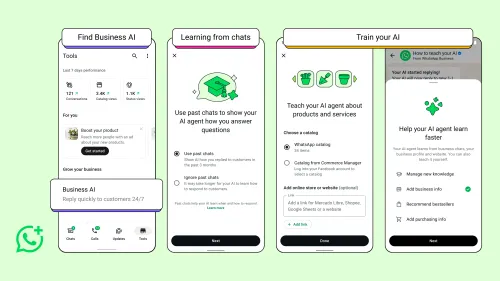
Priority three: an AI layer designed to work quietly in the background — surfacing information, completing tasks and managing bookings.
The roadmap signals WhatsApp's move toward a super-app model, with significant implications for India's digital payments landscape.
WhatsApp is set to expand well beyond its messaging roots, with artificial intelligence, digital payments, and richer communication tools forming the platform's three-pillar roadmap under its new global head, Kunal Shah. Shah, who took charge in June 2026, outlined the strategy on Tuesday, 10 November 2026, after spending his first four months engaging with users and studying where the platform could do more. WhatsApp currently serves more than 3 billion users worldwide.
Shah's Vision: 'Stay Close, Get More Done'
In a post on X, Shah described WhatsApp as a 'shared language' used across billions of conversations — through text, voice notes, stickers and video. He said the clearest signal from his listening tour was straightforward: users want to stay connected to the people who matter and accomplish more without leaving the app.
'I've spent the last few months listening and understanding what our users want from us and what I heard is simple: help people stay close to those who matter to them, and get more done on WhatsApp. So that's what we'll build,' Shah said.
He framed the platform's cultural weight by citing daily usage figures — users send more than 10 billion voice messages and over 4 billion stickers every single day.
Richer, More Expressive Conversations
The first priority is deepening how people communicate. WhatsApp plans to improve features such as voice notes, group chats, stickers and video interactions to keep pace with how communication habits are evolving. The goal, according to Shah, is to ensure that the full emotional range of a conversation — from a parent's voice note to a sticker that defuses a disagreement — is better supported within the platform.
Payments and Everyday Transactions Within the App
The second pillar targets a persistent friction point: tasks that begin on WhatsApp but force users to migrate elsewhere to finish them. Shah specifically cited bill payments, borrowing money, and staying connected while travelling as areas where the handoff to other apps costs users time and effort.
'Each handoff to another task costs time. We're working with financial services and telecom partners so that finishing something feels as easy as starting it,' he noted. This ambition aligns WhatsApp more closely with the super-app model already common in parts of Asia, and signals deeper integration with financial services and telecom operators globally. For India — where WhatsApp Pay has been live for several years — the emphasis on frictionless payments could unlock significantly broader adoption.
AI as the Quiet Backbone
Artificial intelligence forms the third and perhaps most consequential layer of the roadmap. Shah described the AI layer as one that should work in the background — surfacing relevant information, completing tasks, and ensuring users never miss a booking or appointment.
'It should quietly find what you need, get things done and make sure you never miss a booking or an appointment. The best technology saves you time, so you can get back to the connections that matter,' Shah said. The framing is notably understated — positioning AI as an enabler of human connection rather than a headline feature, a contrast to how rivals have marketed AI assistants.
What This Means for Users and the Market
WhatsApp's evolution into a platform for commerce, finance and AI-assisted productivity marks a significant strategic shift for Meta, which owns the app. With 3 billion-plus users, even incremental monetisation through payments or AI-linked services could be transformative in scale. The roadmap is also likely to intensify regulatory scrutiny, particularly in markets such as India and the European Union, where data-sharing between Meta's platforms has drawn attention. How Shah navigates that landscape will be as telling as the product announcements themselves.
Point of View
But it sidesteps the harder question: how will WhatsApp handle the data generated when conversations, payments and AI recommendations converge on a single platform? In India especially, where WhatsApp Pay has struggled to match PhonePe and Google Pay despite massive reach, execution on the payments pillar will be the real test of this leadership era. The first four months of listening are over — the next four will show whether Shah can translate intent into shipped features at scale.
NationPress
11 Nov 2026
Frequently Asked Questions
Who is Kunal Shah and what is his role at WhatsApp?
Kunal Shah is WhatsApp's global head, a position he assumed in June 2026. He is responsible for setting the platform's strategic direction and outlined his three-pillar roadmap — covering AI, digital payments and richer messaging — in a post on X on 10 November 2026.
What are WhatsApp's three key priorities under its new roadmap?
WhatsApp's three priorities are: first, making conversations more expressive through improved voice notes, stickers, group chats and video features; second, enabling in-app digital payments and financial transactions with telecom and financial services partners; and third, integrating AI to quietly assist users with tasks, bookings and information retrieval.
How many users does WhatsApp currently have?
WhatsApp has more than 3 billion users worldwide. Users collectively send over 10 billion voice messages and more than 4 billion stickers on the platform every day, according to figures cited by Kunal Shah.
What does WhatsApp's payments push mean for India?
India is one of WhatsApp's largest markets and the home of WhatsApp Pay, which has operated for several years but trails rivals such as PhonePe and Google Pay. Shah's emphasis on completing financial transactions entirely within WhatsApp — without switching to other apps — could signal deeper investment in the Indian payments ecosystem, though regulatory and competitive hurdles remain.
How does WhatsApp plan to use artificial intelligence?
WhatsApp intends to deploy AI as a background layer that proactively surfaces relevant information, completes tasks on behalf of users and ensures they do not miss appointments or bookings. Shah described it as technology that 'saves you time, so you can get back to the connections that matter.'