World Bank Grants $286 Million Loan to Enhance Healthcare Access in Bengal?
Synopsis
The World Bank has sanctioned a significant loan to bolster healthcare access in West Bengal. This initiative focuses on personalized services and aims to improve health outcomes, particularly for vulnerable populations. Discover how this investment will reshape healthcare delivery in the region!
Key Takeaways
World Bank approves $286 million loan for West Bengal .
Aims to enhance healthcare for over 90 million residents.
Focus on personalized services and digital tracking for non-communicable diseases .
Improves resilience of healthcare facilities to extreme weather.
Targets reproductive and maternal healthcare challenges in critical districts.
New Delhi, Jan 16 (NationPress) The World Bank on Friday authorized a substantial loan of $286 million aimed at a new initiative designed to improve healthcare access for more than 90 million residents of West Bengal.
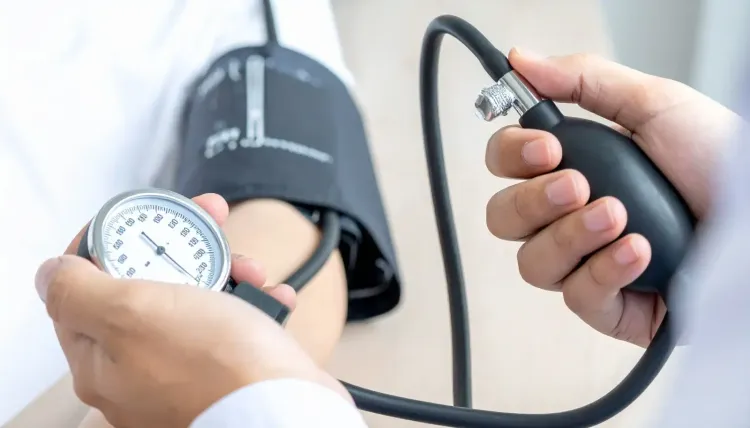
The West Bengal Health System Reform Programme Operation will facilitate the provision of tailored healthcare services to individuals aged 30 and above through the implementation of digital tracking systems for non-communicable diseases (NCDs) like hypertension and diabetes.
This initiative will also foster a patient-focused care model throughout the state’s health infrastructure, enhance the assessment of health outcomes, and bolster the resilience of healthcare facilities against extreme weather conditions.
The $286 million loan, sourced from the International Bank of Reconstruction and Development (IBRD), comes with a final maturity period of 16.5 years, which includes a grace period of three years, as stated by the World Bank.
“This program aims to empower West Bengal to provide more equitable and high-quality health services, with tangible results for women, adolescents, and individuals living with non-communicable diseases,” explained Paul Procee, the World Bank’s Acting Country Director for India.
“By linking funding to verified outcomes and enhancing governance and climate resilience, this operation tackles both service deficiencies and systemic barriers that have hindered health advancements for vulnerable populations. This will significantly affect their capacity to pursue quality employment,” he added.
Over the past two decades, West Bengal has achieved notable health improvements, with infant mortality rates dropping from 32 deaths per 1,000 live births in 2010-2012 to 19 during 2018-2020.
The total fertility rate stands at 1.64 births per woman as of 2019, one of the lowest in the nation. Consequently, life expectancy in West Bengal has reached 72 years, surpassing the national average.
Despite these achievements and high literacy rates among adolescent girls (at 89 percent), West Bengal has the second-highest incidence of adolescent pregnancies in India at 16 percent, contributing to a maternal mortality ratio of 103 deaths per 100,000 live births during 2018-2020.
Districts such as Purulia, Birbhum, Murshidabad, Maldah, and Uttar Dinajpur are encountering significant challenges in reproductive, maternal, and adolescent healthcare.
Earlier this week, the Washington-based multilateral funding organization also sanctioned $680 million in loans for three projects in Assam, aimed at enhancing resilience to extreme weather, improving governance and service delivery, and equipping more than four million students with essential workforce skills.
Point of View
Ultimately aiming for equitable health outcomes. This initiative is crucial for ensuring that West Bengal continues to make progress in enhancing the quality of life for its residents.
NationPress
26 Sept 2026
Frequently Asked Questions
What is the purpose of the World Bank's $286 million loan?
The loan is intended to enhance healthcare access for over 90 million people in West Bengal through personalized healthcare services and improved health outcomes.
How will the loan impact health services in West Bengal?
It will support digital tracking of non-communicable diseases and promote a patient-centric approach to healthcare, improving service delivery across the state.
What are the expected outcomes of this loan?
The program aims to deliver equitable health services, especially for women and adolescents, and strengthen healthcare facilities against climate-related challenges.