Women's T20 WC 2026: Anjum Chopra backs Kranti, Renuka and Arundhati as India's pace trio
Synopsis
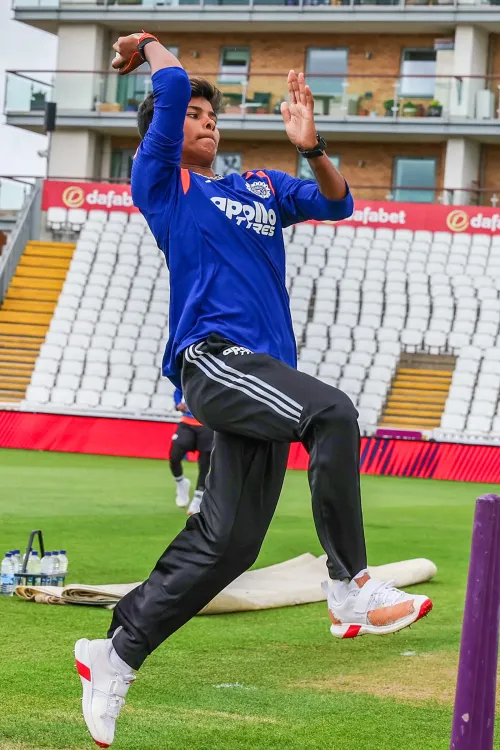
Former India captain Anjum Chopra is calling for all three of India's frontline pacers — Kranti Gaud, Renuka Singh Thakur, and Arundhati Reddy — to start together at the 2026 Women's T20 World Cup, a selection stance that would force India to drop two of their four specialist spinners. With the Pakistan opener at Edgbaston days away and India's bowling combination still unsettled, Chopra's blueprint cuts through the pre-tournament noise.
Key Takeaways
Anjum Chopra wants Kranti Gaud , Renuka Singh Thakur , and Arundhati Reddy to all start in India's playing eleven at the 2026 ICC Women's T20 World Cup .
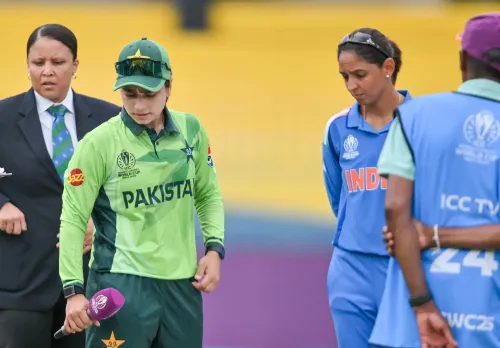
India face Pakistan in their tournament opener at Edgbaston on Sunday .
Fielding three pacers limits India to just two spinners , forcing a tough call between Deepti Sharma , Shreyanka Patil , N Sree Charani , and Radha Yadav .
Chopra argued Shreyanka Patil must play every game to adapt to English conditions, as this is her first tour of England.
India's warm-up results — a 26-run win over West Indies and a six-run loss to England — left selection questions unresolved.
The absence of an all-rounder like Amanjot Kaur has deepened India's balance concerns heading into the tournament.
Former India captain Anjum Chopra has backed Kranti Gaud and Renuka Singh Thakur to both feature in India's playing eleven alongside Arundhati Reddy for the 2026 ICC Women's T20 World Cup, arguing that the three pacers form the non-negotiable core of India's attack. Her remarks come ahead of India's tournament opener against Pakistan at Edgbaston on Sunday.
The Pace Equation
Chopra's case for all three rests on a straightforward reading of India's bowling resources. Renuka Singh Thakur demonstrated prodigious swing against England in the preceding T20I series — including a delivery that dismissed Danni Wyatt-Hodge — though she was costly in the death overs. Kranti Gaud showed inconsistency during the same series, yet Chopra maintained that benching either pacer would weaken the attack structurally.
'We don't know why Renuka didn't get a game in the first three T20s that India played against England. I mean, whether they wanted to give others an opportunity like Nandni Sharma out there in the centre, because consistency was not there with even Kranti Gaud. In my view, Kranti Gaud and Renuka Singh Thakur both start in the playing eleven for India with Arundhati Reddy,' Chopra said.
The Spin Selection Dilemma
Fielding three specialist pacers, Chopra noted, immediately forces a hard choice in the spin department. India have four credible options — Deepti Sharma, Shreyanka Patil, N Sree Charani, and Radha Yadav — but can only accommodate two if the pace trio is retained. Deepti was rested from the warm-up games and has struggled for consistency since the Australia tour, adding to the selection headache.
'So, if you go by that fact, then you can only play two spinners. You can't play Charani, Radha, Deepti, and Shreyanka together. I mean, you have to take a pick. You can't have that kind of a build-up because India is obviously missing all-rounders here,' Chopra said. The absence of a genuine all-rounder like Amanjot Kaur has compounded the problem, leaving India's balance looking thin.
Why Shreyanka Must Play Every Game
Chopra was particularly emphatic about Shreyanka Patil, who is playing in England for the first time. She argued that adapting to unfamiliar conditions takes time and that Shreyanka needs consistent game time — not selective deployment — to be effective in the knockout stages.
'Look, Shreyanka is actually playing for the very first time in England. She has never played in England. This is her very first outing, and it does take time for any cricketer to adapt and understand the conditions,' Chopra said. 'She should be out there bowling in the centre as much as possible because Charani has experience of bowling in England, and she doesn't have it yet. So, for me, Shreyanka will become a very important cog in the wheel.'
Reading the England Series Experiments
Chopra offered a measured take on India's pre-tournament tinkering, including Arundhati Reddy being handed the new ball in all three T20Is against England — a departure from her usual role in the middle and death overs. She conceded there were rough patches, notably when Arundhati conceded around 23-24 runs in one outing at Bristol, but framed the series as deliberate option-weighing rather than confusion.
'Before this series, I had rarely seen her bowl with a new ball, primarily because she has better control when she comes in after the new-ball bowlers have bowled. But then, where her initial part of the bowling was good, her latter part, or maybe the death bowling, did not really help India as well,' Chopra observed. She added that Deepti Sharma being promoted ahead of Richa Ghosh in the batting order was similarly exploratory.
India's two warm-up games — a 26-run win over West Indies and a six-run loss to England — resolved little about the final eleven. Rookie pacer Nandni Sharma, who took three wickets on debut in Chelmsford, faces questions over match readiness given limited warm-up game time. India's group stage also includes Australia, South Africa, Bangladesh, and the Netherlands, making early clarity on the bowling unit critical.
Point of View
Deepti floating up the order — read less like a plan and more like a search for one. India enter a group featuring Australia and South Africa with their bowling combination still genuinely unsettled, which is a concern that tactics alone cannot fix.
NationPress
21 Sept 2026
Frequently Asked Questions
Which bowlers does Anjum Chopra want in India's playing eleven for the 2026 Women's T20 World Cup?
Anjum Chopra wants Kranti Gaud, Renuka Singh Thakur, and Arundhati Reddy to all start together as India's pace attack. She argued the trio forms the backbone of India's bowling unit and should not be split regardless of the experiments carried out in the preceding England T20I series.
When and where does India play their first Women's T20 World Cup 2026 match?
India open their 2026 ICC Women's T20 World Cup campaign against Pakistan at Edgbaston on Sunday. The match is India's first in a tough group that also includes Australia, South Africa, Bangladesh, and the Netherlands.
Why is India's spin selection a problem at the 2026 Women's T20 World Cup?
India have four credible spin options — Deepti Sharma, Shreyanka Patil, N Sree Charani, and Radha Yadav — but can only accommodate two if all three pacers are selected. Chopra noted that India are also missing a genuine all-rounder like Amanjot Kaur, which limits the team's flexibility in building a balanced eleven.
Why does Anjum Chopra want Shreyanka Patil to play every game?
Chopra stressed that this is Shreyanka Patil's first tour of England and that adapting to unfamiliar conditions takes time. She argued Shreyanka needs consistent match time — not selective appearances — to be effective, particularly since N Sree Charani already has experience bowling in England.
What were India's results in the Women's T20 World Cup 2026 warm-up games?
India won their first warm-up by 26 runs against West Indies but lost their second by six runs to England. Neither fixture resolved questions about India's final bowling combination, with Arundhati Reddy and Kranti Gaud both returning inconsistent figures.