Women's T20 WC 2026: Aakash Chopra warns India faces 'trial by fire' in groups
Synopsis
Aakash Chopra isn't sugarcoating India's Women's T20 World Cup 2026 draw — Australia and South Africa make it brutal. But his bigger point is structural: India's long-standing six-hitting deficit has finally been addressed, and that could change everything about how this team performs under pressure.
Key Takeaways
Aakash Chopra described India's ICC Women's T20 World Cup 2026 group stage as a 'trial by fire', with Australia and South Africa in the same group.
Chopra backed India to use fixtures against Pakistan and the Netherlands to build momentum before tougher clashes.
He urged India to win early games by large margins to secure a favourable net run rate .
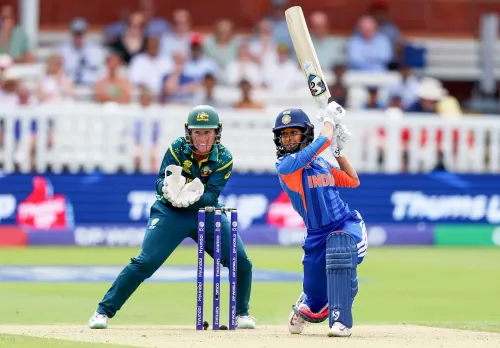
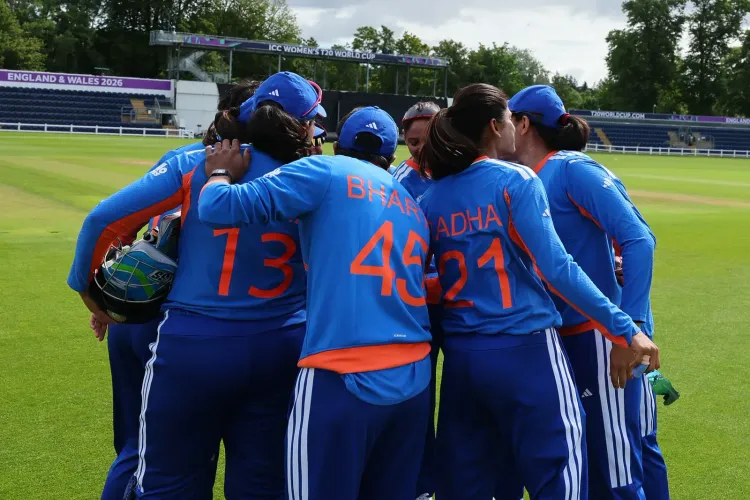
Chopra argued India's batting has evolved from a 'four-hitting team' to one with genuine six-hitters in Smriti Mandhana , Harmanpreet Kaur , Shafali Verma , Richa Ghosh , and Bharti Fulmali .
His ideal scenario: India arrive at the Australia fixture with qualification nearly secured, shifting pressure onto the opposition.
Former India opener Aakash Chopra has said that India's campaign at the ICC Women's T20 World Cup 2026 will demand a battle-hardened group-stage run, describing the challenge as an unavoidable rite of passage for any side serious about lifting the trophy. Speaking to JioStar, Chopra argued that the difficulty of India's group is less an obstacle and more a proving ground.
The Group-Stage Challenge
India have been drawn alongside heavyweights Australia and South Africa, giving them one of the tournament's most demanding paths to the knockouts. Chopra was candid about what that means: 'You will have to beat either South Africa or Australia. If you're not in this group, then you'll get New Zealand and England. So, you are going to be up against at least two formidable opponents. And if you want to win the World Cup, you will have to go through a trial by fire,' he said.
Notably, the same logic applies regardless of the draw — there is no soft route to a World Cup title at this level of women's cricket.
Schedule as a Strategic Advantage
Chopra pointed to the sequencing of India's fixtures as a potential edge. With matches against Pakistan and the Netherlands scheduled before the high-stakes clash against South Africa, India have a window to build rhythm and confidence. 'But the good thing is that by the time India play South Africa, their campaign will be well underway, having hopefully won a couple of games already against Pakistan and the Netherlands,' he noted.
He further emphasised that those earlier wins must be emphatic, not just comfortable. 'Ideally, what should happen is that you win against Bangladesh, the Netherlands and Pakistan by a good margin, so the net run rate is also on your side,' Chopra said, underscoring how net run rate could prove decisive in a tightly contested group.
The Australia Equation
Chopra outlined what he considers the ideal scenario heading into India's encounter with six-time champions Australia. 'You need to have your campaign peak in a fashion that by the time you meet Australia, you're almost through, and the pressure is on the opposition,' he said. The strategy essentially involves neutralising Australia's psychological advantage by arriving at that fixture with qualification already secured.
India's Batting Identity Has Shifted
Beyond tactics, Chopra highlighted what he sees as a structural transformation in India's batting. He argued that a historic weakness — the inability to match opponents in six-hitting — has been addressed in this squad. 'There was always a discussion about why India used to fall short in T20 cricket, because the other teams had the ability to hit more sixes. We were still more of a four-hitting team,' he said.
He pointed to Smriti Mandhana, Harmanpreet Kaur, Shafali Verma, Richa Ghosh, and Bharti Fulmali as players now capable of clearing the ropes consistently. 'So, you have plenty of six-hitters across your playing XI. Given the demands of modern T20 cricket, this is a must-have ability in your side,' Chopra added.
This comes amid a broader evolution in women's T20 cricket globally, where power-hitting has become as decisive as bowling depth. Whether India can convert this newfound firepower into a maiden World Cup triumph remains the central question of their 2026 campaign.
Point of View
Richa, and Mandhana do offer a different ceiling — but India's World Cup ceiling has historically been set by bowling consistency and death-over execution, not batting depth alone. The 'arrive against Australia with qualification secured' script also assumes Pakistan and Netherlands are straightforward wins, which in knockout-pressure conditions is never guaranteed. The more interesting test is whether this squad has the mental infrastructure to match its physical upgrades.
NationPress
13 Sept 2026
Frequently Asked Questions
What did Aakash Chopra say about India's Women's T20 World Cup 2026 chances?
Chopra said India will have to go through a 'trial by fire' in the group stage, given they are drawn alongside Australia and South Africa. He argued that no path to a World Cup title is easy, and India must treat the tough group as a necessary test rather than a disadvantage.
Which teams are in India's group at the Women's T20 World Cup 2026?
India are drawn alongside Australia, South Africa, Pakistan, and the Netherlands in their group. Australia and South Africa are considered the two most challenging opponents, while Pakistan and the Netherlands precede those fixtures in India's schedule.
Why does Chopra consider India's batting improved for the 2026 tournament?
Chopra believes India have addressed a longstanding weakness — the inability to hit sixes consistently — with players like Smriti Mandhana, Harmanpreet Kaur, Shafali Verma, Richa Ghosh, and Bharti Fulmali all capable of clearing the ropes. He described this as a 'must-have ability' in modern T20 cricket.
What is Chopra's ideal strategy for India at the Women's T20 World Cup 2026?
Chopra wants India to beat Pakistan, the Netherlands, and Bangladesh by large margins to build net run rate, then ideally arrive at the Australia fixture with qualification nearly secured so the pressure falls on the opposition rather than India.
How important is net run rate in India's Women's T20 World Cup group stage?
Chopra specifically flagged net run rate as a potential decider in a tightly contested group, urging India to win their games against lower-ranked teams by convincing margins rather than just scraping through. In closely matched groups, NRR frequently determines which teams advance.