Asian Para Games: Arshad Shaik to undergo surgery for femur fracture in Japan
Synopsis
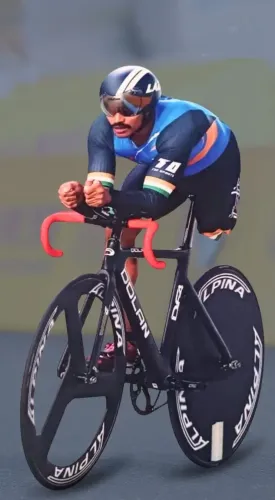
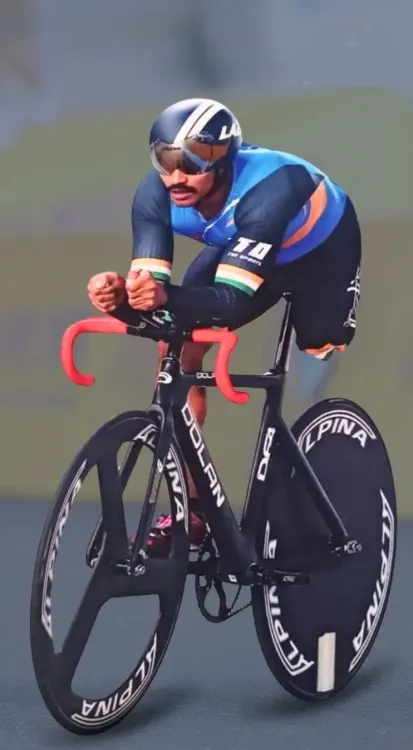
India's only para-cyclist at the Asian Para Games, Arshad Shaik — a 2024 Paralympian — fractured his femur in a time trial fall in Shizuoka. Separated from the rest of India's 167-strong contingent in Nagoya, he required an emergency hospital transfer, and surgery was scheduled within hours. The chief team physician who rushed 300 km through the night has known Arshad since childhood.
Key Takeaways
Arshad Shaik , India's sole para-cyclist at the Asian Para Games , suffered a comminuted, displaced subtrochanteric femur fracture during the time trial in Shizuoka on Wednesday night.
Surgery was scheduled for 1 PM local time at Chutoen Sogo Izu General Hospital , following an emergency transfer from Juntendo University Hospital .
Recovery is expected to take 10 to 14 days post-surgery, with repatriation plans subject to his progress.
Chief team physician Dr.
Ameya Kagali travelled approximately 300 km overnight from Nagoya to reach Arshad, arriving at 11:30 PM .
Arshad is stable with normal blood reports and was cleared as fit for surgery.
He was the only athlete among India's 168-member contingent stationed in Shizuoka, with the remaining 167 based in Nagoya.
Indian para-cyclist Arshad Shaik, the country's sole cycling representative at the Asian Para Games, is set to undergo surgery for a comminuted, displaced subtrochanteric fracture of the femur — a severe upper thigh bone break — sustained during a fall at the ongoing Games in Shizuoka, Japan. The injury occurred in his above-knee amputated left limb during the time trial event on Wednesday night, and he is expected to remain hospitalised for 10 to 14 days post-surgery, according to India's chief team physician.
How the Injury Unfolded
Arshad, a 2024 Paralympian who competed at the Paris Paralympics, slipped during the time trial at the Games and was initially transported by the Japanese event medical team to Juntendo University Hospital in Shizuoka. Chief team physician Dr. Ameya Kagali, who was stationed at the Mizohu Athletics Stadium in Nagoya at the time, immediately set out for Shizuoka — a road journey of approximately 300 km — upon receiving the call. He arrived at the hospital at 11:30 PM local time on Wednesday, accompanied by Mr. Chaitanya, team India coordinator in Japan, and Manish Rana, a Paralympique Committee of India (PCI) official.
Diagnosis and Hospital Transfer
Scans at the first hospital confirmed the fracture: a comminuted, displaced subtrochanteric break located within 5 cm below the lesser trochanter — classified as a severe injury requiring surgical intervention. However, the required surgeons were unavailable at Juntendo University Hospital until Sunday, as they were attending a conference. Rather than wait, the medical team acted swiftly. 'We couldn't wait till then, so we took a call to shift him,' Dr. Kagali said. On the recommendation of Dr. Shinya, Medical Chair of the Asian Para Committee, Arshad was transferred by ambulance to Chutoen Sogo Izu General Hospital — situated roughly midway between Nagoya and Shizuoka — where surgery was scheduled for 1 PM local time the following day.
Logistical and Communication Challenges
The medical team faced significant hurdles in coordinating Arshad's care, including poor network connectivity and language barriers. 'We were trying to activate all the channels of doctors that we know who are in Japan and also the embassy where we can make arrangements for any manpower that's required later on. But, again, the network was bad. We were working on language barriers,' Dr. Kagali noted. Despite these obstacles, coordination with the Indian Embassy and local medical contacts was maintained throughout.
Arshad's Condition and Emotional Support
According to Dr. Kagali, Arshad remained stable ahead of surgery, with all blood reports returning normal and the athlete cleared as fit for the procedure. Of the 168 athletes in India's contingent, Arshad was the only one based in Shizuoka — all 167 others were in Nagoya — given that the cycling venue is located in a separate setting. The physician, who has known Arshad since the Paris Paralympics and described a personal connection with the athlete, underscored the importance of emotional support during the ordeal. 'It's just too unfortunate that it has happened. So we need to give moral support to them,' he said.
Recovery Timeline and What Comes Next
Post-surgery, Arshad is expected to remain at Chutoen Sogo Izu General Hospital for approximately 10 to 14 days before any further plans for his return can be confirmed. The timeline for his repatriation to India will depend on his surgical and post-operative progress. The Indian contingent, the Paralympic Committee of India, and the Indian Embassy are monitoring the situation closely as Arshad begins what is expected to be a lengthy rehabilitation ahead.
Point of View
With no on-site physician and poor communications. That Dr. Kagali had to drive through the night, navigate language barriers, and personally coordinate an inter-hospital transfer is a testament to individual dedication — but it also exposes the absence of a protocol for geographically dispersed athletes. The Paralympic movement in India has grown significantly since Tokyo; administrative frameworks for medical emergencies at overseas multi-city events need to catch up.
NationPress
22 Oct 2026
Frequently Asked Questions
What injury did Arshad Shaik suffer at the Asian Para Games?
Arshad Shaik suffered a comminuted, displaced subtrochanteric fracture of the femur — a severe break in the upper thigh bone located within 5 cm below the lesser trochanter — in his above-knee amputated left limb after falling during the time trial in Shizuoka.
Which hospital is Arshad Shaik being treated at in Japan?
He was initially taken to Juntendo University Hospital in Shizuoka, then transferred to Chutoen Sogo Izu General Hospital, where his surgery was scheduled. The transfer was recommended by Dr. Shinya, Medical Chair of the Asian Para Committee, as the required surgeons were unavailable at the first hospital until Sunday.
How long will Arshad Shaik's recovery take?
According to chief team physician Dr. Ameya Kagali, Arshad is expected to remain hospitalised for approximately 10 to 14 days following surgery before further recovery and repatriation plans can be finalised.
Who is Arshad Shaik?
Arshad Shaik is an Indian para-cyclist and a 2024 Paralympian who competed at the Paris Paralympics. He was the only para-cycling representative in India's 168-member contingent at the Asian Para Games in Japan.
What challenges did the Indian medical team face in treating Arshad?
The team faced poor network connectivity, language barriers, and a 300 km distance between the physician's location in Nagoya and Arshad's hospital in Shizuoka. Coordinating with local doctors, the Indian Embassy, and finding a hospital with available surgeons added further complexity to an already difficult overnight emergency.