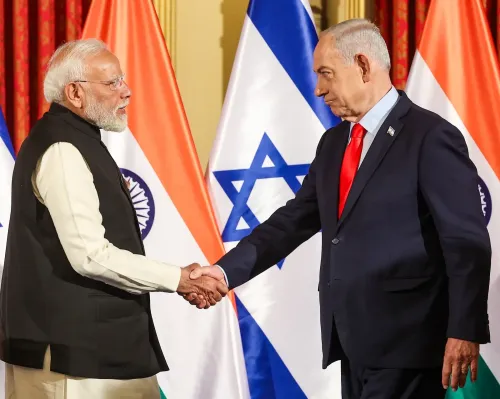
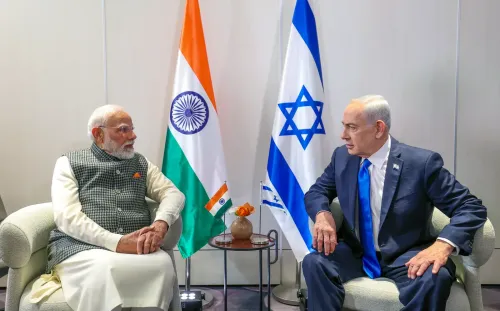
PM Modi speaks with Netanyahu, reviews India-Israel ties amid West Asia tensions

Synopsis
Prime Minister Narendra Modi received a call from Israeli PM Benjamin Netanyahu on October 22, 2026, reaffirming bilateral ties and discussing West Asia developments, continuing a strategic partnership built since full diplomatic relations were established in 1992.
Key Takeaways
Prime Minister Narendra Modi received a phone call from Israeli PM Benjamin Netanyahu on October 22, 2026 .
The two leaders reviewed 'sustained momentum' in bilateral ties and reaffirmed commitment to strengthening the partnership.
Both sides exchanged views on recent developments in West Asia .
India and Israel have maintained full diplomatic relations since 1992 ; Modi's July 2017 visit was the first by an Indian PM to Israel.
India is part of the I2U2 grouping with Israel, UAE and the US, launched in 2022 , covering food security and clean energy.
India is among Israel's largest defence customers, with cooperation also spanning water technology and agricultural innovation.
As West Asia remains a theatre of acute geopolitical stress, Prime Minister Narendra Modi received a phone call from Israeli Prime Minister Benjamin Netanyahu on Thursday, October 22, 2026, reviewing the trajectory of bilateral ties and exchanging views on regional developments.
A partnership built across three decades of engagement
The call is the latest touchpoint in a relationship that has matured considerably since India and Israel established full diplomatic relations in 1992. What was once a carefully guarded, largely covert partnership has evolved into an open strategic alliance spanning defence procurement, counter-terrorism intelligence-sharing, water technology and agricultural innovation.
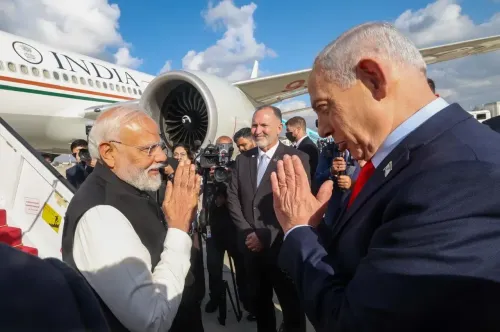
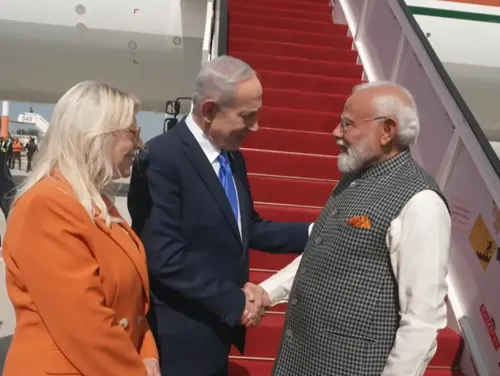
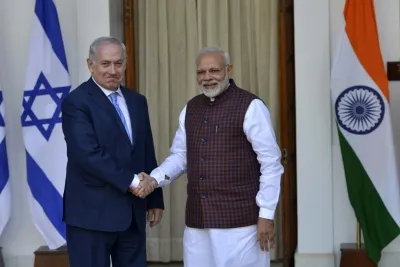
The trajectory sharpened dramatically after Prime Minister Modi's July 2017 visit to Israel — the first by any Indian Prime Minister — and Netanyahu's reciprocal visit to India in January 2018, which yielded a clutch of agreements across defence and water management. The two countries also anchored a multilateral framework when India joined the I2U2 grouping alongside Israel, the United Arab Emirates and the United States in 2022, designed to accelerate cooperation on food security, clean energy and infrastructure technology.
West Asia on the agenda — India's multi-directional tightrope
Modi and Netanyahu 'exchanged views on recent developments in West Asia,' the Prime Minister's post stated — language that signals substantive conversation without revealing specific positions. The region is a zone where India has long walked a calibrated line: sustaining a deepening strategic partnership with Israel while preserving longstanding ties with Gulf states and Arab partners that are critical to India's energy security and its eight-million-strong diaspora.
Phone calls at the leadership level have become a consistent mechanism to keep the relationship's momentum alive between high-level visits — particularly during periods of regional volatility when each side needs to understand the other's read on fast-moving events.
Defence, agri-tech and what follows the call
India is among Israel's largest defence customers, with procurement spanning radar systems, unmanned aerial vehicles and precision munitions. The agricultural and water-technology corridor — born from Israel's expertise in drip irrigation and India's scale needs — has generated programmes across several Indian states. Both tracks are likely to feature in any follow-up ministerial engagements that flow from today's conversation.
The reaffirmed 'commitment to further strengthening the partnership,' as Modi described it, suggests the call was not a crisis call but a deliberate act of diplomatic maintenance — the kind that keeps alliances credible precisely when the world around them is anything but stable.
Point of View
India's ability to maintain a credible conversation with Jerusalem while preserving Gulf partnerships is itself a strategic asset. The Modi government has consistently used phone diplomacy to signal continuity and reassurance to partners during volatile periods, and this call fits that arc precisely. Watch for any ministerial-level follow-through, which would indicate whether the conversation surfaced actionable deliverables or remained a confidence-building exercise.
NationPress
22 Oct 2026
Frequently Asked Questions
Why did PM Modi speak with Benjamin Netanyahu on October 22, 2026?
Prime Minister Modi received a phone call from Israeli PM Netanyahu to review the progress of bilateral ties, reaffirm the partnership, and exchange views on recent developments in West Asia.
What is the current state of India-Israel relations?
India and Israel have full diplomatic relations since 1992, with deep cooperation in defence, counter-terrorism, water technology and agriculture. PM Modi's 2017 visit and Netanyahu's 2018 visit to India significantly expanded the partnership.
What is the I2U2 grouping and what does India's membership mean?
I2U2 is a multilateral grouping comprising India, Israel, the UAE and the United States, launched in 2022. It focuses on economic and technological cooperation in areas like food security, clean energy and infrastructure.
How does India balance its ties with Israel and Arab states?
India pursues a multi-directional policy in West Asia, maintaining its growing strategic partnership with Israel while preserving longstanding economic and energy ties with Gulf and Arab states, which are also critical for the Indian diaspora.
What areas define India-Israel bilateral cooperation?
The two countries cooperate primarily in defence procurement (UAVs, radar systems, precision munitions), counter-terrorism intelligence, agricultural technology, water management and through the I2U2 multilateral framework.