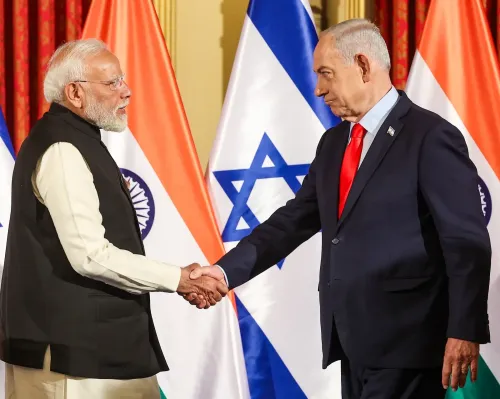
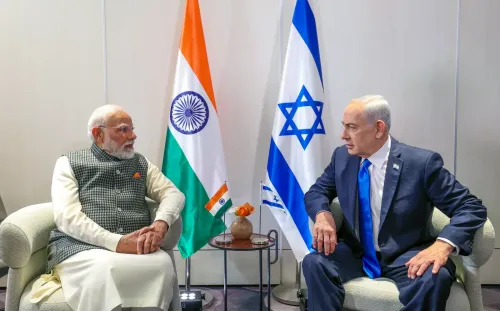
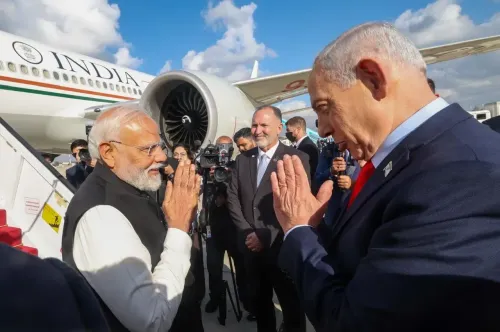
PM Modi speaks with Netanyahu, reviews India-Israel ties and West Asia
Synopsis
Prime Minister Narendra Modi received a call from Israeli PM Benjamin Netanyahu on 6 August 2026, reviewing progress on the India-Israel Special Strategic Partnership and exchanging views on the West Asia situation. The partnership, anchored by landmark visits in 2017 and 2018, spans defence, agriculture, and cybersecurity.
Key Takeaways
PM Modi and Israeli PM Netanyahu spoke by phone on 6 August 2026 .
Both leaders reviewed the India-Israel Special Strategic Partnership , described as growing 'from strength-to-strength'.
The leaders also exchanged views on the current situation in West Asia .
The partnership was established during PM Modi's historic July 2017 visit to Israel — the first by an Indian prime minister.
Netanyahu visited New Delhi in January 2018 , expanding agreements on defence, agriculture, and cybersecurity.
India maintains its multi-alignment approach, engaging Israel alongside Arab states and the Palestinian Authority .
A phone call between two of the world's most consequential leaders on Thursday, 6 August 2026 put the India-Israel Special Strategic Partnership back in the spotlight — as Prime Minister Narendra Modi and Israeli Prime Minister Benjamin Netanyahu reviewed the partnership's momentum and exchanged views on a region that is never far from crisis.
A partnership built over a decade of high-level engagement
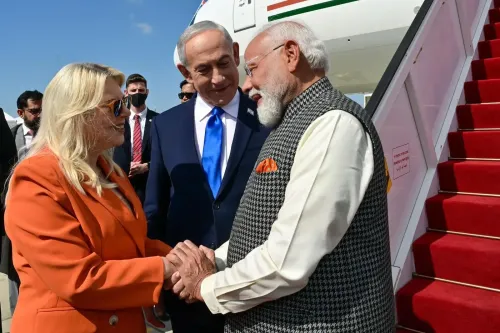
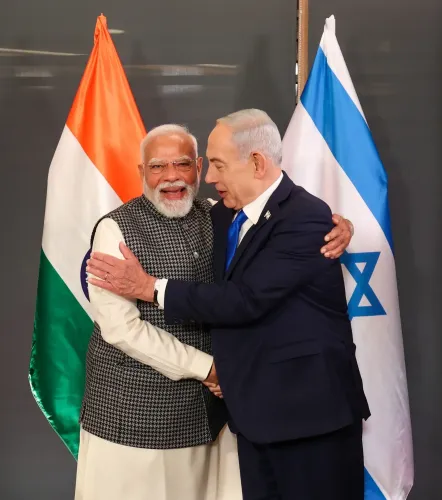
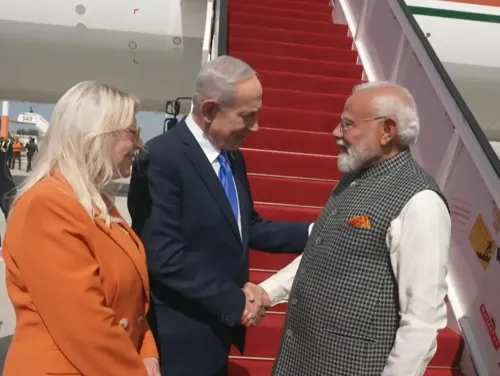
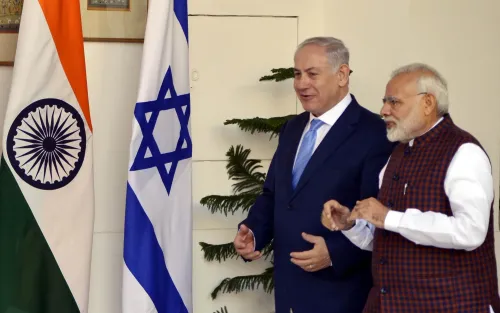
The India-Israel Special Strategic Partnership is not a routine diplomatic label. It was forged in July 2017 when Prime Minister Modi became the first Indian prime minister to visit Israel — a historic trip that recast a relationship India had kept at arm's length for decades after establishing full diplomatic ties in 1992. Netanyahu returned the gesture with a visit to New Delhi in January 2018, signing expanded agreements on defence, agriculture, and cybersecurity.
Since then, the partnership has deepened across precision agriculture, water management, homeland security, and defence procurement — making Israel one of India's most consequential technology and security partners, even as New Delhi simultaneously maintains active ties with Arab states and the Palestinian Authority.
West Asia on the agenda
Beyond the bilateral review, both leaders 'exchanged views on the current situation in West Asia' — a phrase that carries real weight given the region's persistent volatility. India's approach has been to engage all sides without abandoning its multi-alignment doctrine: a posture that gives New Delhi diplomatic room that few other major democracies enjoy.
Leader-level phone calls of this kind typically serve to synchronise positions ahead of multilateral forums or to flag concerns before they harden into policy gaps. The specific content of this exchange has not been disclosed by either side.
What the call signals
That the call was initiated by Netanyahu and publicly acknowledged by Modi is itself a signal — both governments are invested in keeping the relationship visible. Defence industries, agri-tech sectors, and security establishments on both sides watch these leader-level touchpoints closely, as they often precede technical-level meetings and, occasionally, new agreements.
For India, maintaining a warm channel with Jerusalem while navigating its relationships across the Arab world and with Iran is a tightrope act that has, so far, held. This call suggests it is holding still.
Point of View
High-visibility pillar of Modi's foreign policy — not a quiet back-channel. For a government that has staked its diplomatic identity on 'strategic autonomy', keeping the Netanyahu relationship warm while West Asia simmers is a careful balancing act: it signals defence and technology alignment with Israel without foreclosing India's extensive economic and energy ties across the Arab world. The timing and the public disclosure suggest both capitals want the relationship seen — and that is itself a foreign-policy message.
NationPress
21 Sept 2026
Frequently Asked Questions
Why did Netanyahu call PM Modi in August 2026?
According to PM Modi 's post, Netanyahu called to review progress on the India-Israel Special Strategic Partnership and to exchange views on the current situation in West Asia . Specific details of the conversation were not disclosed.
What is the India-Israel Special Strategic Partnership?
The India-Israel Special Strategic Partnership is a bilateral framework established during PM Modi's July 2017 visit to Israel — the first by an Indian prime minister. It covers defence, water management, precision agriculture, cybersecurity, and innovation.
When did India and Israel establish diplomatic relations?
India and Israel established full diplomatic relations in 1992 . The relationship was elevated to a 'Special Strategic Partnership' following PM Modi's 2017 visit and Netanyahu's reciprocal visit to New Delhi in January 2018 .
What is India's position on the West Asia conflict?
India follows a multi-alignment approach in West Asia , maintaining active ties with Israel , Arab states, and the Palestinian Authority . New Delhi has consistently called for dialogue and a two-state solution while expanding functional cooperation with Israel .
How important is Israel as a defence partner for India?
Israel is one of India 's most significant defence suppliers, providing systems in areas including missile defence, drones, and surveillance technology. Defence cooperation has been a central pillar of the Special Strategic Partnership since its formalisation in 2017 .