Women's T20 WC: Ian Bishop says women's cricket now a standalone force
Synopsis
The ICC Women's T20 World Cup broke its own group stage attendance record twice in 24 hours — 27,163 at Lord's for India vs Australia — and crossed 1,25,000 overall. Ian Bishop's verdict: the women's game no longer needs men's cricket as a scaffold. It stands alone, and the numbers prove it.
Key Takeaways
27,163 fans attended the India vs Australia match at Lord's , breaking the ICC Women's T20 WC group stage attendance record for the second time in 24 hours .
The previous record of 21,018 was set at The Oval for the England vs New Zealand fixture just a day earlier.
Total on-ground attendance crossed 1,25,000 , the highest in ICC Women's T20 World Cup history.
Ian Bishop called the women's game 'a standalone thing' and urged governing bodies to give dedicated administrative autonomy to women's cricket.
The tournament has seen five scores of 200-plus ; Australia and England lead the batting charts and are both in the semi-finals.
Bishop flagged a shortage of fast and seam bowling options as the most critical gap to address in the women's game going forward.
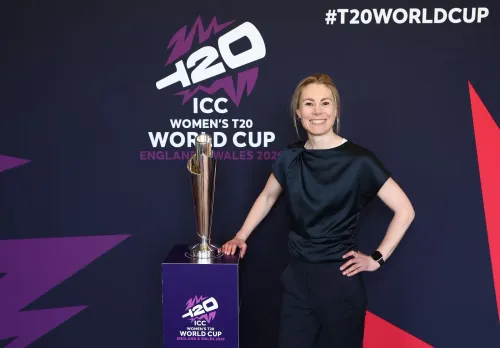
Former West Indies fast bowler Ian Bishop has declared that women's cricket has firmly established itself as a standalone product, capable of drawing massive crowds even while competing with marquee global events such as the FIFA World Cup, men's Test cricket, and Wimbledon. Bishop, serving as an ICC Women's T20 World Cup expert, shared his views at JioStar's Media Day on Monday, 29 June.
Record Attendance at Lord's
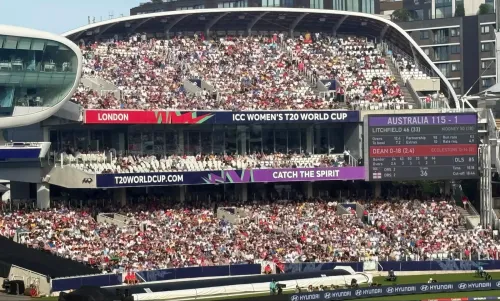
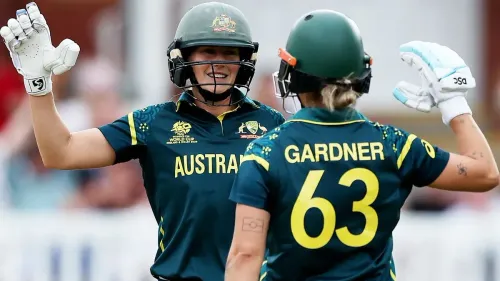
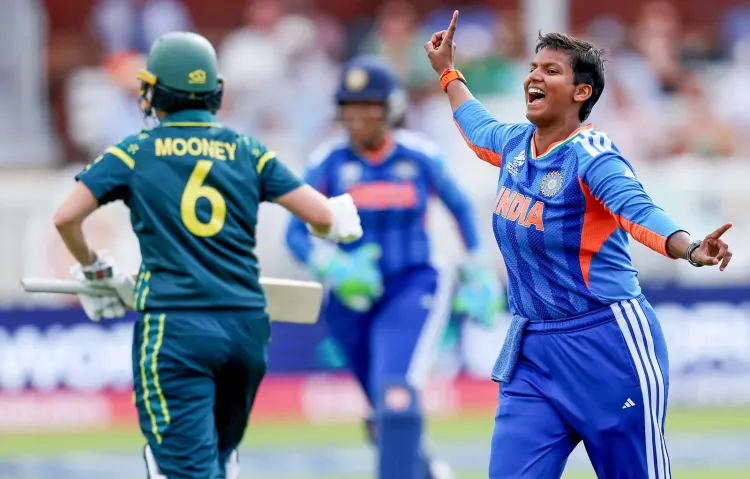
The group stage of the tournament scripted history when a crowd of 27,163 fans packed Lord's for the India vs Australia Group A fixture — breaking the ICC Women's T20 World Cup group stage attendance record for the second time in 24 hours. That figure surpassed the 21,018 recorded at The Oval for the England vs New Zealand match just a day earlier. Overall, the tournament crossed 1,25,000 in on-ground attendance, making it the highest-selling ICC Women's T20 World Cup in history.
Bishop on the Game's Growth
'The women's game is a standalone thing. I think we've talked about that for a couple of years now,' Bishop said. He cited a personal example — his teenage daughter, who previously showed no interest in cricket, now wants to play every day at school. 'The gospel has been spreading more and more, and that is reflected also in the attendance,' he added. Bishop acknowledged that parallel sporting events may have tempered the numbers further, but maintained that the trajectory is unmistakably upward.
Batting Dominance and the Evolution of Women's T20
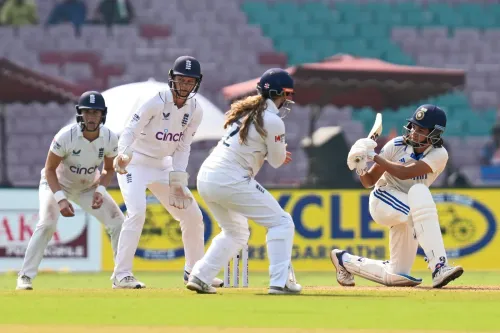
The tournament has been notable for its high-scoring character, with five scores of 200-plus recorded and multiple batting records broken. Bishop credited ground staff for producing surfaces where the ball comes on to the bat, while also pointing to the broader evolution of the women's game. He observed that Australia and England — the two highest-scoring sides — are unsurprisingly among the four semi-finalists. He also highlighted South Africa's Marizanne Kapp for her match-winning contribution, noting that top sides now combine dynamic batting with effective bowling variety. 'The dominant forces have been Australia and England, who have scored runs, but who also have bowling lineups that are able to hold their own against most other competitors,' Bishop explained. He warned that lower-ranked teams such as Bangladesh and Sri Lanka are being left behind in power-hitting, and stressed that bowlers across the board must now adapt to the new reality.
Fast Bowling Gap and the Call for More Pace Options
Bishop identified fast and seam bowling as the most urgent developmental need in the women's game. 'I want to see more fast bowling, seam bowling options come through because we have a lot of spin,' he said, naming Shabnam Ismail as a benchmark. He argued that governing bodies must actively search for pace options to complement the spin-heavy landscape that currently defines women's T20 cricket.
Praise for Associate Nations and a Plea for Autonomy
Bishop was effusive in his praise for qualifier nations, singling out Babette de Leede and Sterre Kallis of the Netherlands, Darcey Carter and Katherine Fraser of Scotland, and Iris Zwilling for her disciplined bowling. He also noted Ireland's established quality, referencing Orla Prendergast and Amy Hunter. He acknowledged that many Netherlands players are amateurs juggling careers and university education, and called for greater professionalisation and administrative support. His central recommendation was that cricket boards — at local, national, and international levels — give dedicated, autonomous arms to the women's game so it receives focused investment and attention. 'Give them autonomy so that they have all the attention... to pour more into the women's game, and it will get even better. So that would be my cry from here on,' he concluded.
With the tournament having already rewritten attendance benchmarks, the semi-finals will test whether the momentum of this record-breaking group stage can carry through to the final.
Point of View
While historic, carry an asterisk — they are still being measured against a backdrop of competing global events, which Bishop himself acknowledges could have suppressed turnout. The real structural question his remarks surface is governance: women's cricket has outgrown the patronage model of being an add-on to men's boards, and his call for dedicated administrative autonomy deserves more than applause. The gap between associate nations and the top four is also widening, not narrowing — a sign that record crowds and record scores are concentrating at the top while the base remains thin.
NationPress
28 Sept 2026
Frequently Asked Questions
What attendance record was broken at the ICC Women's T20 World Cup 2025?
The group stage attendance record was broken twice in 24 hours. A crowd of 27,163 attended the India vs Australia match at Lord's, surpassing the 21,018 recorded at The Oval for England vs New Zealand the previous day. Overall tournament attendance crossed 1,25,000, the highest in ICC Women's T20 World Cup history.
What did Ian Bishop say about women's cricket at the ICC Women's T20 World Cup?
Bishop said the women's game is now 'a standalone thing' that no longer depends on men's cricket for visibility. Speaking at JioStar's Media Day on 29 June, he cited record attendance figures and his own daughter's growing passion for the sport as evidence of the game's expansion.
Which teams are in the semi-finals of the ICC Women's T20 World Cup 2025?
Australia and England have confirmed their semi-final berths, with two further spots decided from the group stage. Bishop noted that both sides are among the tournament's highest-scoring teams, combining dynamic batting with effective bowling attacks.
What did Ian Bishop say about fast bowling in women's cricket?
Bishop identified fast and seam bowling as the most urgent developmental gap in women's T20 cricket. He called on cricket organisations to actively search for pace options, noting that the format is currently dominated by spin and that bowlers must catch up with the rapid evolution of batting.
Why did Ian Bishop praise the Netherlands and Scotland at the Women's T20 World Cup?
Bishop lauded the Netherlands for the professionalism of players like Babette de Leede and Sterre Kallis, and praised Scotland's Darcey Carter, Katherine Fraser, and Iris Zwilling for their performances. He called for greater administrative support and professionalisation for associate nations, arguing that limited exposure to high-level competition — not lack of talent — is what holds them back.