ICC Women's T20 World Cup 2026: Bristol, Southampton venues get multi-million pound overhaul

Synopsis
Three English cricket venues — Bristol, Southampton, and Old Trafford — have undergone multi-million pound infrastructure overhauls specifically triggered by the 2026 ICC Women's T20 World Cup. Tournament director Beth Barrett-Wild says Bristol's £3 million, four-facility upgrade and Hampshire Bowl's PMOA refurbishment set a new benchmark for women's cricket hosting standards in England.
Key Takeaways
Bristol County Ground completed a £3 million refurbishment featuring four world-class changing facilities ahead of the 2026 ICC Women's T20 World Cup .
The Utilita Bowl in Southampton underwent significant PMOA (Players and Match Officials Area) refurbishments.
Old Trafford increased its female toilet count from 63 in 2025 to 114 for the tournament.
All 12 competing nations arrived without major incident despite logistical challenges linked to the West Asia crisis .
The ICC's GoBubble AI programme, which monitored 1.5 million toxic comments in 2024, is active again for online abuse monitoring.
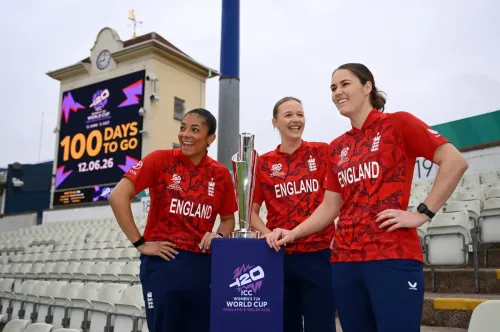
The tournament runs from 12 June to 5 July 2026 across seven venues in six cities in England and Wales.
The Bristol County Ground and the Utilita Bowl in Southampton have undergone significant infrastructure upgrades ahead of the 2026 ICC Women's T20 World Cup, tournament director Beth Barrett-Wild has said. The England and Wales Cricket Board (ECB)-hosted tournament runs from 12 June to 5 July 2026 across seven venues in six cities, with at least three grounds having embarked on major facility developments in preparation.
What Bristol and Southampton Have Built
The Bristol County Ground in Gloucestershire has completed a multi-million pound changing room refurbishment, with four world-class changing facilities installed at a cost of approximately £3 million. Barrett-Wild noted that the investment was directly triggered by the venue's selection as a World Cup host, which imposed minimum facility requirements. The four facilities are also designed to support double headers — a format that proved highly successful during The Hundred — with several double-header fixtures scheduled at Bristol during the tournament.
At the Hampshire Bowl (also known as the Utilita Bowl) on the south coast in Southampton, significant Players and Match Officials Area (PMOA) refurbishments have been completed. Barrett-Wild confirmed that considerable work has been carried out at the venue to bring it up to tournament standards.
Old Trafford Doubles Female Toilet Capacity
Lancashire has also invested in Old Trafford, where the number of female toilets has grown from 63 in 2025 to 114 for the Women's T20 World Cup. The county has additionally developed a secondary facility called Farrington, described by Barrett-Wild as 'almost their second venue.' She said the development, while not directly linked to the World Cup, reflects the broader growth of the women's game and the recognition that a world-class second facility is now necessary to accommodate both men's and women's cricket.
Logistics and Global Disruptions Managed
Beyond venue infrastructure, organisers navigated a complex set of logistical challenges arising from the West Asia crisis, including disruptions to global shipping timelines for kit and equipment. Barrett-Wild confirmed that the ECB and the ICC maintained a joint risk register and ran parallel contingency planning throughout the build-up. All 12 competing nations arrived without major incident, aided in part by preparatory series held in Scotland, Ireland, and England that encouraged teams to travel early.
'We had been alert to it from the outset. We've worked very closely with the ICC on this and we've had various contingency plans in place around things like the shipping timelines for kit and equipment,' Barrett-Wild said. She added that coordination with the UK government also covered potential fuel shortage scenarios and broader security arrangements, with a safety and security overlay described as equivalent to that deployed at men's global events.
Online Abuse Monitoring in Place
On the growing issue of online abuse directed at women cricketers, Barrett-Wild confirmed that dedicated monitoring software is operational for England women's players. The ICC is running a parallel AI-driven programme called GoBubble at the tournament level — the same system used during the 2024 ICC Women's T20 World Cup, when it monitored approximately 1.5 million toxic comments across social media platforms.
The issue has gained renewed attention after India lower-order batter Bharti Fulmali received online hate and trolling targeting her appearance. Barrett-Wild acknowledged the problem is worsening in some respects and called it something 'everybody is aware of and needs to be addressed.' She noted that the monitoring company involved is now used by several major women's team sports globally.
With all teams on the ground and venues ready, the 2026 ICC Women's T20 World Cup is set to be the most infrastructure-intensive women's cricket tournament England has hosted, and a potential benchmark for future global events.
Point of View
Women's cricket facilities at venues like Bristol were an afterthought; the World Cup mandate is doing what voluntary goodwill did not. The GoBubble deployment and the Bharti Fulmali episode, meanwhile, are a reminder that off-field protection remains as underfunded and reactive as the dressing rooms once were. The question for the ECB and ICC is whether these facility standards become the floor for all future women's fixtures, or revert once the cameras leave.
NationPress
25 Sept 2026
Frequently Asked Questions
Which venues have been refurbished for the 2026 ICC Women's T20 World Cup?
At least three venues have undergone major upgrades: Bristol County Ground completed a £3 million, four-facility changing room refurbishment; the Utilita Bowl in Southampton carried out significant PMOA refurbishments; and Old Trafford in Manchester more than doubled its female toilet capacity from 63 to 114.
When and where is the 2026 ICC Women's T20 World Cup being held?
The 2026 ICC Women's T20 World Cup runs from 12 June to 5 July 2026 in England and Wales, across seven venues in six cities. The ECB is the Local Organising Committee host.
What is GoBubble and why is it being used at the Women's T20 World Cup?
GoBubble is an AI-driven social media monitoring programme used by the ICC to detect and flag toxic comments directed at players and teams. During the 2024 Women's T20 World Cup, it monitored approximately 1.5 million harmful comments. It is being deployed again in 2026 alongside separate monitoring software used for England women's players.
How did organisers handle disruptions caused by the West Asia crisis?
The ECB and ICC maintained a joint risk register and ran contingency planning sessions throughout the build-up, covering shipping delays for kit and equipment, global travel disruptions, and potential fuel shortages. All 12 competing nations arrived without major incident.
Why is the Bristol County Ground refurbishment significant for women's cricket?
The £3 million upgrade at Bristol, which includes four world-class changing facilities, was directly triggered by the venue's selection as a Women's T20 World Cup host. Tournament director Beth Barrett-Wild said it represents the kind of capital investment that hosting a global event makes possible, and sets a new standard for women's cricket infrastructure at county grounds.