2026 Women's T20 World Cup: Barrett-Wild on sustaining momentum beyond the final

Synopsis
Nine years after the 2017 Women's ODI World Cup final at Lord's created a surge of interest that had nowhere to go, the ECB has built a near-seamless post-tournament calendar — a historic women's Test, domestic T20 finals, and The Hundred — to ensure 2026's momentum doesn't evaporate on 5 July. The blueprint is as much about supply-chain thinking as it is about sport.
Key Takeaways
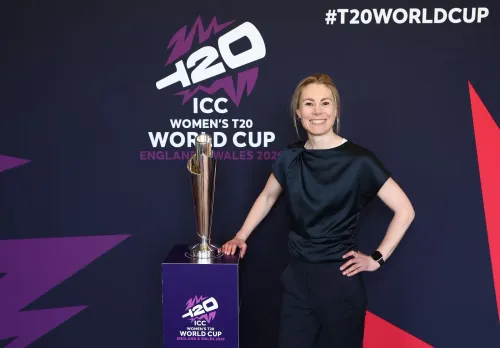
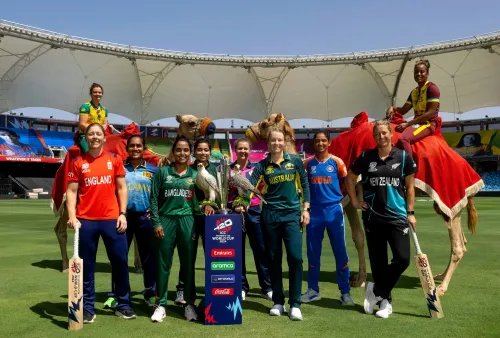
Beth Barrett-Wild , tournament director of the 2026 ICC Women's T20 World Cup , outlined a blueprint to sustain women's cricket momentum beyond the Lord's final on 5 July .
The key lesson from the 2017 Women's ODI World Cup : England had no follow-on fixtures after the sold-out final, leaving newly converted fans with nowhere to go.
The ECB has sequenced a post-final calendar: first-ever women's Test at Lord's ( 10 July ), Vitality Blast finals at Kia Oval ( 17 July ), and then The Hundred .
England has grown from 15 professional female cricketers in 2017 to over 150 today, backed by nine fully professional domestic teams .
A grassroots target of 500,000 women and girls picking up bats and balls this summer through 'Spirit parties' and open days across England and Wales.
The 2027 Women's Ashes is already embedded in the ECB's long-term momentum plan.
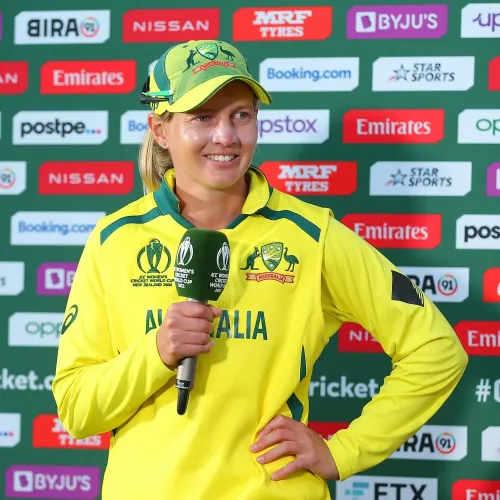
Beth Barrett-Wild, tournament director of the 2026 ICC Women's T20 World Cup, has outlined a detailed blueprint to ensure the momentum generated by the tournament does not fade the moment the final whistle blows at Lord's on 5 July. Speaking ahead of the tournament's opening, she drew directly on lessons from the 2017 Women's ODI World Cup — a watershed moment for women's cricket in England — to explain why supply must follow demand.
The 2017 Lesson: A Spark Without a Follow-Through
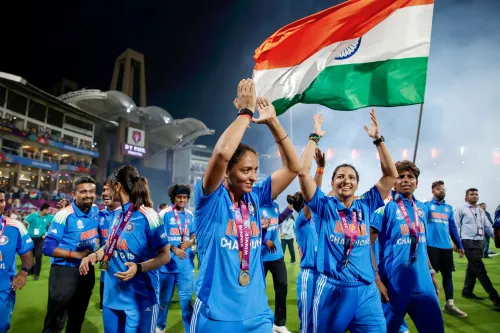
The 2017 Women's ODI World Cup final — a sold-out England v India clash at Lord's — is widely credited as the moment women's cricket broke through at scale on a national level in England. Barrett-Wild, who worked on that tournament as a strategic planning manager, described it as the first time a traditionally male-dominated sport like cricket genuinely captured the national imagination.
'That sold-out final really just demonstrated that if you build an opportunity for the women's game to shine and you market it properly, there is an audience there that wants to watch it,' she said.
However, she acknowledged a critical gap that followed. 'England women didn't actually play another fixture that summer. We had that big groundswell of love for the England women's team and all of that attention — then we didn't have anywhere to signpost those fans into going to watch,' Barrett-Wild explained. That absence of a follow-on pathway for newly converted fans became the defining lesson she carried into planning for 2026.
A Near-Seamless Post-Final Calendar
This time, the England and Wales Cricket Board (ECB) has engineered a carefully sequenced calendar to keep fans engaged well beyond the tournament's conclusion. Just five days after the T20 World Cup final on 5 July, the first-ever women's Test match at Lord's — England versus India — begins on 10 July. That is followed by the Vitality Blast women's T20 finals day at the Kia Oval on 17 July, and then The Hundred.
'Straight away, fans will have the opportunity to watch England women or India women in action. Then we've got our domestic women's T20 finals day — the Vitality Blast — on the 17th of July at the Kia Oval, which is no coincidence, as it's really carefully identified as an opportunity to signpost people in,' Barrett-Wild said. She described The Hundred as 'probably one of the big shifts' since 2017, with World Cup players expected to feature prominently in the competition, sustaining fan connection with familiar faces.
Quality of the Tournament and the Open Playing Field
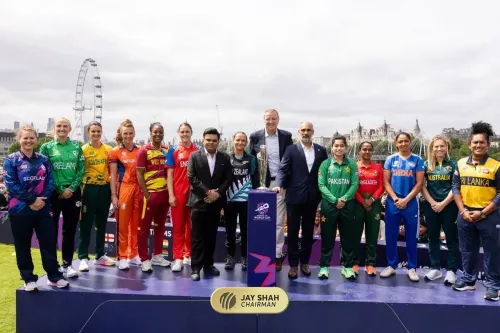
Barrett-Wild expressed confidence that the competitive quality of the 2026 Women's T20 World Cup would itself act as a bridge to domestic cricket. 'The quality of this Women's T20 World Cup is going to be stronger, better and deeper than we've ever seen. It really is quite an open playing field across those 12 nations,' she said.
She noted that players from finalists — whether from England, South Africa, India, Australia, or the West Indies — would in all likelihood move on to play in The Hundred, ensuring continuity of engagement. 'Once you've created that demand, you're really optimising it with supply afterwards,' she added — a phrase that encapsulates the ECB's entire strategy for the summer.
Women's Sport Tailwind and Grassroots Ambitions
Barrett-Wild also pointed to a broader wave of women's sport success in England as a favourable backdrop — the Lionesses winning the UEFA Women's Euros at Wembley in 2022, and the Red Roses claiming the Women's Rugby World Cup on home soil at Twickenham in 2025. 'This Women's T20 World Cup really couldn't have come at a better time,' she said.
On the grassroots front, the tournament has set an ambition to get 500,000 women and girls picking up bats and balls this summer through what the ECB is calling 'Spirit parties' — club open days, taster sessions, and community events across England and Wales. Recreational clubs have been provided with resources including bunting, posters, and decorations to encourage communities to engage with the World Cup even if they cannot attend in person.
Infrastructure Built for the Moment
Barrett-Wild highlighted how dramatically the professional women's cricket structure in England has grown since 2017. At the time of that tournament, England had just 15 professional female cricketers — effectively the national squad alone. Today, the country has over 150 female professional cricketers, supported by nine fully professional women's domestic teams and nine semi-professional teams beneath them.
'We've got the depth of infrastructure now for women's cricket in the elite pathway that is very, very strong. If we have a generation of young girls falling in love with women's cricket through this tournament, we've got an infrastructure ready with open arms to capture them,' she said. Looking further ahead, Barrett-Wild confirmed that the 2027 Women's Ashes is already part of the ECB's long-term momentum plan, ensuring that the cadence built in 2026 carries into the following summer.
Point of View
But the ECB's sequenced calendar only works if the domestic product — The Hundred, the Vitality Blast — delivers quality that matches World Cup expectations. The jump from an India-England World Cup final to a county-level T20 finals day is a significant drop in spectacle, and fan retention is never guaranteed by scheduling alone. The growth from 15 to over 150 professional female cricketers is the more structurally significant number in this interview, and it deserves more scrutiny: are those contracts genuinely full-time, liveable-wage arrangements, or are the numbers flattering a more fragile reality? The 2027 Ashes plan is smart long-termism, but the real test of 2026's legacy will be whether grassroots participation numbers — the 500,000 target — translate into sustained club membership, not just a summer spike.
NationPress
22 Sept 2026
Frequently Asked Questions
What is the 2026 ICC Women's T20 World Cup and when is the final?
The 2026 ICC Women's T20 World Cup is a 12-nation women's cricket tournament hosted in England. The final is scheduled for 5 July 2026 at Lord's Cricket Ground in London.
What lesson did the ECB take from the 2017 Women's ODI World Cup?
The key lesson was that England had no follow-on fixtures after the sold-out 2017 final at Lord's, leaving newly converted fans with no pathway to continue watching women's cricket. Tournament director Beth Barrett-Wild used this gap to build a carefully sequenced post-tournament calendar for 2026.
What cricket events follow the 2026 Women's T20 World Cup final?
Just five days after the final, the first-ever women's Test match at Lord's — England versus India — begins on 10 July. That is followed by the Vitality Blast women's T20 finals day at the Kia Oval on 17 July, and then The Hundred competition.
How has women's professional cricket in England grown since 2017?
England had just 15 professional female cricketers at the time of the 2017 Women's ODI World Cup. That number has grown to over 150, supported by nine fully professional women's domestic teams and nine semi-professional teams.
What is the ECB's grassroots target for the 2026 Women's T20 World Cup?
The ECB aims to get 500,000 women and girls picking up bats and balls during the summer of 2026, using the World Cup as a platform through 'Spirit parties', open days, and taster sessions at recreational clubs across England and Wales.