Cricket Australia defends sandpaper gate findings after Khawaja's bombshell claims
Synopsis
Eight years after sandpaper gate shook world cricket, Usman Khawaja's forthcoming memoir 'Sabr' has detonated a fresh crisis: he claims the entire Australian squad — not just Smith, Warner, and Bancroft — knew about the ball-tampering. Cricket Australia has dug in, saying it is comfortable with its original findings. If Khawaja's account is documented, the three-player narrative that defined one of cricket's biggest scandals could unravel entirely.
Key Takeaways
Usman Khawaja claims the entire 2018 Australian squad was aware of ball-tampering in the Cape Town Test and that sandpaper was also used in the preceding Test .
Cricket Australia responded on 7 November 2026 , saying all information had been 'properly considered' and it remains 'comfortable' with its integrity findings.
Khawaja will detail the incident in his upcoming memoir 'Sabr' , extracts of which were quoted by the Sydney Morning Herald .
Previously, only Steve Smith (1-year ban + 2-year captaincy ban), David Warner (1-year ban + lifetime leadership ban, overturned in 2024 ), and Cameron Bancroft (9-month ban) were sanctioned.
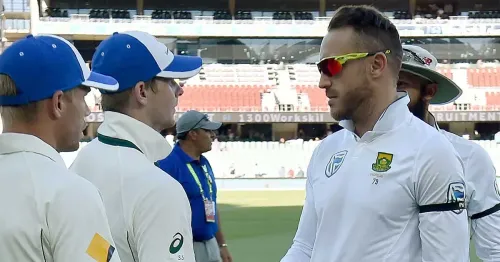
Khawaja also alleged South Africa was 'far better' at working the ball through unconventional methods, echoing admissions by former SA captain Faf du Plessis .
Cricket Australia (CA) on 7 November 2026 responded to explosive claims made by former opener Usman Khawaja, who alleged that the entire Australian squad was aware of the ball-tampering incident during the 2018 Cape Town Test against South Africa — a scandal that upended Australian cricket. CA stated that all information presented to it had been 'properly considered' and that it remains 'comfortable' with the findings of its integrity process.
What Khawaja Claimed
Khawaja is set to detail the incident in his upcoming memoir 'Sabr', in which he reportedly asserts that sandpaper was used not only in the Cape Town Test but also in the preceding Test match. More strikingly, he claims knowledge of the scheme extended across the entire playing group — far beyond the three individuals who were sanctioned. 'It was all of us. Not the batters, not the bowlers, not the staff. All of us,' Khawaja said, as quoted by the Sydney Morning Herald ahead of the book's release.
He also revealed a reluctance to come forward, saying, 'In an ideal world, I don't want to do this. I don't want to be the one who comes out and talks about the truth. The issue is that I genuinely thought after eight years the truth would have been out by now.'
Cricket Australia's Official Response
CA's statement acknowledged the sustained public interest surrounding the incident. 'There has been a great deal of speculation in the eight years since the 2018 Cape Town Test, including extensive media coverage throughout last month's series in South Africa,' the governing body said. It added that there had been 'the ongoing opportunity to present any relevant information' and that this 'remains the case.' CA did not announce any plans to reopen the investigation.
What We Knew Before — and What Has Changed
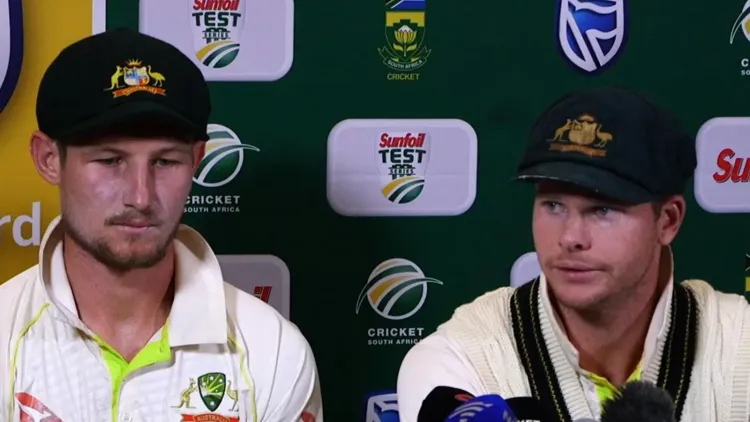
Until now, public understanding held that then-captain Steve Smith, vice-captain David Warner, and batter Cameron Bancroft were the principal figures in the incident — with Bancroft caught on camera applying the object to the ball. Smith and Warner were handed one-year bans from international and domestic cricket, while Bancroft received a nine-month ban. Smith was additionally barred from captaining Australia for two years, and Warner was handed a lifetime leadership ban — a sanction that was overturned in 2024.
Khawaja's account, if corroborated, would suggest that the sanctions were applied to a small subset of a broader collective operation — a claim that could reignite calls for a fuller inquiry.
The South Africa Angle
Khawaja also alleged that the South African team was 'far better' at working the ball through unconventional means, and that Australia was 'trying to keep up with them.' This comes amid notable context: then-South Africa captain Faf du Plessis had himself been sanctioned twice for ball tampering and has stated on multiple occasions that his side was also attempting to manipulate reverse swing through unconventional methods.
What Happens Next
The full scope of Khawaja's disclosures will become clearer upon 'Sabr''s release. Cricket administrators, players' associations, and anti-corruption officials will likely face renewed pressure to respond to the specific details laid out in the memoir. Whether CA's current stance holds will depend on how much new, documented evidence the book contains beyond Khawaja's personal testimony.
Point of View
CA's current position could become untenable. The selective punishment of three players was always a convenient narrative; the deeper question was whether a team culture that widespread could genuinely have been unknown to administrators at the time. That question has never been seriously tested in public, and Khawaja's disclosure suggests it still needs to be.
NationPress
7 Nov 2026
Frequently Asked Questions
What did Usman Khawaja claim about sandpaper gate?
Khawaja claimed that the entire Australian playing squad — not just Smith, Warner, and Bancroft — was aware of the ball-tampering scheme during the 2018 Cape Town Test. He also alleged that sandpaper was used in the Test match preceding Cape Town, widening the scope of the original scandal.
How did Cricket Australia respond to Khawaja's claims?
Cricket Australia said all information presented to it had been 'properly considered' and that it remains 'comfortable' with the findings of its integrity process. The governing body did not announce any plans to reopen or expand the investigation.
What punishments were handed out after sandpaper gate in 2018?
Steve Smith and David Warner each received one-year bans from international and domestic cricket. Cameron Bancroft was banned for nine months. Smith was also barred from captaining Australia for two years, and Warner received a lifetime leadership ban that was overturned in 2024.
What is Usman Khawaja's book 'Sabr' about?
'Sabr' is Khawaja's forthcoming memoir in which he details, among other things, his account of the 2018 ball-tampering incident. Extracts quoted ahead of its release suggest it will contain the most expansive first-hand account of the scandal yet published.
What did Khawaja say about South Africa's ball-tampering practices?
Khawaja alleged that South Africa was 'far better' at working the ball through unconventional means and that Australia was 'trying to keep up with them.' Former South Africa captain Faf du Plessis has himself acknowledged using unconventional methods and was sanctioned twice for ball tampering during his career.