Sandpaper gate: Khawaja says entire Australia team knew in Cape Town 2018
Synopsis
Eight years after sandpaper gate upended Australian cricket, Usman Khawaja is claiming it was never just three men — the whole team knew. His autobiography 'Sabr' alleges collective awareness and extends the tampering to a previous Test, raising pointed questions about whether Cricket Australia's 2018 investigation ever got the full picture.
Key Takeaways
Usman Khawaja alleges the entire Australian team was aware of ball-tampering during the Cape Town Test against South Africa in 2018 .
He claims the sandpaper was used in the preceding Test match as well, not only at Newlands .
Khawaja says he was never interviewed by Cricket Australia despite sitting next to Cameron Bancroft throughout the match.
Steve Smith and David Warner each received one-year bans ; Bancroft was banned for nine months ; Warner's lifetime leadership ban was overturned in 2024 .
The claims are set to appear in Khawaja's autobiography 'Sabr' , due for release on Tuesday .
In 2021 , Bancroft had implied bowler awareness; Cummins , Starc , Hazlewood , and Lyon denied it in a joint statement.
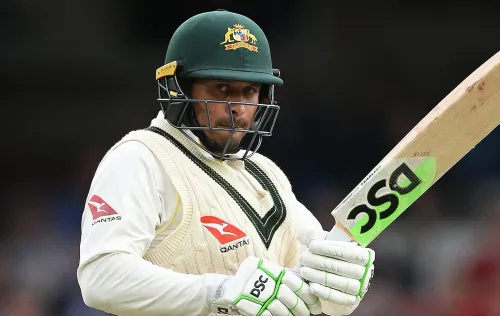
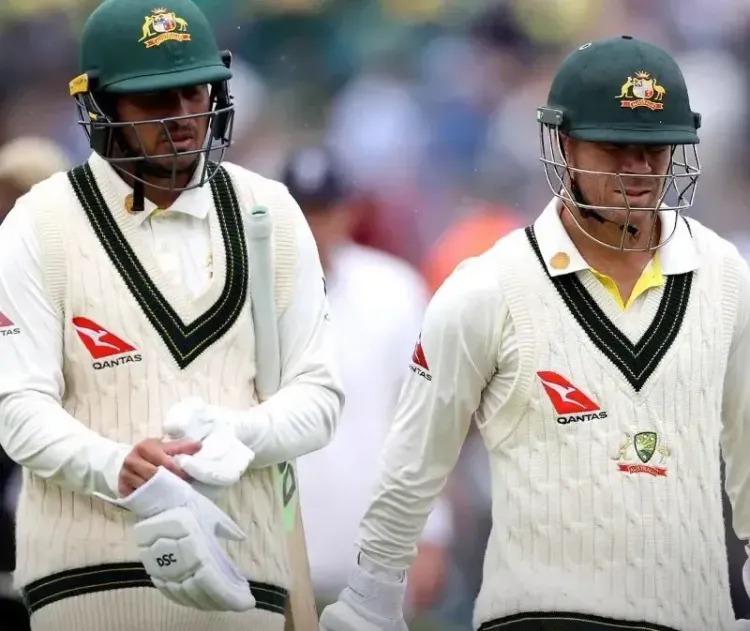
Former Australian batter Usman Khawaja has alleged that the entire Australian cricket team — not just the three players punished — was aware of the ball-tampering that took place during the Cape Town Test against South Africa in 2018. The explosive claim, set to be detailed in his forthcoming autobiography 'Sabr', shatters the long-held public narrative that only Steve Smith, David Warner, and Cameron Bancroft were in the know.
What Khawaja Has Claimed
'It was all of us. Not the batters, not the bowlers, not the staff. All of us,' Khawaja said, as quoted by the Sydney Morning Herald. He further revealed that the sandpaper was allegedly used not just in the Cape Town Test, but during the preceding Test match as well — a detail that significantly broadens the scope of the original scandal.
Khawaja said he had long expected someone else to come forward. 'In an ideal world, I don't want to do this. I don't want to be the one who comes out and talks about the truth. The issue is that I genuinely thought after eight years the truth would have been out by now,' he said.
The Original Sanctions and Who Bore the Fallout
When the incident came to light during the third Test at Newlands, Cape Town, in March 2018, the official findings pinned culpability on three individuals. Smith and Warner each received one-year bans from international and domestic cricket, while Bancroft was suspended for nine months. Smith was additionally barred from captaining Australia for two years, and Warner was handed a lifetime leadership ban — a sanction that was overturned only in 2024.
Khawaja expressed sympathy for all three, particularly Warner and Bancroft. 'I've seen Davey over the last eight years just get nailed bad over and over again, and it's taken a big man not to say anything and just to stay quiet,' he said. On Bancroft, he noted: 'He played a little bit of Test cricket after that, but then never came back in, even though he's been scoring a lot of runs. He's been a terrific cricketer for a long time, but I know it's something that hangs over his head.'
Khawaja's Role and the Investigation He Was Never Part Of
In one of the more striking revelations, Khawaja said he sat next to Cameron Bancroft throughout the Cape Town Test but was never called in for an interview by Cricket Australia during its investigation. 'I thoroughly feel that I didn't get interviewed because of that, because they knew that I wanted to take it as a team, because they knew I was ready to tell the truth if I was interviewed. And I was waiting for my phone to ring. It just never rang,' he said.
He recalled urging teammates in the dressing room to collectively own the incident. 'Even in the change rooms, when I was talking to them after the game. I said, take this as a team. We did this as a team. We knew what was going on, and we have to take it as a team, and so I was always of that stance,' he added.
The 2021 Bancroft Statement and Its Fallout
This is not the first time the original account has been questioned. In 2021, Bancroft stated it was 'self-explanatory' that the bowlers had awareness of what was happening in Cape Town. That prompted a joint denial from Pat Cummins, Mitchell Starc, Josh Hazlewood, and Nathan Lyon, who released a statement saying they had no knowledge of the ball-tampering. Khawaja's autobiography, reportedly more detailed than those earlier statements, threatens to reignite the debate with fresh specifics.
South Africa's Conduct and What Comes Next
Khawaja also claimed that the South African side was 'far better' at working the ball through similar means and that Australia was 'trying to keep up with them.' He said he would provide full details in the book. Notably, then South Africa captain Faf du Plessis had previously acknowledged that his team was attempting to generate reverse swing through unconventional methods and had himself been sanctioned twice for ball-tampering before that series.
With 'Sabr' set for release, Australian cricket faces fresh questions about the depth and integrity of its 2018 investigation — and whether the punishment was ever proportionate to the collective knowledge that may have existed in that dressing room.
Point of View
Cricket Australia's 2018 investigation was either incomplete or deliberately narrow — and three players spent years absorbing consequences for a collective act. The more uncomfortable question is institutional: an inquiry that did not interview a batter sitting next to Bancroft at the crease raises serious doubts about whether Cricket Australia wanted the full truth or a manageable one. Warner's lifetime leadership ban, now overturned, looks even more disproportionate in this light. Australian cricket has rebuilt its image around cultural reform since 2018; a credible account of collective knowledge does not invalidate that reform, but it does demand a reckoning with who actually carried the can.
NationPress
7 Nov 2026
Frequently Asked Questions
What did Usman Khawaja claim about sandpaper gate?
Khawaja claimed that the entire Australian team — not just Steve Smith, David Warner, and Cameron Bancroft — was aware that sandpaper was being used to tamper with the ball during the 2018 Cape Town Test against South Africa. He also alleged the tampering occurred in the preceding Test match as well.
What is Khawaja's book 'Sabr' and when does it come out?
'Sabr' is Usman Khawaja's autobiography, due for release on Tuesday. The book is expected to contain detailed accounts of the sandpaper gate incident, including Khawaja's first-hand perspective from inside the Australian dressing room.
What penalties were handed out after the 2018 Cape Town ball-tampering scandal?
Steve Smith and David Warner each received one-year bans from international and domestic cricket, while Cameron Bancroft was banned for nine months. Smith was also barred from captaining Australia for two years, and Warner was given a lifetime leadership ban that was later overturned in 2024.
Why was Khawaja never interviewed by Cricket Australia?
Khawaja claims he was not interviewed despite sitting next to Cameron Bancroft throughout the Cape Town Test. He said he believes Cricket Australia knew he would have told the truth and pushed for a collective team response, implying he was deliberately left out of the inquiry.
How does Khawaja's claim relate to what Bancroft said in 2021?
In 2021, Bancroft stated it was self-explanatory that the bowlers had some awareness of the Cape Town incident. This prompted a joint denial from Pat Cummins, Mitchell Starc, Josh Hazlewood, and Nathan Lyon. Khawaja's forthcoming account goes further, asserting collective knowledge extended across the entire squad.