India chemicals industry to hit $300 bn by 2030, $1 trillion by 2040
Synopsis
A government factsheet released on 7 November 2026 reveals India's chemicals and petrochemicals sector — already the world's sixth-largest — is on course to triple from $220 billion to $1 trillion by 2040. Backed by a new ₹3,030 crore chemical parks scheme and a ₹1 lakh crore R&D corpus, this is one of the most ambitious industrial scaling blueprints India has laid out in a generation.
Key Takeaways
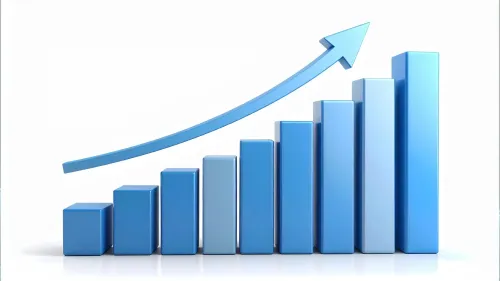
India's chemicals and petrochemicals sector is valued at $220 billion and projected to reach $300 billion by 2030 and $1 trillion by 2040 .
India is the sixth-largest chemical producer globally and fourth-largest in Asia ; second-largest dye exporter and third-largest agrochemical exporter.
FDI inflows in the sector reached ₹1,04,895 crore during 2014–2026 , more than doubling the previous decade's tally.
The BHAVYA Rasayan Scheme (approved July 2026 ) will establish 3 dedicated chemical parks with a total outlay of ₹3,030 crore over FY 2026–27 to FY 2030–31 .
The RDI Scheme , launched November 2025 , has a corpus of ₹1 lakh crore to catalyse private-sector research and innovation.
Chemicals and petrochemicals production rose from 45,638 thousand MT in 2015–16 to 58,617 thousand MT in 2024–25 .
India's chemicals and petrochemicals sector, currently valued at approximately $220 billion, is projected to reach $300 billion by 2030 and $1 trillion by 2040, according to a government factsheet released on Saturday, 7 November 2026. The figures underscore the sector's growing strategic weight as New Delhi pushes to deepen India's role in global chemical supply chains.
India's Global Standing in Chemicals
India is the sixth-largest producer of chemicals globally and the fourth-largest in Asia, with its output serving pharmaceuticals, textiles, construction, automobiles, electronics, and consumer goods. The country holds specialised leadership positions as the second-largest manufacturer and exporter of dyes and the third-largest exporter of agrochemicals worldwide.
Production of major chemicals and petrochemicals has climbed from 45,638 thousand metric tonnes (MT) in 2015–16 to 58,617 thousand MT in 2024–25 — a gain of roughly 28% over the decade. The sector supports approximately 13,000 large-scale units and 4.45 lakh micro, small, and medium enterprises (MSMEs).
FDI Inflows More Than Double
Foreign direct investment in the sector reached ₹1,04,895 crore during 2014–2026, more than double the ₹45,240 crore recorded in the preceding decade of 2004–2014, according to the factsheet. India permits 100% FDI through the automatic route for most chemical sub-sectors, meaning investors resident outside India do not require prior government approval.
This surge in investment coincides with global supply chain diversification away from concentrated manufacturing hubs, a trend that has benefited Indian exporters across speciality chemicals and intermediates.
BHAVYA Rasayan Scheme: Three Dedicated Chemical Parks
A centrepiece of the government's forward strategy is the Bharat Audyogik Vikas Yojana Rasayan (BHAVYA Rasayan) Scheme, approved in July 2026, which aims to establish three dedicated chemical parks across the country. Each park will cover a minimum of 8 square kilometres (2,000 acres).
The Centre will provide grants of up to ₹1,000 crore per park, contingent on a minimum state government contribution of ₹500 crore. The scheme carries a total financial outlay of ₹3,030 crore — of which ₹3,000 crore is earmarked for common infrastructure and basic utilities, and ₹30 crore for administrative expenditure. It will run for five years, from FY 2026–27 to FY 2030–31.
RDI Scheme and the ₹1 Lakh Crore Research Push
Complementing the infrastructure drive is the Research, Development and Innovation (RDI) Scheme, launched in November 2025, with a corpus of ₹1 lakh crore. The scheme is designed to catalyse private-sector investment in research and innovation by providing long-term financing and refinancing on favourable terms for transformative projects.
Its stated goals include accelerating advanced technology adoption, strengthening industrial competitiveness, and promoting self-reliance in critical and emerging technology areas — aligning the chemicals sector with the broader 'Atmanirbhar Bharat' agenda.
What Comes Next
With dedicated chemical parks, favourable FDI norms, and a large R&D corpus now in place, India's chemicals sector appears structurally positioned to absorb a larger share of global production. The pace at which BHAVYA Rasayan parks are operationalised and the uptake of RDI scheme financing by private players will be the key indicators to watch over the next two to three years.
Point of View
But three parks covering 6,000 acres combined is modest against China's chemical industrial zone footprint, which runs into tens of thousands of acres. The doubling of FDI inflows is real and significant, yet the sector's MSME backbone — 4.45 lakh units — remains chronically under-capitalised and dependent on credit access the RDI scheme is not explicitly designed to fix. The critical variable is whether the ₹1 lakh crore RDI corpus moves fast enough to build proprietary technology rather than simply replicate foreign processes at Indian cost. Without that, India risks staying a mid-value-chain assembler rather than becoming the speciality chemicals innovator the projections imply.
NationPress
7 Nov 2026
Frequently Asked Questions
What is the projected size of India's chemicals and petrochemicals industry by 2030 and 2040?
India's chemicals and petrochemicals sector, currently valued at around $220 billion, is projected to reach $300 billion by 2030 and $1 trillion by 2040, according to a government factsheet released on 7 November 2026. The sector is already the sixth-largest in the world by production volume.
What is the BHAVYA Rasayan Scheme?
The BHAVYA Rasayan Scheme, approved in July 2026, is a government initiative to establish three dedicated chemical parks, each covering at least 8 square kilometres. The Centre will provide grants of up to ₹1,000 crore per park, with a total financial outlay of ₹3,030 crore running from FY 2026–27 to FY 2030–31.
How much FDI has India's chemicals sector attracted since 2014?
FDI inflows into India's chemicals sector reached ₹1,04,895 crore during 2014–2026, more than double the ₹45,240 crore recorded during 2004–2014. India allows 100% FDI through the automatic route for most chemical sub-sectors, removing the need for prior government approval.
What is the RDI Scheme and how does it support the chemicals sector?
The Research, Development and Innovation (RDI) Scheme, launched in November 2025, has a corpus of ₹1 lakh crore designed to catalyse private-sector investment in research and innovation. It offers long-term financing and refinancing on favourable terms to accelerate technology adoption and strengthen industrial competitiveness.
Where does India rank globally in chemicals production and exports?
India is the sixth-largest producer of chemicals in the world and the fourth-largest in Asia. It is also the second-largest manufacturer and exporter of dyes and the third-largest exporter of agrochemicals globally, according to government data.