US markets log biggest weekly loss since April 2025 as AI fears grip Wall Street
Synopsis
A Democratic midterm sweep detonated one of Wall Street's worst weeks in over a year — not on traditional macro fears, but on a new threat: AI regulation. With $3 trillion wiped in a single session and Asian chipmakers tumbling double digits, the market is repricing the political risk embedded in the entire AI trade.
Key Takeaways
The S&P 500 fell 2.7% for the week ended 7 November 2025 — its steepest weekly loss since April 2025 .
The Nasdaq 100 ended down 4.91% for the week after Thursday's selloff, the index's worst single-session drop since the Covid-19 pandemic .
Thursday's rout erased roughly $3 trillion in S&P 500 market value in a single session.
A Democratic sweep in the US midterm elections stoked fears of tighter AI regulation and curbs on data-centre spending.
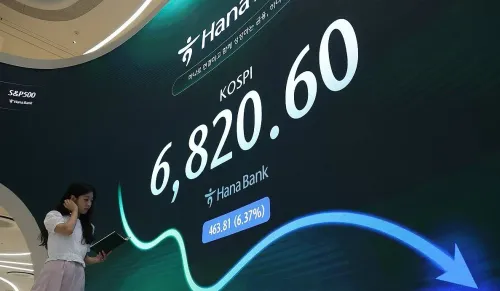
South Korea's KOSPI and Taiwan's benchmark index each fell over 8% ; Japan's Nikkei dropped around 6% .
Samsung Electronics lost nearly 10% and SK Hynix fell almost 12% amid the global chip rout.
US stock markets posted their steepest weekly decline since April 2025 as investor anxiety over artificial intelligence-related investments deepened in the wake of a Democratic sweep in the US midterm elections, raising fears of regulatory headwinds and policy shifts that could crimp the AI growth narrative.
Weekly Damage on Wall Street
The S&P 500 fell 2.7% for the week despite clawing back a modest 0.3% gain on Friday. The Nasdaq 100 recovered 1.35% in the final session but still ended the week 4.91% lower, weighed down by a historic one-day rout on Thursday that marked the index's worst single-session fall since the Covid-19 pandemic.
What Triggered the Selloff
Markets initially rallied following the midterm results, with technology megacaps leading gains. Sentiment reversed sharply by Thursday, however, as concerns mounted that the new political landscape could bring tighter oversight of data centres, curb AI infrastructure spending, and alter the regulatory environment for chipmakers and their supply chains, according to multiple reports.
The selloff was amplified as hedge funds, long-only managers, and quantitative firms moved to offload positions or capitalise on volatility. The CBOE Volatility Index posted its largest single-week spike since April 2025, signalling a broad flight to safety.
$3 Trillion Wiped in a Single Session
Thursday's plunge alone erased roughly $3 trillion in market value from S&P 500 constituents. The shockwave spread rapidly to Asian markets, where technology-heavy indices recorded some of their sharpest declines in recent years.
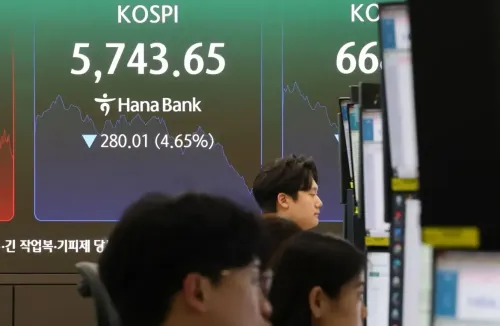
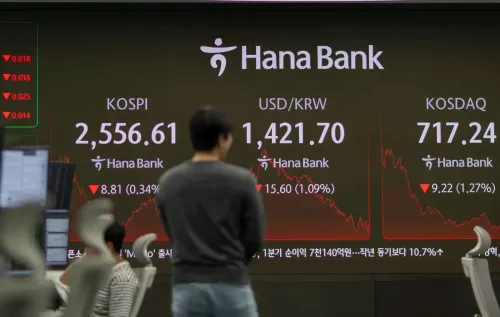
South Korea's KOSPI fell more than 8%, triggering a trading halt before recovering slightly after markets reopened. Japan's Nikkei dropped approximately 6%, while Taiwan's benchmark index also declined by over 8%.
Semiconductor Stocks Bear the Brunt
Major semiconductor and AI-linked companies led losses globally. Samsung Electronics declined nearly 10%, while memory-chip maker SK Hynix slid almost 12%. The carnage underscored how deeply the AI investment thesis has become embedded in global equity valuations — and how vulnerable those valuations are to a policy shock.
What This Means Going Forward
The episode highlights the fragility of the AI-driven rally that has underpinned global markets for much of the past two years. Notably, this is not the first time political catalysts have destabilised technology valuations, but the speed and breadth of this week's contagion — from Wall Street to Seoul, Tokyo, and Taipei — suggests the market's AI exposure is more concentrated, and more correlated, than many investors had priced in. All eyes will now be on policy signals from the incoming Democratic-majority Congress and any early regulatory pronouncements regarding AI infrastructure and data-centre development.
Point of View
Which tells you how stretched AI valuations had become relative to the political risk they were ignoring. The contagion to Seoul, Tokyo, and Taipei also exposes a structural vulnerability: the global semiconductor supply chain has become so tightly coupled to US AI demand narratives that a policy question in Washington is now a market emergency in East Asia. The bigger question markets have not yet priced is whether this is a one-week repricing or the beginning of a prolonged derating of the AI infrastructure trade.
NationPress
7 Nov 2026
Frequently Asked Questions
Why did US markets post their biggest weekly loss since April 2025?
US stocks declined sharply after a Democratic sweep in the midterm elections raised fears of stricter AI regulation and possible curbs on data-centre investment. The S&P 500 fell 2.7% for the week, with Thursday alone erasing roughly $3 trillion in market value.
How badly did the Nasdaq 100 fall this week?
The Nasdaq 100 ended the week down 4.91%, despite recovering 1.35% on Friday. Thursday's session was its worst single-day drop since the Covid-19 pandemic, driven by a sharp selloff in technology and AI-linked stocks.
Which Asian markets were hit hardest by the selloff?
South Korea's KOSPI fell more than 8% and triggered a trading halt; Taiwan's benchmark index also dropped over 8%; and Japan's Nikkei declined around 6%. Technology-heavy markets across the region recorded some of their steepest losses in recent years.
Which stocks led the losses globally?
Major semiconductor and AI-linked companies bore the brunt of the selloff. Samsung Electronics fell nearly 10% and SK Hynix slid almost 12%, reflecting how exposed the global chip sector is to shifts in US AI policy expectations.
What is the CBOE Volatility Index and why did it surge?
The CBOE Volatility Index, often called the 'fear gauge', measures expected market volatility. It posted its largest weekly increase since April 2025 as investors rushed to buy protection against further market declines following the midterm-driven selloff.