KOSPI plunges 5.28% as US midterm 'blue wave' stokes AI regulation fears
Synopsis
The 'blue wave' that swept through the US midterms sent shockwaves to Seoul — the KOSPI lost over 5 percent in a single session as investors fled semiconductor and AI-linked stocks. With Democrats set to control both chambers from January, the fear isn't abstract: tighter AI data-centre rules could crimp the very demand that has powered South Korea's chip giants.
Key Takeaways
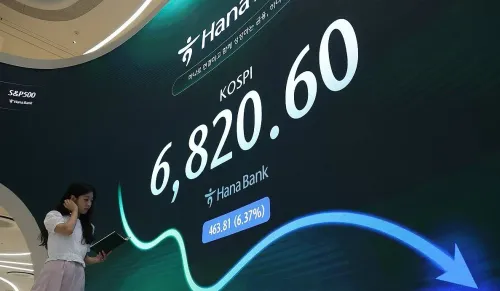
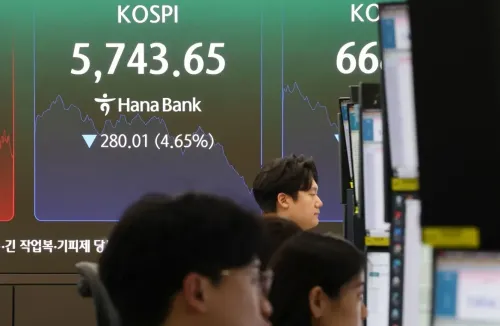
The KOSPI fell 300 points (5.28%) to close at 5,383.80 on 5 November 2026 — one of its steepest single-session declines.
The trigger was the Democratic Party's landslide US midterm victory , raising fears of tighter AI data-centre regulations .
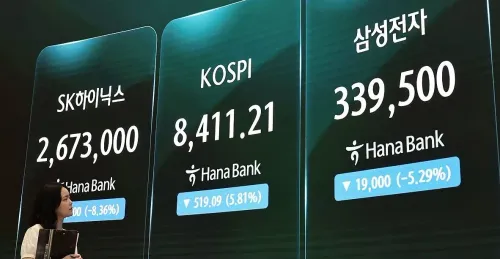
Samsung Electronics fell 7.57% ; SK Hynix plunged 9.46% ; Samsung Electro-Mechanics dived 15.34% .
Foreigners sold a net 3.39 trillion won worth of shares during the session.
Hyundai Motor (+3.53%) and Naver (+8.26%) bucked the trend, closing sharply higher.
The South Korean won slipped to 1,342.1 won per dollar; bond yields fell on safe-haven demand.
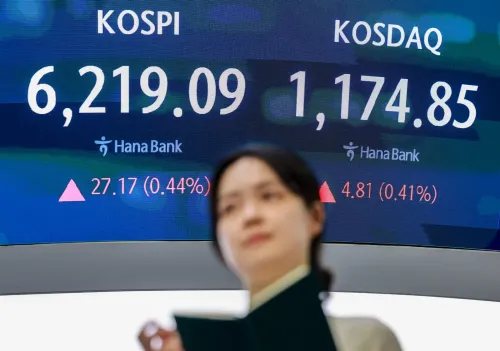
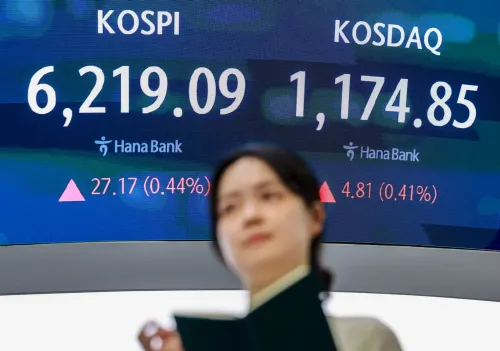
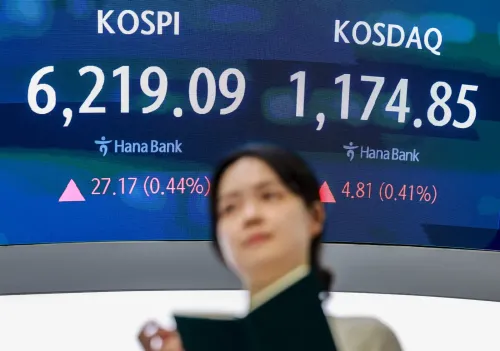
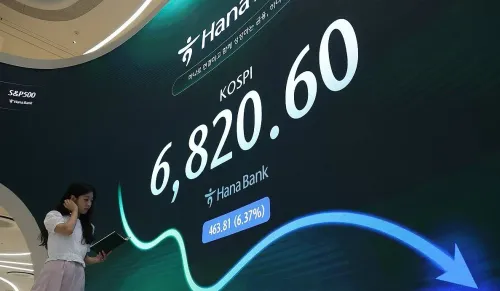
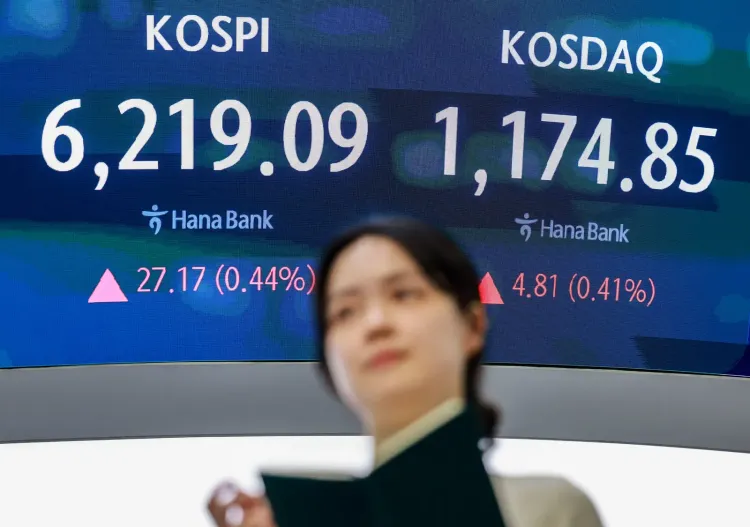
South Korea's benchmark Korea Composite Stock Price Index (KOSPI) crashed 300 points, or 5.28 percent, to close at 5,383.80 on Thursday, 5 November 2026, as the Democratic Party's landslide victory in the US midterm elections triggered sweeping concerns over tighter regulation of artificial intelligence investments. The South Korean won also weakened against the US dollar, compounding pressure on markets.
How the Sell-Off Unfolded
The KOSPI opened 1.82 percent lower before losses deepened through the morning session. The bourse operator activated a sell-side sidecar at 10:16 am, suspending programme trading for KOSPI-listed shares for five minutes to contain the rout. Trade volume remained light at 256.8 million shares worth 22.6 trillion won (approximately US$16.8 billion), with losers outnumbering winners 534 to 344.
Foreigners were net sellers of 3.39 trillion won worth of shares, while institutions and individual investors absorbed a net 841.8 billion won and 2.28 trillion won, respectively.
The 'Blue Wave' and AI Regulation Concerns
The Democrats' sweep of both chambers of Congress — widely labelled a 'blue wave' — raised fears that the incoming legislature, set to take control in January, could impose stricter rules on AI data centres and slow the pace of AI-related capital spending.
Kim Seok-hwan, an analyst at Mirae Asset Securities, explained the linkage directly: 'The 'blue wave' hit the KOSPI, dragging down shares within the semiconductor value chains and stoking a foreign sell-off. Democrats gained control of both chambers of Congress, raising concerns over tighter regulations on AI data centres and slower AI investments.'
South Korea's semiconductor sector, deeply embedded in global AI supply chains, bore the brunt of the selldown. Tech giant Samsung Electronics tumbled 7.57 percent to 201,500 won, while chipmaking rival SK Hynix plummeted 9.46 percent to 1.26 million won. Chip equipment maker Hanmi Semiconductor slumped 9.13 percent to 169,100 won, and Samsung Electro-Mechanics dived 15.34 percent to 944,000 won.
Defence and Energy Shares Also Retreat
Rising hopes for diplomatic solutions to conflicts in the Middle East and Eastern Europe added fresh pressure on defence and refinery counters. Leading oil refinery SK Innovation sank 7.68 percent to 114,200 won, and defence major Hanwha Aerospace retreated 7.48 percent to 680,000 won.
Bright Spots: Auto, Telecom, and Internet
Not all sectors closed in the red. Top carmaker Hyundai Motor rose 3.53 percent to 293,500 won and affiliate Kia gained 5.22 percent to 100,800 won, likely benefiting from expectations of renewed trade dialogue. Internet portal Naver jumped 8.26 percent to 184,900 won, and mobile carrier SK Telecom edged up 0.13 percent to 77,500 won.
Currency and Bond Markets
The South Korean won was quoted at 1,342.1 won per US dollar as of 3:30 pm, down 0.6 won from the previous session's close. Bond prices moved higher as yields fell: the three-year Treasury yield dropped 4.5 basis points to 3.669 percent, and the five-year government bond yield fell 6.8 basis points to 3.769 percent, signalling a flight to safety.
With US Congressional transition set for January, analysts say volatility in AI-linked equities — both in Seoul and globally — could persist until regulatory intentions become clearer.
Point of View
And that alone wiped over 5 percent off the benchmark. For Samsung and SK Hynix, whose premium valuations are built on AI-driven memory demand, a regulatory slowdown in US data-centre spending is an earnings story, not just a sentiment one. What mainstream coverage underplays is the asymmetry: auto and internet stocks rallied sharply on the same day, suggesting the market is not in panic mode but in a deliberate re-rating of AI exposure. The real question is whether the incoming Congress will follow through — or whether, as often happens, regulatory intent dissipates in legislative complexity.
NationPress
5 Nov 2026
Frequently Asked Questions
Why did the KOSPI crash on 5 November 2026?
The KOSPI fell 5.28 percent to 5,383.80 on 5 November 2026 after the Democratic Party's landslide US midterm victory — the so-called 'blue wave' — raised concerns that the new Congress could impose stricter regulations on AI data centres and slow AI-related investment. South Korea's market is heavily exposed to global AI supply chains through its semiconductor sector.
Which South Korean stocks were worst affected?
Samsung Electro-Mechanics was the hardest hit, diving 15.34 percent to 944,000 won. SK Hynix fell 9.46 percent, Hanmi Semiconductor dropped 9.13 percent, and Samsung Electronics shed 7.57 percent, reflecting the concentrated blow to semiconductor and chip-equipment companies.
How much did foreign investors sell during the session?
Foreign investors sold a net 3.39 trillion won worth of shares on Thursday. Institutions and individual investors partially offset the outflow, buying a net 841.8 billion won and 2.28 trillion won respectively.
Were any sectors positive on the day?
Yes — Hyundai Motor rose 3.53 percent, Kia climbed 5.22 percent, and Naver jumped 8.26 percent. Rising hopes for diplomatic resolution of conflicts in the Middle East and Eastern Europe weighed on defence and energy stocks but appeared to lift consumer and internet names.
What happens next for South Korean markets?
Markets are likely to remain volatile until the new US Congress makes its regulatory intentions clearer, with control set to transfer in January. Analysts say semiconductor and AI-linked stocks remain most exposed, while any concrete signal on AI data-centre policy from Washington could trigger further sharp moves.