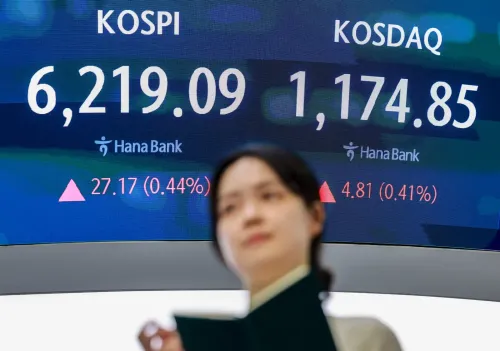
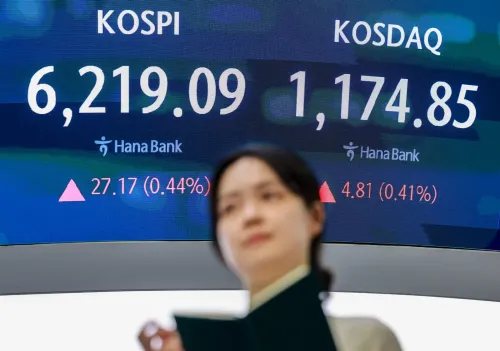
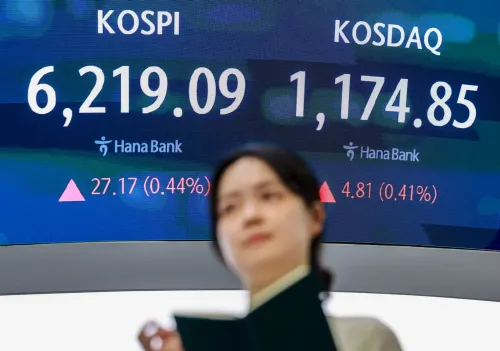
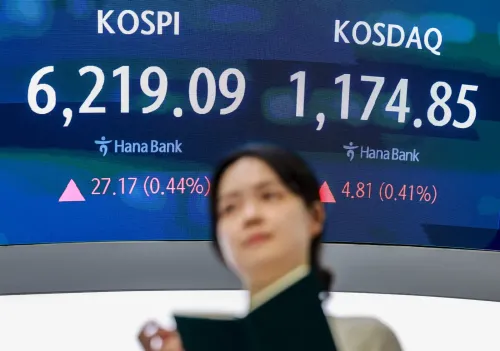
KOSPI crashes below 5,000 as AI data centre fears grip South Korea markets
Synopsis
South Korea's KOSPI lost more than 8% in a single session on 6 November, breaking below 5,000 for the first time in weeks after a Democrat sweep in U.S. midterms raised fears of slower AI data centre construction. With Samsung and SK hynix each down over 10% and the fear index at a three-month high, the Seoul market's vulnerability to U.S. AI policy is now fully exposed.
Key Takeaways
KOSPI fell more than 8 percent and broke below 5,000 points on 6 November , triggering a 20-minute trading halt .
Samsung Electronics and SK hynix — nearly half of the KOSPI's market cap — each plunged more than 10 percent in morning trading.
The sell-off was triggered by fears that a Democratic Party congressional majority could slow AI data centre construction in the U.S.
NASDAQ slumped more than 5 percent overnight after Democrats won the governorship of Texas , a key AI data centre state.
The VKOSPI fear index hit a three-month high of 64.74 , according to the Korea Exchange .
Finance Minister Lee Hyoung-il vowed government action to prevent 'excessive' market volatility.
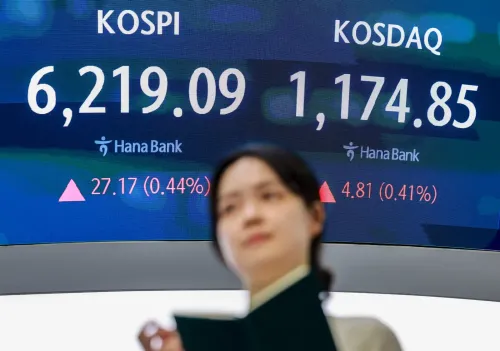
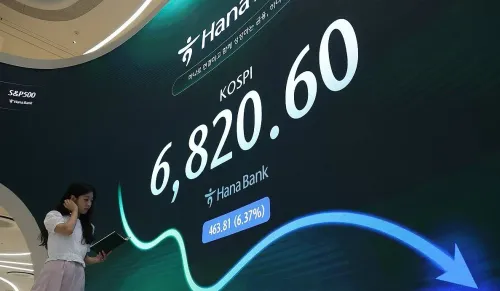
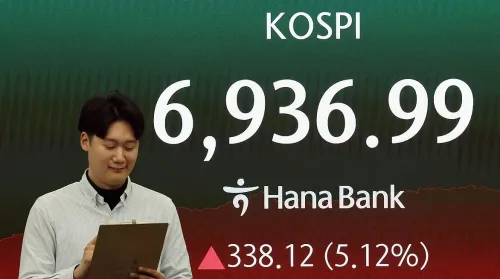
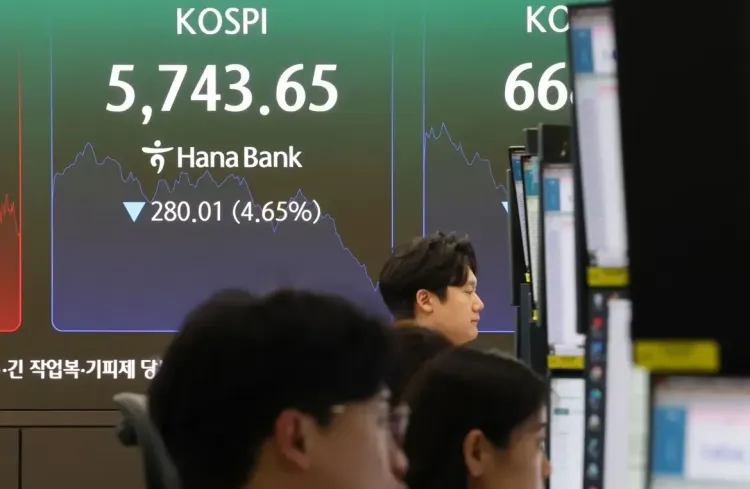
South Korea's benchmark Korea Composite Stock Price Index (KOSPI) sank below 5,000 points on Friday, 6 November, tumbling more than 8 percent in a sharp sell-off triggered by fears that a Democratic Party sweep in the U.S. midterm elections could slow the construction of artificial intelligence (AI) data centres. The scale of the decline was severe enough to trigger a 20-minute trading halt — the first such suspension in 16 trading sessions.
What Triggered the Crash
The immediate catalyst was a tech rout on Wall Street overnight, where the NASDAQ slumped more than 5 percent after the Democratic Party won gubernatorial control of Texas, a key U.S. state at the centre of AI data centre expansion plans. With Democrats also securing majorities in both the U.S. Senate and the House of Representatives, analysts widely expect the political leverage of U.S. President Donald Trump to diminish considerably in the final two years of his term. That shift in power raised immediate questions about the pace of federally-backed or policy-supported AI infrastructure buildout.
Samsung and SK Hynix Lead Losses
The hardest-hit stocks were Samsung Electronics and SK hynix, which together account for nearly half of the KOSPI's total market capitalisation. Both plunged more than 10 percent in morning trading on Friday, reflecting their deep exposure to AI-related memory chip demand. As global technology firms scale back or recalibrate data centre investments, Korean chipmakers face the most direct earnings risk. This is not the first time KOSPI has reacted sharply to U.S. political shifts, but the magnitude of Friday's move underscored how structurally dependent South Korea's market has become on the AI supply chain.
Fear Index Spikes, Analysts Split
South Korea's stock market fear gauge, the KOSPI 200 Volatility Index (VKOSPI), surged to a three-month high of 64.74 on Friday, according to the Korea Exchange. Analyst Han Ji-young of Kiwoom Securities said volatility in the local market is likely to persist following the sharp decline. However, Lee Kyung-min, an analyst at Daishin Securities, offered a more measured view, stating in a research note that while the Democratic win may prompt delays in AI data centre construction, 'the likelihood of full-scale suspension of such build-out was low.' Daishin Securities described the market's overall reaction as 'excessive.'
Government Response
Finance Minister Lee Hyoung-il convened an emergency meeting with relevant ministers on Friday, pledging swift government intervention. He said authorities 'will preemptively set up measures and take them to prevent our stock markets from excessively responding' to the U.S. tech sell-off. The minister also emphasised that South Korea's economic fundamentals remain solid, even as the government moves to closely monitor external uncertainties. This comes amid broader concern in Asian markets about how a Democrat-controlled U.S. Congress will approach big-tech regulation and AI infrastructure policy going forward.
What to Watch Next
Investors will closely track any policy signals from the new Democrat-majority Congress regarding AI data centre permitting and federal subsidies. Any slowdown in NVIDIA, Microsoft, or Google data centre spending plans would directly impact Korean chip demand. With the VKOSPI at a three-month high and trading circuit breakers already triggered once, further volatility cannot be ruled out until the new U.S. political landscape crystallises.
Point of View
Samsung and SK hynix bleed double digits — that is a dangerous single-thread dependency. Finance Minister Lee's pledge to 'preemptively' intervene is the right tone, but it cannot substitute for a diversification of the demand base for Korean chips. The Daishin Securities call that a full-scale AI construction freeze is 'unlikely' may prove correct, but markets are pricing uncertainty, and uncertainty has a cost of its own.
NationPress
6 Nov 2026
Frequently Asked Questions
Why did the KOSPI crash on 6 November 2026?
The KOSPI fell more than 8 percent and broke below 5,000 points on 6 November after the Democratic Party won majorities in both the U.S. Senate and House of Representatives, raising fears that a Democrat-controlled Congress could slow AI data centre construction in the United States. The sell-off followed a more than 5 percent overnight drop in the NASDAQ.
What is a KOSPI trading halt and why was it triggered?
A trading halt — also called a circuit breaker — temporarily suspends all trading on the KOSPI when the index falls sharply, giving markets time to stabilise. On 6 November, the 20-minute halt was triggered for the first time in 16 trading sessions as the index plunged more than 8 percent.
How much did Samsung Electronics and SK hynix fall?
Both Samsung Electronics and SK hynix plunged more than 10 percent in morning trading on 6 November. The two companies together account for nearly half of the KOSPI's total market capitalisation, amplifying the index's overall decline.
What did South Korea's finance minister say about the market crash?
Finance Minister Lee Hyoung-il convened an emergency ministerial meeting on 6 November and pledged that the government 'will preemptively set up measures and take them to prevent our stock markets from excessively responding' to the U.S. tech sell-off. He also said South Korea's economic fundamentals remain solid.
Will AI data centre construction in the U.S. actually slow down?
Analyst Lee Kyung-min of Daishin Securities said in a research note that while the Democratic Party's win may prompt delays in AI data centre construction, 'the likelihood of full-scale suspension of such build-out was low,' describing the market reaction as excessive. However, Kiwoom Securities analyst Han Ji-young cautioned that volatility in South Korean markets is likely to persist.