AI hedge fund Situational Awareness collapses, warning Chinese investors
Synopsis
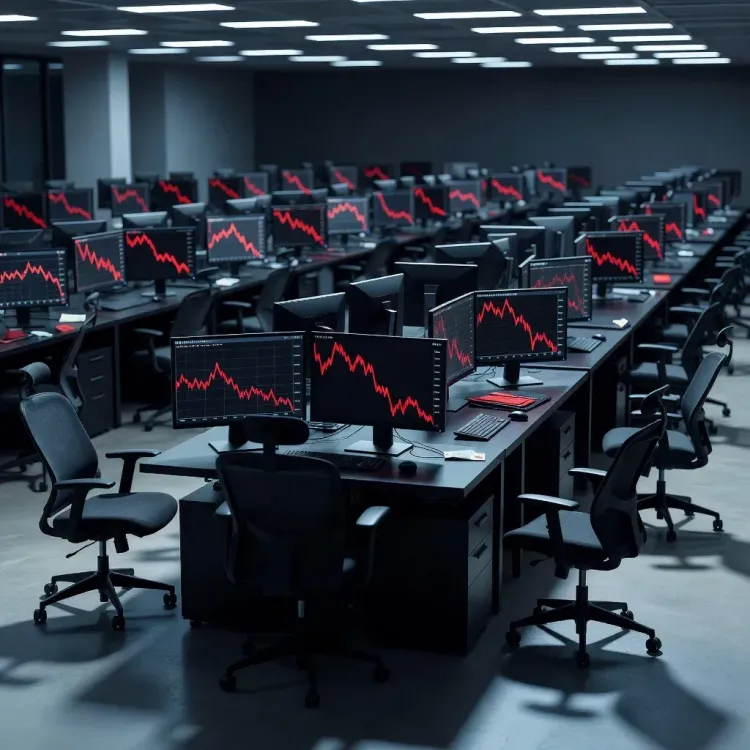
Situational Awareness, a 2024-founded AI-focused hedge fund, saw its portfolio crash 67% in July 2026 and was forced to dump billions in AI stocks to Citadel after margin calls — a cautionary tale that Shanghai analysts are urgently flagging for Chinese investors hooked on leveraged AI trades.
Key Takeaways
Situational Awareness , founded in 2024 , was forced to liquidate its entire stock portfolio to Citadel after failing to meet lender collateral demands.
The fund's portfolio fell 67 per cent in July 2026 alone, according to a letter sent to investors.
Key holdings included memory-chip makers SK Hynix and SanDisk , and AI cloud provider Nebius Group — all of which fell sharply.
SK Hynix , which listed on Nasdaq on 10 July 2026 , has dropped more than 10 per cent ; SanDisk and Nebius have each lost more than 30 per cent over the past month.
Shanghai -based analyst Harry Shen and market veteran Michael Zhang both warned Chinese investors against using leverage to chase AI -themed stocks.
Situational Awareness, a Wall Street hedge fund founded in 2024 that made concentrated bets on artificial intelligence stocks, has offloaded billions of dollars' worth of technology shares to Citadel at steep losses after failing to meet collateral demands from lenders — sending a sharp warning to Chinese retail and institutional investors chasing AI-themed trades with borrowed money.
The collapse, explained
The fund, which bet heavily on the AI supply chain, held significant positions in memory-chip makers SK Hynix and SanDisk, as well as AI cloud-computing provider Nebius Group. In July 2026 alone, Situational Awareness's portfolio value plummeted 67 per cent, according to a letter the firm sent to investors, as reported on Friday, 1 August 2026. Unable to meet margin calls from its bank lenders, the fund was forced to liquidate its entire stock portfolio to Citadel within days, suffering heavy losses.
Shares of SK Hynix, which listed on Nasdaq on 10 July, have fallen more than 10 per cent since its debut. SanDisk and Nebius Group have each slumped more than 30 per cent over the past month, amplifying the damage for any leveraged holder of those positions.
Why it matters for Chinese investors
The episode is resonating strongly in Shanghai and across mainland China, where retail enthusiasm for AI-linked equities has surged alongside global interest in the technology. Shanghai-based public-markets analyst Harry Shen issued a blunt caution: 'Don't use leverage! Don't use leverage! Don't use leverage!' Shanghai-based stock market veteran Michael Zhang echoed the sentiment: 'Don't trade with borrowed money. Don't blindly chase hot topics — because by the time you get in, it might be exactly when others are heading for the exit.'
The warnings reflect a broader anxiety: that the AI investment narrative, while structurally compelling, has attracted speculative capital that amplifies volatility and punishes latecomers disproportionately.
The competitive backdrop
Situational Awareness was positioned along the AI infrastructure stack — memory chips, cloud compute — sectors that have seen extreme price swings as investor sentiment oscillates between euphoria over AI adoption and concern over near-term earnings delivery. SK Hynix, a dominant supplier of high-bandwidth memory chips critical to AI training, was seen as a core holding for funds seeking direct hardware exposure. The rapid de-rating of these names underscores how quickly consensus trades can unwind when liquidity is withdrawn.
What's next
The forced liquidation by Situational Awareness is unlikely to be the last such event if volatility in AI-linked technology stocks persists. Analysts and market veterans are watching whether other leveraged funds with concentrated AI supply-chain positions face similar margin pressure. For Chinese investors — both retail participants and smaller funds — the episode serves as a live case study in the asymmetric risk of leverage in high-momentum, high-volatility sectors.
The durability of the AI investment cycle will ultimately depend on whether revenue from AI applications catches up with the capital already deployed in infrastructure — a question that markets will keep testing through the rest of 2026.
Point of View
Creating a gap that leveraged funds are uniquely ill-equipped to survive. For Chinese retail investors, the episode is particularly salient because domestic enthusiasm for AI-linked equities mirrors the same pattern of late-cycle momentum chasing that preceded earlier tech blow-ups. The real question is whether this is an isolated margin-call event or an early signal that the AI trade's most speculative layer is beginning to crack.
NationPress
15 Sept 2026
Frequently Asked Questions
What happened to the Situational Awareness hedge fund?
Situational Awareness , a Wall Street hedge fund founded in 2024 , was forced to sell its entire stock portfolio to Citadel at a steep loss after it could not meet collateral demands from its bank lenders. The fund's portfolio had dropped 67 per cent in July 2026 alone, driven by sharp declines in its core AI supply-chain holdings.
Which stocks did Situational Awareness hold?
The fund held significant positions in memory-chip makers SK Hynix and SanDisk , and AI cloud-computing provider Nebius Group . All three stocks experienced sharp declines, with SanDisk and Nebius each falling more than 30 per cent over the past month and SK Hynix dropping more than 10 per cent since its Nasdaq listing on 10 July 2026 .
Why does this matter for Chinese investors?
The collapse is being closely watched in mainland China because many retail investors have been using leverage to buy AI -themed stocks. Shanghai -based analysts including Harry Shen and Michael Zhang have issued urgent warnings that borrowed money amplifies losses catastrophically when high-momentum stocks reverse.
What is the risk of using leverage in AI stocks?
Leverage magnifies both gains and losses, and lenders can demand additional collateral — a margin call — when a portfolio's value falls sharply. If a fund cannot meet those demands, as was the case with Situational Awareness , it is forced to sell holdings at distressed prices, locking in losses. AI -linked stocks are particularly volatile, making leveraged positions especially dangerous.
Who bought the Situational Awareness portfolio?
Citadel , one of the world's largest hedge funds, purchased the liquidated portfolio from Situational Awareness on Thursday, 31 July 2026 . The sale was conducted at a steep discount as the fund rushed to meet its lenders' collateral requirements.