Did Canada's Lack of Game Time Cost Them Against UAE?
Synopsis
In a gripping T20 World Cup match, Canada fell short against the UAE, highlighting the impact of limited preparation and harsh winter conditions on their performance. With players expressing concerns over the lack of competitive cricket, can Canada bounce back in their quest for a win?
Key Takeaways
Canada's cricket team struggles with limited competitive play.
Harsh winter conditions hinder outdoor training and practice.
Players emphasized the need for better preparation and more matches.
Veteran Saad Bin Zafar remains a key performer.
The team aims to adjust strategies to improve future performances.
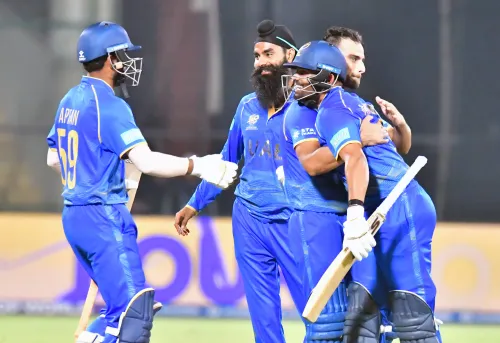
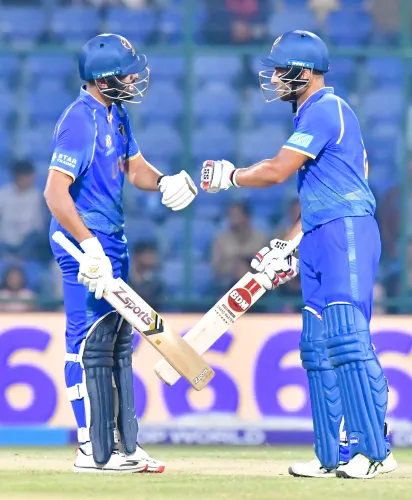
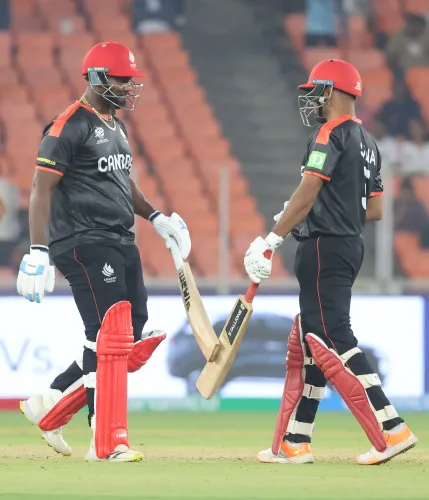
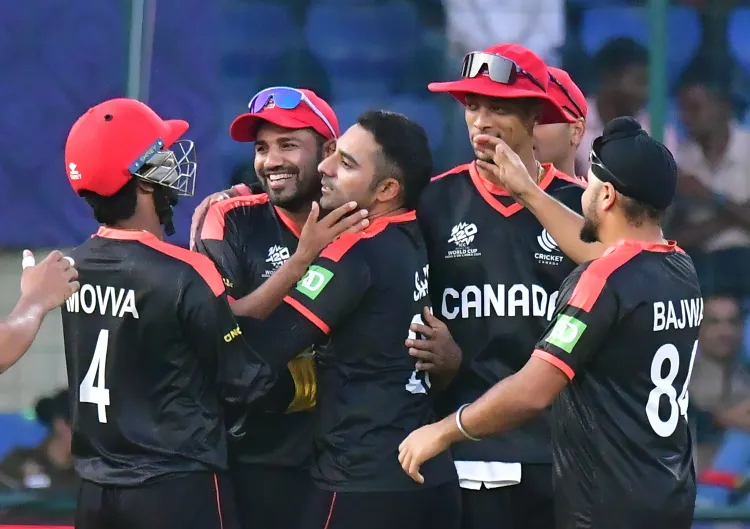
New Delhi, Feb 13 (NationPress) The absence of competitive cricket for Canada proved detrimental as they relinquished a commanding position, ultimately succumbing to the United Arab Emirates (UAE) by five wickets in their Men’s T20 World Cup Group D showdown at the Arun Jaitley Stadium on Friday. Players attributed their struggle to limited preparation and challenging winter conditions in their home country.
The North American squad had not participated in a T20I since June 2025 and faced a lack of competitive matches since September, just ahead of their second appearance at the T20 World Cup. They initially looked set for victory after restricting the UAE to 68-4 in the 13th over while defending a total of 150.
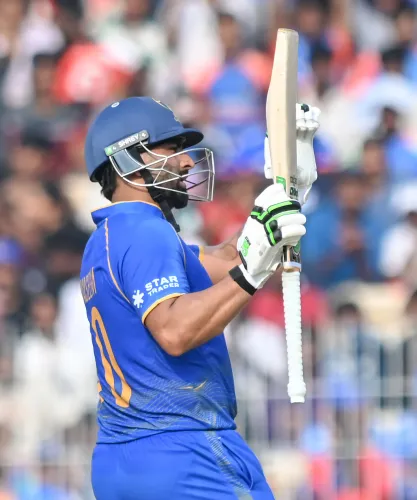
However, a counter-attacking performance from Sohaib Khan, scoring 51 off 29 balls, alongside an unbeaten 74 from Aryansh Sharma, allowed the UAE to finish their chase with two deliveries to spare, marking Canada’s second consecutive defeat.
"Unfortunately, we hadn’t played any T20 cricket since June of the previous year. We had three weeks in Sri Lanka before this, where we engaged in four or five practice matches. While the preparation in Sri Lanka was beneficial, it was a challenge to transition the boys from winter. We hope this groundwork will lead us to at least one victory before the tournament concludes," remarked Canada’s batting all-rounder Nicholas Kirton during the post-match press conference.
Fast bowler Dilon Heyliger, who conceded 17 runs in a pivotal 17th over as the UAE reversed the game’s momentum, stressed the difficulties of playing cricket in a country where harsh winters limit outdoor practice for most of the year.
"Certainly - living in Canada means dealing with minus 15-degree weather. We only have a three-month window each year to play cricket, with the rest spent training indoors. Before the World Cup, we spent a month in Sri Lanka. Weather conditions are definitely a factor for us," he stated.
"We must always travel to a climate conducive to training and acclimatizing to warmer conditions. While it poses challenges, we must adapt quickly because this is a significant event. I wouldn’t label it as an excuse; rather, it’s a slight disadvantage for us in Canada,” he added.
Despite Canada managing only 150/7, they briefly entertained hopes of victory when left-arm spinner Saad Bin Zafar took 3-14, reducing the UAE to 68/4.
However, Heyliger noted that his team deviated from their strategy during the critical death overs, permitting Khan to unleash a devastating assault, including 17 runs in the 17th over alone.
"Definitely – in my view, we had the game under control, but it slipped away a bit. I felt the slower ball could have been effective later, but things shifted. The hard lengths were working, yet they managed to capitalize on that," he explained.
Kirton recognized the UAE's superior execution, particularly praising Siddique's five-wicket haul, which stands as the best bowling figures by a player from an associate nation in the ongoing tournament.
"No, I don’t believe they were lucky. They performed admirably and did an excellent job in limiting us to 150. We were aiming for 160 or 180 but fell short by 10 runs. They played exceptionally well, especially Junaid, and those two batters performed very effectively, particularly Sohaib," he said.
Canada's preparation consisted merely of a month-long training camp in Sri Lanka and warm-up matches, having not played together under captain Dilpreet Bajwa’s leadership prior to the tournament.
Kirton pointed out broader systemic issues plaguing Canadian cricket, including inadequate facilities and the difficulty in maintaining team continuity during the six-month winter.
"Certainly, six months of winter is a hindrance. Our facilities are not ideal throughout the year. However, progress is underway - we’re obtaining various permissions from local authorities to secure more grounds during summer, as there’s an overload of cricket during the limited sunny months. We hope to find ways to keep the team cohesive over the winter, facilitating more tours outside Canada during that time to compensate, and ultimately maximizing our summer opportunities," he elaborated.
Kirton further acknowledged that the pressure of performing on cricket’s grandest stage impacted some players making their World Cup debuts.
"Clearly, on such a prominent platform, there’s added pressure. Some players, like Dilon, faced pressure after a rocky start. Unfortunately, we couldn’t clinch the win today. However, we aim to execute our plans better moving forward. Fingers crossed for one win in this tournament," he said.
Both Kirton and Heyliger commended veteran spinner Zafar, who captained Canada during the last T20 World Cup in 2024, for his consistent performances despite the team’s struggles.
"Saad has been with us for a while. He captained us at the last World Cup, and his influence remains significant. He’s incredibly effective and consistently performs well. He often emphasizes executing his strategy, even when batters make good shots. Today, he executed that effectively," Kirton remarked.
"I believe Saad has been an invaluable asset to us, serving Canada for an extended period. He has been my captain and is a great role model; he shares knowledge and is one of our seasoned players. We rely on him heavily and look up to him for his exemplary performance. Although we didn’t emerge victorious today, Saad consistently delivers solid performances," Heyliger concluded.
Point of View
It's essential to recognize the challenges faced by Canadian cricket, particularly the effects of limited competitive play and harsh winter conditions. While the performance in this match was disappointing, it reflects broader structural issues that need addressing for future success.
NationPress
24 Sept 2026
Frequently Asked Questions
What factors contributed to Canada's loss against UAE?
Canada's loss can be attributed to a lack of recent competitive play, limited preparation time, and harsh winter conditions affecting their performance.
How long has it been since Canada played a T20I?
Canada had not played a T20 International since June 2025, marking a significant gap in competitive exposure.
Who were the standout players in the match?
Sohaib Khan and Aryansh Sharma were key players for UAE, while Saad Bin Zafar excelled for Canada with 3-14.
What challenges does Canadian cricket face?
Canadian cricket faces challenges including limited facilities, a six-month winter, and the need for more competitive matches to maintain team cohesion.
What are Canada's hopes moving forward in the tournament?
Canada aims to improve their performance by executing their plans better and hopes to secure at least one win in the tournament.