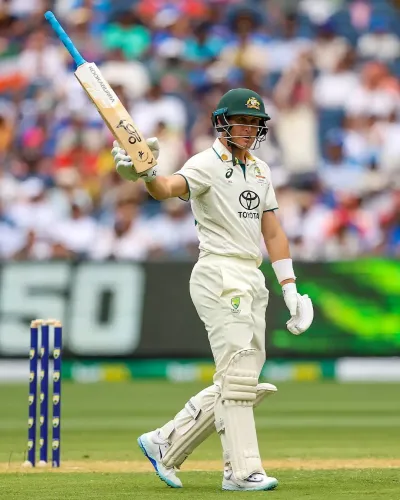
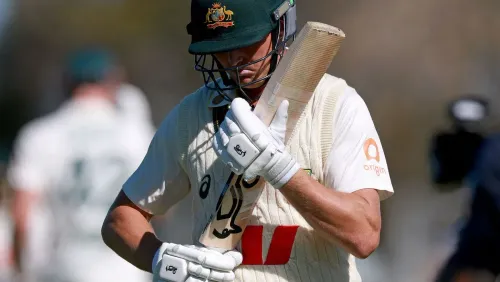
Labuschagne's slump is mental, Test break unavoidable: Greg Chappell
Synopsis
Greg Chappell isn't just calling Marnus Labuschagne out of form — he's diagnosing a psychological breakdown. With 26 Tests and 49 innings without a century, Chappell invokes a condition he calls Elite Players Decline Syndrome, name-drops Sachin Tendulkar, and says Sheffield Shield cricket won't fix this. His prescription: the beach first, then the nets.
Key Takeaways
Greg Chappell says Marnus Labuschagne 's slump is psychological, not technical, and a Test break is 'unavoidable'.
Labuschagne has gone 26 Tests and 49 innings without a century since the 2023 Ashes .
During this run, he has averaged just 24.31 , accumulating 1,094 runs with nine half-centuries .
He scored only 131 runs across six innings in Australia's 2-1 series loss in South Africa , with a top score of 39 .
Chappell prescribed 'a few days by the sea' before a return to first-class cricket, cautioning that returning straight to Sheffield Shield would not break the cycle.
He recommended Labuschagne revisit footage of his 215 against New Zealand at the SCG in January 2020 to rediscover his positive mindset.
Former Australia captain Greg Chappell has said that Marnus Labuschagne's prolonged loss of form in Test cricket is rooted in the mind rather than technique, and that a break from the format now appears unavoidable for the struggling right-hander. Chappell shared his diagnosis in a column published on Wednesday, 4 November 2026, offering a detailed psychological and technical breakdown of the Queensland batter's decline.
The Scale of the Slump
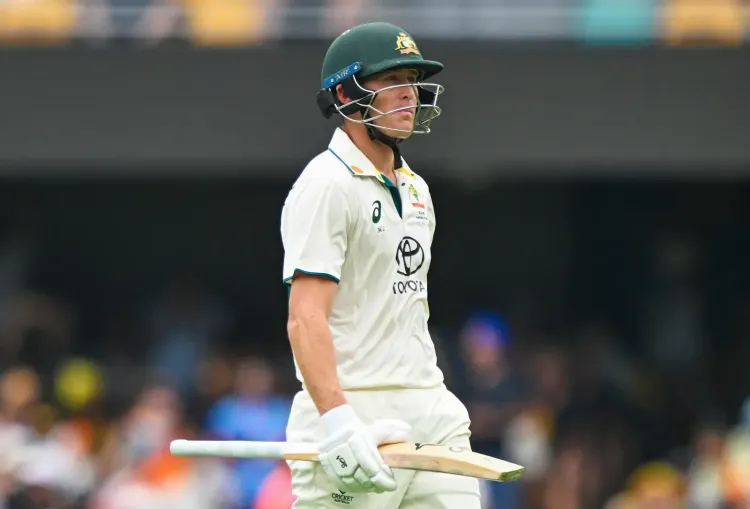
Labuschagne has not scored a Test century since the 2023 Ashes — a drought that now spans 26 Tests and 49 innings. During this extended barren run, he has accumulated just 1,094 runs at an average of 24.31, with nine half-centuries as his only notable contributions. His struggles were further laid bare during Australia's 2-1 series defeat in South Africa, where he managed a meagre 131 runs across six innings, with a top score of only 39.
Chappell's Diagnosis: Elite Player Decline Syndrome
Chappell attributed the malaise to what he terms Elite Players Decline Syndrome (EPDS) — a condition he argues affects almost every high-level batter who has sustained a long career at the top. 'The ancients understood that the mind rules the body, meaning any real battle against adversity is fought upstairs first. For Marnus Labuschagne, as he looks to find his best form again, any turnaround has to start in his head,' Chappell wrote.
He drew on a conversation with Sachin Tendulkar to illustrate the concept. 'Sachin Tendulkar asked me years ago why batting gets harder as you get older. Surely it must get easier! As I explained to Sachin, it gets harder because you know how difficult it is to make runs against quality bowling attacks, and you get more conservative as you age,' he explained. Chappell argued the only remedy is for a batter to consciously recreate the thought processes of their younger self — a task he conceded is easier said than done.
From 'Cat-Like' to 'Crab-Like': The Technical Symptoms
Chappell drew a vivid contrast between Labuschagne's current batting and his peak years. 'I remember watching Marnus in his pomp and seeing his feet move quickly, like John Travolta's on the dance floor. He was obviously watching the ball closely out of the bowler's hand, picking up clues from the bowler's body language, and pouncing on deliveries like a seagull on food scraps,' he recalled.
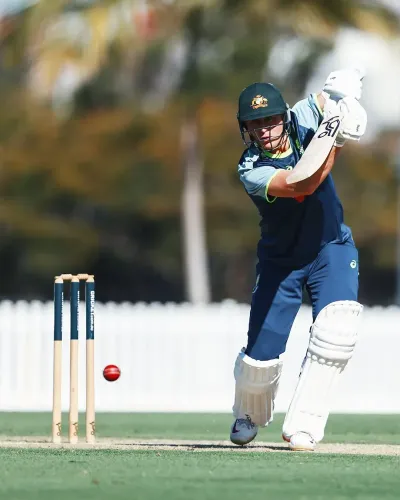
That dynamism has visibly faded. 'To watch him now, he is crab-like at the crease and rarely makes contact with the ball in front of the popping crease. Where he once got to the ball a metre in front of the crease with a full, flowing bat, he is now prodding around, searching for the ball with his hands,' Chappell observed. He added that Labuschagne being consistently late into the hitting area pointed directly to negative thoughts preventing him from picking up the ball out of the bowler's hand — a problem the conscious mind cannot solve mid-match.
Chappell's Prescription: Sea, Solitude, and Self-Tape
Chappell was explicit that a return to Sheffield Shield cricket alone would be insufficient as a circuit breaker. 'Marnus needs a circuit breaker, and Sheffield Shield cricket alone won't provide one. A few days by the sea to clear his head and only then a return to first-class cricket. If he goes straight back into action, I fear the cycle will continue,' he wrote.
He also recommended that Labuschagne revisit footage of his 215 against New Zealand at the SCG in January 2020 — a knock he described as capturing Labuschagne's athletic stance, positive attitude, and decisive footwork at their best. 'If he can recapture that mindset, he will go a long way toward turning his form around,' Chappell concluded. The comments add authoritative weight to growing calls within Australian cricket circles for the selectors to manage Labuschagne's workload carefully ahead of a busy home summer.
Point of View
And a beach break, while well-intentioned advice, sidesteps questions about whether his current batting blueprint is still fit for purpose against high-quality seam attacks. Australia's selection panel will face a genuine dilemma if the home summer arrives and the numbers have not improved.
NationPress
4 Nov 2026
Frequently Asked Questions
How long has Marnus Labuschagne gone without a Test century?
Labuschagne has not scored a Test century since the 2023 Ashes, a drought covering 26 Tests and 49 innings. During this period he has averaged just 24.31, scoring 1,094 runs with nine half-centuries.
What is Elite Players Decline Syndrome (EPDS) as described by Greg Chappell?
EPDS is a term coined by Chappell to describe the psychological deterioration that affects experienced elite batters who become increasingly aware of how difficult scoring runs at the highest level is. As a batter ages, Chappell argues, the conscious mind overrides the subconscious instincts that drove peak performance, leading to hesitancy and conservatism at the crease.
What did Greg Chappell recommend for Labuschagne to recover his form?
Chappell recommended Labuschagne take 'a few days by the sea' to clear his head before returning to first-class cricket, warning that going straight back into Sheffield Shield action would not break the psychological cycle. He also advised Labuschagne to watch footage of his 215 against New Zealand at the SCG in January 2020 to reconnect with his positive mindset and athletic technique.
How did Labuschagne perform in Australia's series loss to South Africa?
Labuschagne managed only 131 runs across six innings during Australia's 2-1 series defeat in South Africa, with a highest score of just 39. The series further underlined his extended loss of form at Test level.
Why does Chappell say Sheffield Shield cricket alone is not enough?
Chappell argues that Labuschagne's issue is fundamentally psychological — specifically performance anxiety and a loss of trust in his subconscious decision-making. Because the problem is mental rather than technical, returning immediately to competitive cricket without first addressing the psychological state risks perpetuating the same cycle rather than breaking it.