Dr. Jitendra Singh: Cabinet clears ₹2,814 cr critical minerals scheme
Synopsis
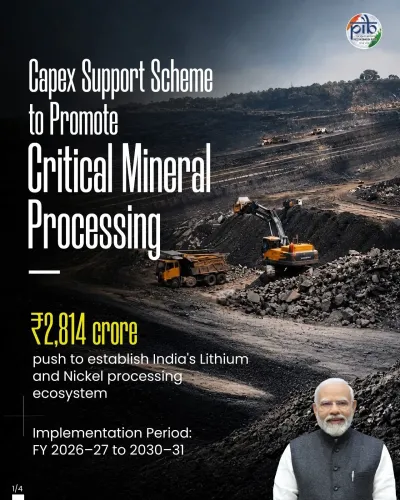
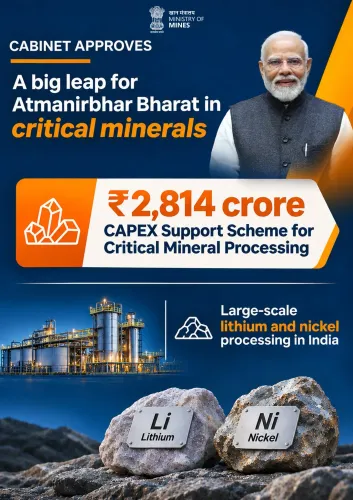
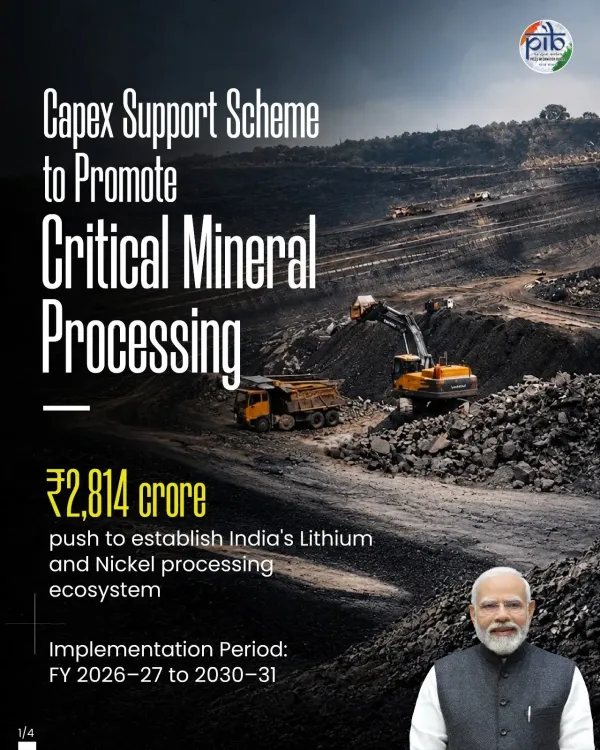
The Union Cabinet has approved the Capex Support Scheme to Promote Critical Mineral Processing with a ₹2,814 crore outlay over five years (FY 2026-27 to 2030-31), announced by Minister Dr. Jitendra Singh, aiming to build domestic refining capacity for lithium, cobalt and rare earths.
Key Takeaways
The Union Cabinet approved the Capex Support Scheme to Promote Critical Mineral Processing on 4 November 2026 .
Financial outlay is ₹2,814 crore spread over five years from FY 2026-27 to FY 2030-31 .
The scheme targets domestic processing and refining of strategic minerals including lithium, cobalt, and rare earths — not just extraction.
Key beneficiaries include EV battery manufacturers , electronics, solar, and defence supply chains.
The move follows the MMDR Amendment Act 2023 (24 critical minerals added) and India's 30 critical minerals notification of 2022 .
KABIL , incorporated in 2019, continues to pursue overseas mineral asset acquisition to complement domestic processing capacity.
India's bet on strategic self-reliance just got a ₹2,814 crore engine. Union Science and Technology Minister Dr. Jitendra Singh announced on Wednesday, 4 November 2026, that the Union Cabinet, chaired by Prime Minister Narendra Modi, has approved the Capex Support Scheme to Promote Critical Mineral Processing — a five-year central sector programme running from FY 2026-27 to FY 2030-31 designed to end India's dependence on imported, processed minerals.
What the ₹2,814 crore scheme actually does
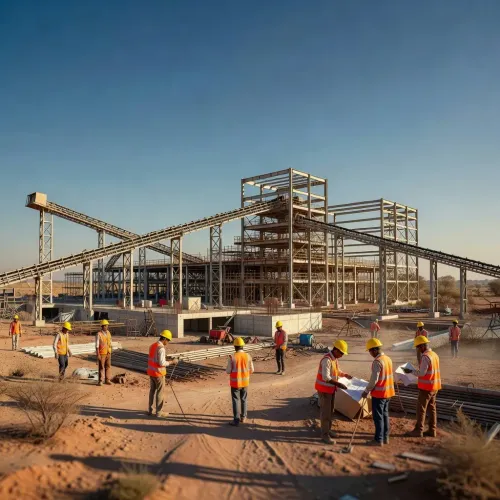
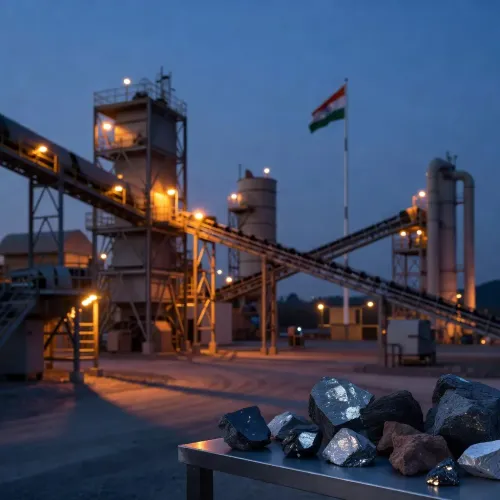
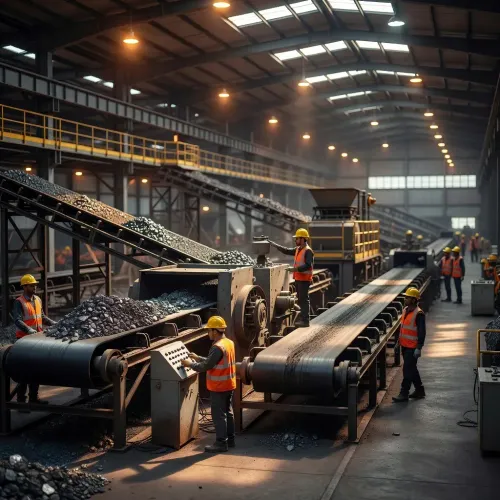
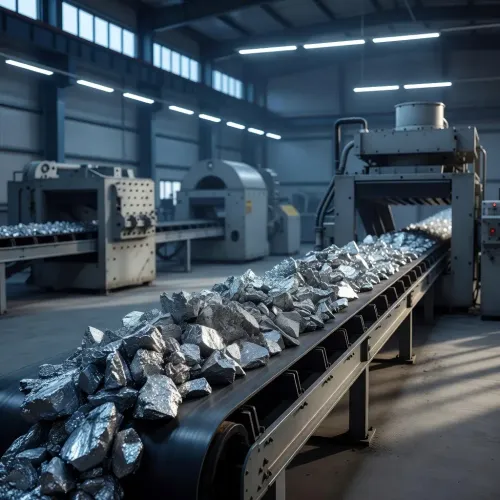
The scheme deploys capital expenditure support — essentially co-funding the high upfront costs that have kept domestic processors out of a game currently dominated by a handful of foreign refiners. Its focus is the value-added end of the mineral chain: processing and refining of materials such as lithium, cobalt, and rare earths, not merely extraction. By targeting this chokepoint, the government is trying to plug the gap between India's growing raw-mineral ambitions and the industrial capacity needed to actually turn those ores into battery-grade or electronics-grade inputs.
The industries that stand to gain are exactly the ones the government has been pushing hardest: EV battery manufacturers, consumer electronics assemblers, solar module producers, and defence supply chains — all of which today depend on processed minerals sourced overwhelmingly from concentrated overseas suppliers.
The policy trail that made this inevitable
The Cabinet decision did not arrive in a vacuum. The Mines and Minerals (Development and Regulation) Amendment Act, 2023, added 24 critical minerals to the statutory list and threw open exploration to private players for the first time — a structural opening that created demand for exactly the kind of downstream processing capacity this scheme now funds. Before that, the government notified a list of 30 critical minerals in 2022, signalling strategic intent. And Khanij Bidesh India Ltd (KABIL), incorporated in 2019, has been scouting overseas mineral assets to diversify the import base at the source.
What was missing was a credible domestic refining ecosystem to absorb whatever KABIL and private explorers bring in. The Capex Support Scheme is the missing industrial link in that chain.
India's position in the global critical minerals race
The timing is sharp. The global scramble for lithium, cobalt, and rare earths has intensified as the energy transition accelerates demand and geopolitical competition tightens supply. India's National Mineral Policy 2019 already flagged the strategic vulnerability; successive PLI schemes for advanced chemistry cells, electronics, and solar have amplified the urgency. Processing capacity is now the battlefield — countries that can refine these materials domestically will anchor their own industrial supply chains and earn leverage in global trade. Countries that cannot will simply remain buyers at prices set by others.
Detailed scheme guidelines and the first tranche of project approvals are expected ahead of FY 2026-27. The real scorecard — incremental refining capacity commissioned, private investment attracted, and import substitution achieved — will unfold across the five-year window.
India has drawn the map. Now comes the harder work of building the road.
Point of View
The government is trying to replicate, within critical minerals, the demand-pull logic of the PLI framework. The scheme also reflects a sharper geopolitical read: processing concentration in a handful of countries has become a supply-chain vulnerability that no amount of raw-material diplomacy alone can solve. If uptake is strong, the five-year window could meaningfully shift India's position from a raw-material importer to a value-added player in the global critical minerals hierarchy.
NationPress
4 Nov 2026
Frequently Asked Questions
What is the Capex Support Scheme for critical mineral processing?
It is a central sector scheme approved by the Union Cabinet with a ₹2,814 crore financial outlay over five years (FY 2026-27 to 2030-31) to co-fund domestic processing and refining infrastructure for strategic minerals such as lithium, cobalt, and rare earths.
Which industries benefit from India's critical mineral processing scheme?
EV battery manufacturers, consumer electronics assemblers, solar module producers, and defence supply chains are the primary beneficiaries, as they depend on processed mineral inputs currently imported from concentrated overseas suppliers.
How does this scheme relate to previous critical mineral policies?
It builds on the MMDR Amendment Act 2023 (which added 24 critical minerals and opened exploration to private players), the 2022 notification of 30 critical minerals, and KABIL's overseas asset acquisition mandate — addressing the missing domestic refining link in the chain.
What is the total budget outlay for the critical mineral processing scheme?
The approved financial outlay is ₹2,814 crore over five years, from FY 2026-27 to FY 2030-31.
What is KABIL and what role does it play in India's critical minerals strategy?
Khanij Bidesh India Ltd (KABIL), incorporated in 2019, is a government entity tasked with acquiring mineral assets overseas to diversify India's import base; the new processing scheme is designed to complement its sourcing work by building domestic refining capacity.