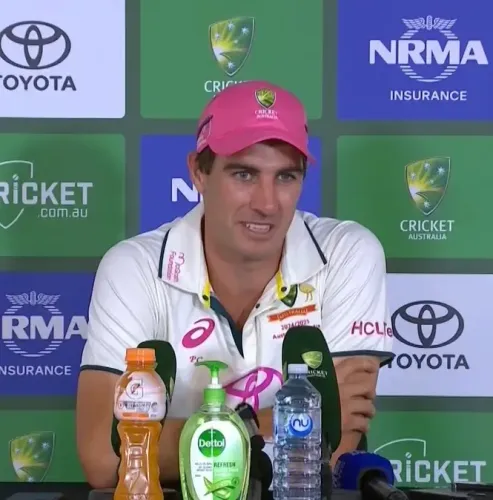
Pat Cummins: Balancing International Duty and Franchise Cricket Commitment

Synopsis
Australia's captain Pat Cummins emphasizes the challenges of balancing international cricket with franchise commitments as he pledges to continue playing all formats. His determination reflects the passion of players amidst the evolving cricket landscape.
Key Takeaways
Pat Cummins is committed to playing all three formats of cricket.
Balancing international and franchise commitments is increasingly challenging.
Several players have opted out of certain formats to prolong their careers.
The upcoming Test series against Bangladesh coincides with the Hundred, prompting financial sacrifices.
Test cricket's popularity varies by country, affecting player availability.
New Delhi, March 26 (NationPress) Australia’s captain Pat Cummins has recognized the increasing pressure between international duties and franchise cricket, cautioning that future players may find it more challenging to maintain this balance. Nevertheless, he remains committed to representing Australia in all formats for as long as possible.
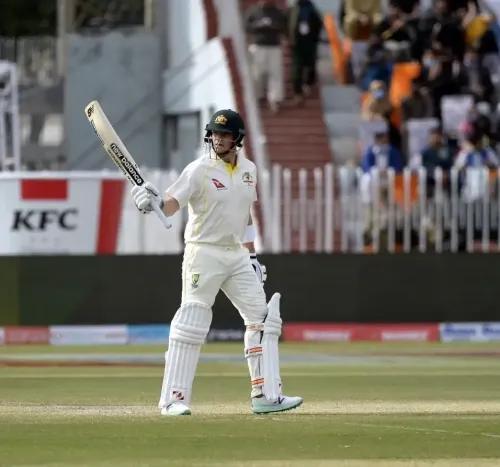
Many of Cummins’ veteran teammates, such as Steve Smith, Glenn Maxwell, and Marcus Stoinis, have already stepped down from ODIs, while Mitchell Starc has opted out of T20Is to prolong their careers. In contrast, Cummins is still eager to participate in all three formats, even if it necessitates carefully managed rest periods.
"I’m very enthusiastic about playing all three formats, and currently, I believe we can make it work. I adore Test cricket. I hope to maintain a rhythm that allows me to keep competing for three, four, or five more years without having to sacrifice Test cricket," Cummins stated during the Business of Sport podcast.
Despite ongoing back issues, Cummins has consistently shown his prowess in Test cricket, missing only two matches in a busy schedule from mid-2023 through the onset of the latest home summer. Simultaneously, he has largely reduced his participation in white-ball internationals since Australia’s recent World Cup campaigns.
Apart from the IPL, Cummins’ global franchise presence is on the rise. He has already secured a long-term contract with a Major League Cricket team and has shown interest in eventually competing in England’s Hundred tournament. These commitments underscore the financial and professional allure of franchise leagues worldwide.
Looking at the larger picture, Cummins acknowledged that the sport is nearing a pivotal moment.
"I believe we are at a point of tension. This has been the case for some time, but it seems to be intensifying. As these franchise leagues become more financially robust and sophisticated, some of the owners from India are now diversifying and owning different leagues."
He pointed out that while nations like Australia and England continue to attract large crowds and media attention for Test cricket, this is not a universal reality, leading to varying pressures across the global landscape.
"What we experience in Australia and England is that Test cricket is very well supported, with large crowds and considerable media attention during the Test summer. However, this is not the case for every international team. Each nation faces unique challenges. As the Australian captain, we often discuss how to ensure we have our best players available when selecting a Test or ODI side, given the high demand for them elsewhere.
"Even our approach to contracting players and the discussions around allowing players to participate in different formats has changed significantly over the past five years. We want to retain our top talent, which means offering them a bit more flexibility than we might have in the past," he added.
Cummins also referenced a significant scenario later this year: Australia’s two-Test series against Bangladesh, which coincides with the Hundred window. Several Australian players are expected to pass up substantial earnings to prioritize national duty, a choice he believes may not always be viable in the future.
"The intriguing point is that during prominent series like the Ashes, all key players are eager to participate. However, this season, while the Hundred is taking place, we have two Test matches against Bangladesh. All our players who will participate in that Test series have chosen to skip the Hundred auction – but this will not always be the case."
"Some of our players are turning down offers of half a million pounds for just 20 days of work to play those two Tests against Bangladesh – indicating a point of tension. It truly reflects that our players are passionate about representing Australia and are willing to sacrifice for it, but we cannot assume this will always be the case," he remarked.
While recognizing the financial incentives available to Australian internationals, Cummins cautioned against assuming that allegiance to national teams will always outweigh the attractiveness of global leagues.
"If you are playing all three formats in Australia, the compensation is quite favorable," he indicated.
Point of View
It is evident that the growing tension between international commitments and lucrative franchise opportunities poses a significant challenge for players like Cummins. His commitment to Australian cricket while acknowledging this evolving landscape highlights the need for a sustainable balance for future athletes.
NationPress
29 Sept 2026
Frequently Asked Questions
What formats is Pat Cummins committed to playing?
Pat Cummins is dedicated to playing all three formats of cricket: Tests, ODIs, and T20Is.
How have other players responded to the pressure of international vs. franchise cricket?
Several of Cummins' teammates have stepped back from ODIs and T20Is to focus on extending their careers.
What challenges does Cummins foresee for future players?
Cummins warns that balancing international duties with franchise commitments will become increasingly difficult for future players.
What is the significance of the upcoming Test series against Bangladesh?
The series is scheduled during the Hundred window, highlighting the financial sacrifices players may have to make for national duty.
What does Cummins say about the future of Test cricket?
He emphasizes that while Test cricket is well-supported in Australia and England, this is not the case globally, creating diverse pressures.