Andrew McDonald warns against rushed Australia Test shake-up after Bangladesh loss
Synopsis
Australia's first-ever home Test loss to Bangladesh has triggered loud calls for squad regeneration — but coach Andrew McDonald is pushing back. While Ponting demands change at the top of the order, McDonald insists the players have a fair bit of cricket left in them and that selection for the Mackay Test will follow process, not panic.
Key Takeaways
Australia suffered their first-ever home Test defeat to Bangladesh in Darwin , triggering calls for squad changes.
Coach Andrew McDonald backed under-fire batters Jake Weatherland and Marnus Labuschagne , resisting calls for immediate overhaul.
Former captain Ricky Ponting called for 'regeneration' at the top of the batting order.
Labuschagne scored only 31 runs in the second innings; McDonald said 'he needs some big runs'.
The second Test begins in Mackay on 22 August ; selection will follow standard process, not emotional reaction.
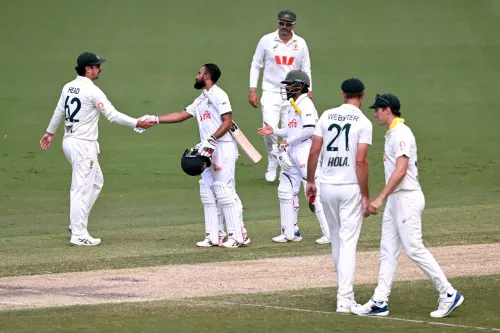
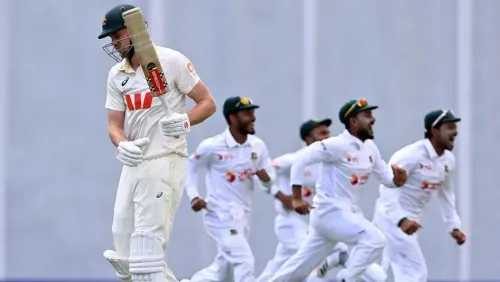
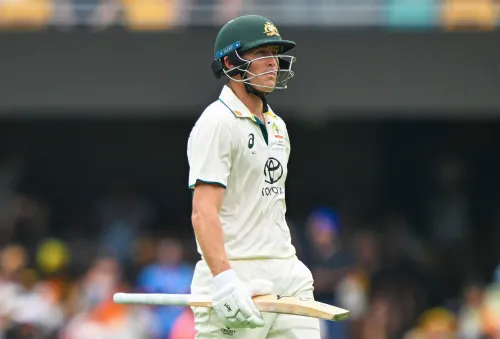
Australia head coach Andrew McDonald has urged restraint over calls to overhaul the Test squad following the side's historic defeat to Bangladesh in the first Test at Darwin, insisting that the players under scrutiny still have a 'fair bit of cricket left in them'. The loss — Australia's first-ever home Test defeat to Bangladesh — has intensified debate around the team's batting order, particularly the futures of opener Jake Weatherland and No.3 Marnus Labuschagne.
The Pressure on Australia's Batting Order
The Darwin defeat on Sunday prompted immediate calls for structural change, with former Australia captain Ricky Ponting among the most prominent voices demanding 'regeneration' at the top of the order. Both Weatherland and Labuschagne have faced sharp public criticism for their contributions in the match, with Labuschagne managing only 31 runs in the second innings.
This is not the first time Labuschagne has faced a selection crisis — he was dropped from the Australian side last year against the West Indies and instructed to remodel his batting technique. His recall has been closely watched, and the Darwin performance has renewed questions about whether those adjustments have taken hold under pressure.
What McDonald Said
Speaking to cricket.com.au, McDonald pushed back firmly against knee-jerk selection decisions. 'It's always going to be a conversation, the age profile of the team, where we're at, how we're travelling. A loss doesn't help that,' he said. 'But these players have got a fair bit of cricket left in them, I believe.'
McDonald acknowledged the emotional weight of a Test defeat but cautioned against letting that drive selection. 'There's always going to be calls for change on the back of a loss. There's going to be an emotion around that from the outside — and even internally. Our guys sit in that change room, and they're feeling it. You feel a Test loss. It means a lot to them to play for Australia, so let's not lose that in all this as well,' he said.
He also noted that calls for change are a constant in Australian cricket, regardless of results. 'The easy option is to call for change. A lot of people call for change even when we're winning. They're entitled to do that as well on the back of a performance like that. Why wouldn't they? That's part of our lot,' McDonald said.
Selection Process for the Second Test
McDonald confirmed that the selection panel will approach the second Test in Mackay, beginning 22 August, through its standard process rather than reacting emotionally to the defeat. 'I don't think it's going to be like, we've lost this Test match, so then suddenly it's immediately we shift things. We will work through exactly what we normally work through to come to a conclusion for the best XI,' he said.
He did, however, hint at a broader review of the playing group, framing any potential change as a performance-based calculation rather than a punitive response. 'If change was to be a part of that, it would be us deciding that the team would be better with someone else in there,' he added.
Labuschagne Under the Microscope
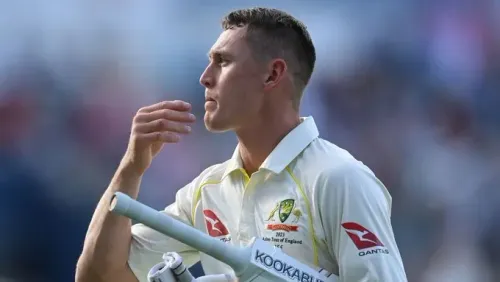
McDonald gave a nuanced assessment of Labuschagne's second-innings knock of 31, acknowledging the shortfall while pointing to positive technical signs. 'Up until the point he got out, you'd sit there and say he was looking good. He was moving well, he's clipping off his pads, he was getting back through the ball down the ground. So it's easy for me to sit here and try to defend that, but ultimately it's 31. It's not a big score. He's lacked runs. He feels that. We feel that,' McDonald said.
The coach expressed satisfaction that technical changes Labuschagne had worked on appeared to hold up under match pressure. 'You can try to make these changes, and then when you get put under extreme pressure in the middle, sometimes those changes don't hold. So it was good to see them hold up. But it is 31. He's disappointed with that missed opportunity. He needs some big runs,' McDonald said.
With the series level at 0-1 and the second Test days away, the pressure on Australia's coaching staff and selectors to find answers — without abandoning experienced players — is set to define the coming week.
Point of View
But it sidesteps the harder question: whether Australia's selection philosophy has been too loyal for too long. Labuschagne's prolonged lean patch — stretching back to his West Indies axing — and Weatherland's struggles suggest the issue is not one bad Test but a structural batting fragility at the top. Ponting's call for regeneration reflects a broader anxiety in Australian cricket about succession planning that the coaching staff has been reluctant to address publicly. The Mackay Test will reveal whether process over panic is genuine confidence or a holding pattern.
NationPress
17 Aug 2026
Frequently Asked Questions
Why is there pressure on Australia's Test squad after the Bangladesh series opener?
Australia lost their first-ever home Test match to Bangladesh in Darwin, a result widely described as an embarrassment for the side. The defeat intensified scrutiny on opener Jake Weatherland and No.3 Marnus Labuschagne, both of whom struggled with the bat.
What did Andrew McDonald say about changing the Test squad?
McDonald urged against rushed changes, saying the players have a fair bit of cricket left in them and that selection for the second Test in Mackay would follow the standard process rather than an emotional reaction to defeat. He acknowledged calls for change are constant but called them the easy option.
What is Marnus Labuschagne's current form and what has McDonald said about him?
Labuschagne scored 31 runs in the second innings of the Darwin Test, a total McDonald described as not a big score. The coach noted positive technical signs in how Labuschagne played but was clear that he needs some big runs. Labuschagne was previously dropped against the West Indies and asked to remodel his technique.
When and where is the second Australia vs Bangladesh Test?
The second Test between Australia and Bangladesh begins on 22 August in Mackay. Australia trail the two-match series 0-1 following the Darwin defeat.
What did Ricky Ponting say about Australia's batting order?
Former Australia captain Ricky Ponting advocated for a shake-up, stating that the opening and No.3 batting positions needed regeneration following the defeat to Bangladesh in Darwin.