Was Varun's Spell the Turning Point in Namibia's Defeat?

Synopsis
In a gripping match, Namibia's captain Gerhard Erasmus credited Varun Chakravarthy's exceptional bowling as the decisive factor in their 93-run defeat. As they faced a high-quality Indian team, Erasmus reflected on the lessons learned and the challenges of adapting to top-level cricket, emphasizing the need for more exposure in the future.
Key Takeaways
Varun Chakravarthy's exceptional bowling was pivotal.
Namibia's strategy included minimizing pace bowling.
Importance of adapting to high-level cricket.
Need for more exposure for associate nations.
Maintaining composure under pressure is crucial.
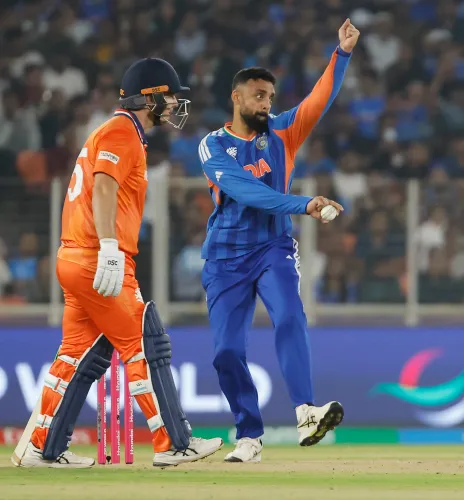
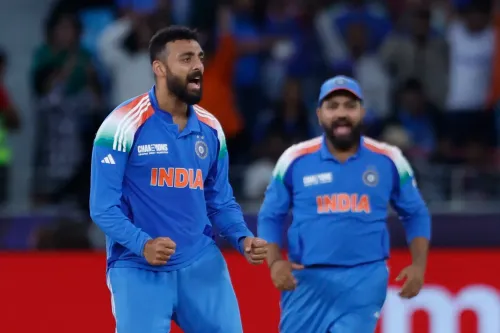
New Delhi, Feb 13 (NationPress) The captain of Namibia, Gerhard Erasmus, remarked that the impactful bowling performance by India's wrist-spinner Varun Chakravarthy was the decisive factor in their team's 93-run loss during their Group A encounter at the Arun Jaitley Stadium on Thursday. Chakravarthy dashed any hopes of an upset by taking three wickets in just ten balls after Namibia had started well at 85/2, effectively sealing the match in favor of India.
"Honestly, I must admit that was the game-changer right there. At one point, he had figures of three for five. For us, it's another learning experience. It's something to carry forward to future World Cups and matches against top teams. The game evolves so rapidly, and preparing for players like him is crucial," Erasmus stated in a post-match interaction with the media.
“You can analyze as much as you want through video footage and strategizing how to approach each ball, but executing it in real time is a different challenge altogether.
“Facing such skill at this level has been a lesson for us. It wasn't about the occasion or the atmosphere; it was simply a new skill that we hadn't encountered before,” he added.
Erasmus elaborated that the type of mystery spin bowling demonstrated by Chakravarthy is seldom seen at the associate level. "Mystery bowling is a skill that isn't commonly found in our cricket. Occasionally, you might face leg-spin and googlies, but players like Mujeeb and Varun represent a rare breed. In associate cricket, there's hardly anyone who bowls like that. Sher Malla from Nepal might be the closest example we have."
He also discussed the team's initial strategy, which involved minimizing pace bowling and slowing the game during the middle overs. However, he recognized that the final over of the powerplay, where Ishan Kishan scored 28 runs off JJ Smit—including four sixes—could have been managed better, as India finished the six-over phase at 86/1.
"We didn't plan to bowl much spin in the powerplay, thinking it would be advantageous. In retrospect, perhaps we should have opted for spin in one of those overs, considering they scored around 80 runs in that phase. But hindsight is always clearer. We aimed to take wickets and slow down the powerplay, but unfortunately that last over was quite damaging," he commented.
"If we could have restricted them to just over 60 runs, it would have been a satisfactory outcome. That last over was pivotal, and credit goes to Kishan for executing it so well. Our strategy was always to slow down the game in the middle overs, as the Indian players are adept at handling pace bowling, similar to how the USA used to approach it.”
Despite showing moments of courage, Erasmus noted that his squad struggled to maintain composure under pressure against a formidable opponent. "That's a fair assessment. Other than the period when Varun bowled, our performance on a flat pitch was inconsistent. In big stadiums and against prominent teams, it's essential not to be overwhelmed, as this is the first step towards showcasing your skills. Some players managed to do this well, while others faltered during critical overs, leading to the loss of three or four wickets in quick succession.”
“While it's courageous to desire victory, it's only part of the equation. To excel as a top-notch cricketer, one must possess courage, paired with the calmness and presence of mind to execute skills under pressure. For instance, I found myself too far from the ball at times, but after adjusting my positioning, I managed to hit a few successful slog sweeps. These are the lessons we take from such experiences.”
Erasmus concluded by emphasizing the necessity for associate nations to gain more exposure to high-level cricket. "Experiencing the atmosphere of 40,000 fans and facing high-quality bowling is crucial. How can one develop the same skills in front of no crowds when playing peers in associate cricket? More games like this will provide essential exposure, experience, and understanding of how to compete effectively."
Point of View
It's evident that associate nations like Namibia face significant challenges when competing against established cricketing powers. The insights from Gerhard Erasmus underscore the importance of exposure and experience at the highest levels of the game. This match not only highlights individual performances but also serves as a learning opportunity for the entire team as they aim to grow in future competitions.
NationPress
13 Oct 2026
Frequently Asked Questions
What was the match result between Namibia and India?
Namibia lost to India by 93 runs in their Group A match.
Who was the standout bowler for India?
Varun Chakravarthy was the standout bowler, taking three wickets for five runs.
What did Namibia's captain say about the match?
Gerhard Erasmus highlighted that Chakravarthy's spell was the game-changer and emphasized the need for more exposure to high-level cricket for associate nations.
How did Namibia plan to approach the game?
Namibia aimed to slow down the game and minimize pace bowling during the middle overs.
What lessons did Namibia learn from this match?
They learned about adapting to high-quality bowling and the importance of composure under pressure.