Fauja Singh inspired India's sports culture, says PM Modi at Khelo India Dialogue
Synopsis
PM Modi used the Khelo India Samvad to make a sweeping case for sports as a life philosophy — not a hobby. Invoking Fauja Singh, who ran marathons at 100 and lived to 114, Modi argued that playgrounds matter more than playstations and that India's sports culture will only take root when schools, families, and youth treat athletics as essential, not optional.
Key Takeaways
PM Narendra Modi addressed the nation's youth virtually at the Khelo India Samvad on 27 August in New Delhi .
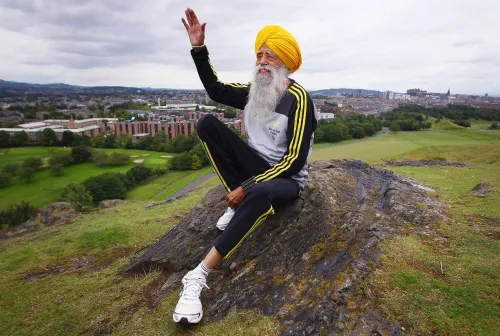
Modi paid tribute to Fauja Singh , who reportedly ran a marathon at age 100 and passed away last year at 114 .
He called for schools to treat sports as a core subject, not a co-curricular activity, to widen the national talent pool.
Modi declared: 'Sports centres are more important than screens.
Playgrounds are more important than playstations.' The address is part of the Centre's ongoing Khelo India initiative to build grassroots sports culture across India.
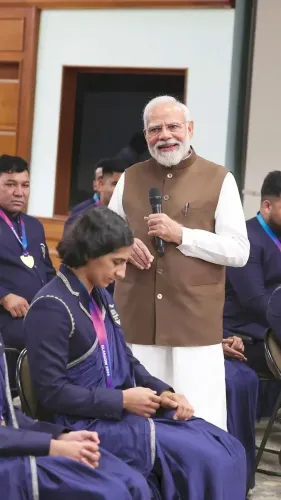
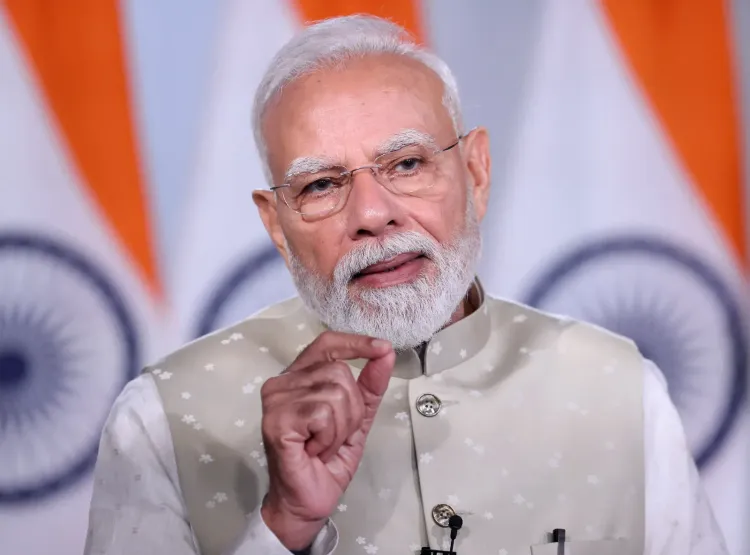
Prime Minister Narendra Modi on Thursday, 27 August paid tribute to legendary centenarian athlete Fauja Singh — widely regarded as the world's oldest marathon runner — while addressing the nation's youth virtually at the Khelo India Samvad in New Delhi. Modi held up Singh's life as the definitive example of the bond between sports, fitness, and quality of life.
Modi's tribute to Fauja Singh
Fauja Singh, who reportedly competed in a marathon at the age of 100, passed away last year at the age of 114. Invoking his legacy, Modi said: 'We all know about Fauja Singh Ji. He passed away last year after having lived more than 100 years. If there is love for sports and fitness, then Fauja Singh Ji was an example of this. His life is a great inspiration for how sports and quality of life are connected.'
Sports as a mainstream profession
The Prime Minister noted that sports participation in India has undergone a visible transformation, with citizens now actively joining triathlons, 5K and 10K races, and recreational formats such as pickleball and badminton. 'Friends, I am happy that sports are a great profession in India today,' Modi said, describing these as signs of a broader cultural shift rather than isolated trends.
He stressed that this shift is not incidental — it reflects growing trust in India's sports future, driven by communities and families embracing athletic participation at every level.
Playgrounds over playstations
Modi made a pointed appeal to schools and families, arguing that sports must be treated as a core part of daily life rather than a supplementary activity. 'When schools consider the sports period as a part of life, not a co-curricular one, this increases the talent pool,' he said. He added that children who pursue sports as a career now increasingly receive family support — a change he described as foundational to building a lasting sports culture.
In a memorable line directed at the youth, Modi said: 'Sports centres are more important than screens. Playgrounds are more important than playstations.' The remark encapsulated his broader argument that grassroots sports infrastructure and attitude must align for India to realise its athletic potential.
Youth as India's sporting power
Closing his address, Modi expressed strong confidence in the country's young population, stating: 'I have a lot of faith in India's youth power and its success. Whether you are in the playground or in the middle of society, your participation is the power of India.' He urged every young person to find a way to connect with sports, regardless of whether they pursue it professionally.
The Khelo India Samvad is part of the Centre's broader push to mainstream sports culture and expand the talent pipeline ahead of upcoming international competitions. With India's medal count at global events rising steadily, Modi's address signals that sports policy is increasingly being framed as a youth empowerment agenda — not just an elite athletic programme.
Point of View
But the harder question is structural: India's school sports infrastructure remains deeply uneven, with urban private schools offering facilities that most rural government schools cannot match. Framing sports as a career path is meaningful only if the pathway — coaches, grounds, equipment, and scholarships — exists beyond metro clusters. The Khelo India programme has expanded budgets, but independent audits of outcomes at the district level remain scarce. Inspiration without infrastructure has a short shelf life.
NationPress
27 Aug 2026
Frequently Asked Questions
Who was Fauja Singh and why did PM Modi mention him?
Fauja Singh was a British-Indian long-distance runner widely regarded as the world's oldest marathon runner, having reportedly competed at the age of 100. He passed away last year at the age of 114. PM Modi invoked his life at the Khelo India Samvad on 27 August as the ultimate example of how love for sports and fitness can define and extend a person's quality of life.
What is the Khelo India Samvad?
The Khelo India Samvad is a virtual dialogue platform through which PM Modi addresses India's youth on sports, fitness, and athletic culture. It is part of the Centre's broader Khelo India initiative aimed at building grassroots sports participation and identifying talent across the country.
What did PM Modi say about schools and sports?
Modi argued that schools must treat the sports period as a core part of daily life rather than a co-curricular activity. He said this shift would widen the national talent pool and encourage more children to pursue sports as a career with family support.
What was PM Modi's key message to India's youth?
Modi urged every young person to connect with sports in some form, saying their participation — on the playground or in society — is the power of India. His headline line was: 'Sports centres are more important than screens. Playgrounds are more important than playstations.'
How does this address fit into India's broader sports policy?
The address is part of the Centre's sustained push under the Khelo India programme to mainstream sports culture, expand the talent pipeline, and reframe athletics as a legitimate career path. It comes as India's medal tally at international events has grown, and the government seeks to build on that momentum through grassroots engagement.