FIFA WC 2026 hydration breaks: Bielsa, Van Dijk divided on mandatory stoppages
Synopsis
FIFA's mandatory three-minute hydration breaks at World Cup 2026 have split the sport's biggest names. Uruguay's Bielsa says they strip football of its identity; Netherlands captain Van Dijk wants conditions to decide; Germany's Nagelsmann quietly used one for tactics. Meanwhile, scientists warn three minutes may not even be enough — leaving FIFA caught between tradition and welfare.
Key Takeaways
FIFA has mandated three-minute hydration breaks midway through each half at FIFA World Cup 2026 , regardless of weather conditions.
Uruguay head coach Marcelo Bielsa said the breaks 'add nothing and take away a lot,' arguing they divide matches into four periods instead of two.
Netherlands captain Virgil van Dijk questioned the blanket policy, saying conditions should determine whether breaks are needed.
Germany head coach Julian Nagelsmann acknowledged using a hydration break to make tactical adjustments during a match.
Researcher Julien Periard warned that even in ideal settings, three-minute breaks 'will not eliminate the risk of heat illness.' Several specialists have called for longer stoppages at extreme temperatures, while coaches argue even the current breaks distort the contest.
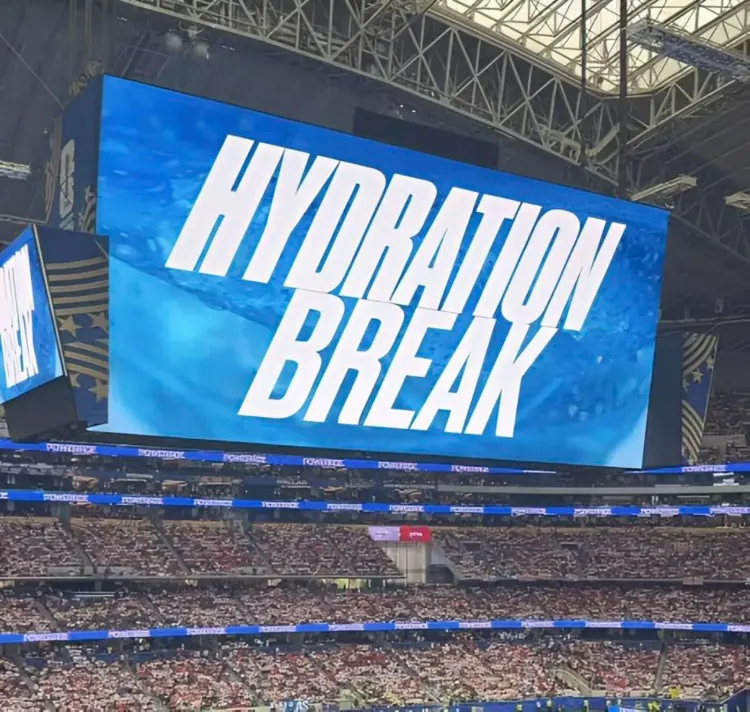
Mandatory three-minute hydration breaks at the FIFA World Cup 2026 in North America have ignited a sharp debate among coaches, players, and sports scientists, with critics arguing the stoppages fundamentally alter the character of football and supporters insisting they are a non-negotiable safety measure. The controversy has emerged as one of the tournament's most discussed off-pitch issues, cutting across technical, medical, and philosophical lines.
What FIFA's Policy Requires
FIFA has mandated a three-minute hydration break midway through each half of every match at the tournament, irrespective of ambient temperature or weather conditions at the venue. The governing body says the uniform application ensures consistent treatment across all fixtures and draws on lessons from previous competitions held in hot climates, including earlier editions staged in North America where temperatures exceeded 32 degrees Celsius (90 degrees Fahrenheit).
Coaches and Captains Push Back
Uruguay head coach Marcelo Bielsa has emerged as the most vocal opponent, arguing that the interruptions restructure the game itself. 'They add nothing and take away a lot,' Bielsa said. 'I'm saying that before this decision, football had one characteristic and now it has a different one. People fall in love with the game because of its characteristics,' he added.
Netherlands captain Virgil van Dijk also questioned the blanket policy. While acknowledging the importance of protecting players during genuine heat spells, Van Dijk argued that conditions at each venue should determine whether a break is warranted rather than a fixed rule applied universally.
Not all coaches are opposed. Germany head coach Julian Nagelsmann acknowledged during the tournament that a hydration break had given his side a valuable opportunity to make tactical adjustments mid-half — an admission that critics say underscores how the breaks can influence match outcomes beyond their stated welfare purpose.
The Science Behind the Breaks
Sports scientists broadly support the policy, even when pitch-side conditions appear manageable. Researchers note that players can lose substantial volumes of fluid through perspiration during a match, especially at afternoon kickoffs in summer conditions, with dehydration documented to impair concentration, decision-making, and physical output. Extreme heat can also place significant strain on the cardiovascular and nervous systems, with potentially serious consequences.
Joshua DeVincenzo, assistant director of applied research services at Columbia University's National Center for Disaster Preparedness, framed the breaks in explicit risk-management terms. 'When we look at the three-minute hydration breaks, we're really looking at this as a way to mitigate anything that could potentially lead to an incident or an emergency,' he said.
Are Three Minutes Enough?
Some researchers support the principle but question whether the allocated time is sufficient. Studies indicate that players can lower core body temperature and improve comfort during cooling breaks by consuming cold fluids and applying ice towels, but experts caution that the benefits depend heavily on how efficiently the short window is used.
Researcher Julien Periard offered a measured assessment: 'Even in ideal settings, the breaks can slightly help but will not eliminate the risk of heat illness in response to a rise in core temperature.' Several specialists have called for longer stoppages when temperatures reach extreme levels, arguing that additional recovery time would deliver meaningfully greater protection.
A Challenge That Outlasts This Tournament
The dispute places FIFA under pressure from opposing camps simultaneously — coaches and players who believe the breaks distort competition, and researchers who argue the current duration may be medically inadequate. As global temperatures rise and the football calendar continues to expand into warmer regions and summer windows, governing bodies will face mounting pressure to reconcile the sport's traditions with the physical realities facing the athletes who play it.
Point of View
The other about liability. Bielsa is not wrong that mandatory mid-half stoppages change the game's rhythm — Nagelsmann's own admission that he used one for tactics proves the point. But FIFA's calculus is shaped less by aesthetics than by the spectre of a player collapsing on a summer afternoon in a packed stadium. The deeper problem is that three minutes satisfies neither side: it disrupts enough to anger coaches yet delivers too little cooling to fully reassure scientists. FIFA needs an evidence-based threshold — temperature, humidity, wet-bulb readings — that triggers variable break lengths, rather than a one-size rule that pleases no one and may not even protect adequately.
NationPress
20 Sept 2026
Frequently Asked Questions
What are the mandatory hydration breaks at FIFA World Cup 2026?
FIFA has required a three-minute hydration break midway through each half of every match at the 2026 World Cup in North America, applied uniformly regardless of the temperature or weather at the venue. The policy is intended to protect players from heat-related illness and is based on experiences from previous tournaments in warm climates.
Why is Marcelo Bielsa critical of the hydration breaks?
Uruguay head coach Marcelo Bielsa argues that the stoppages fundamentally alter football by effectively splitting each match into four periods rather than two continuous halves. He said the breaks 'add nothing and take away a lot' and that the sport's appeal is tied to characteristics the interruptions undermine.
Do sports scientists support FIFA's hydration break policy?
Sports scientists broadly back the principle, noting that dehydration and extreme heat can impair concentration, decision-making, and physical performance, and can strain the cardiovascular and nervous systems. However, some researchers, including Julien Periard, caution that three minutes may not be sufficient to meaningfully reduce the risk of heat illness in all conditions.
Did any coach benefit tactically from a hydration break at World Cup 2026?
Germany head coach Julian Nagelsmann acknowledged during the tournament that a hydration break gave his side an opportunity to make adjustments mid-half — a point critics have used to argue the breaks influence match outcomes beyond their stated welfare purpose.
What changes to the hydration break policy have experts suggested?
Several specialists have recommended that the duration of breaks be extended when temperatures reach extreme levels, arguing that additional recovery time would provide greater protection. Some have also proposed a condition-based threshold — using temperature or wet-bulb readings — to trigger breaks, rather than applying them universally across all matches.