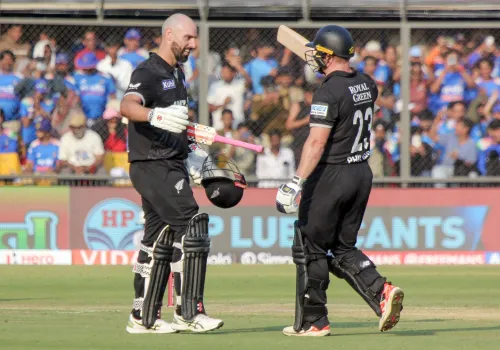
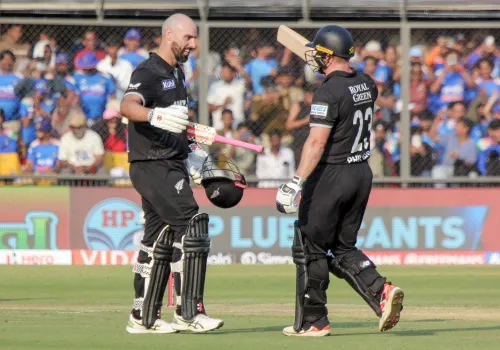
Why Does Glenn Phillips Switch to Left-Hand Batting?

Synopsis
New Zealand's Glenn Phillips discusses his strategic switch to left-handed batting, revealing it’s part of a long-term plan rather than a mere experiment. He aims to enhance his performance and counter left-arm spin, showcasing his dedication to training as he prepares for the upcoming tour of India.
Key Takeaways
Glenn Phillips embraces a strategic shift to left-handed batting .
His approach is aimed at long-term skill development.
Phillips has been training for this transition for an extended period.
He looks forward to the T20 World Cup preparations in India.
Adaptability is crucial in modern cricket.
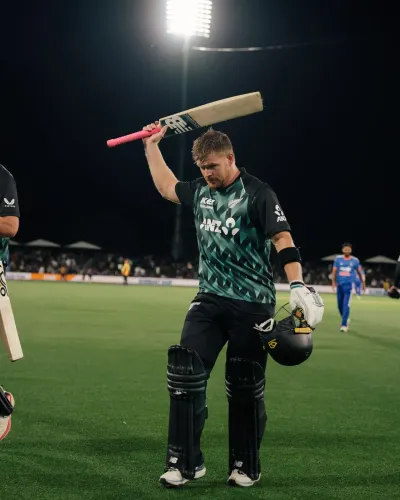
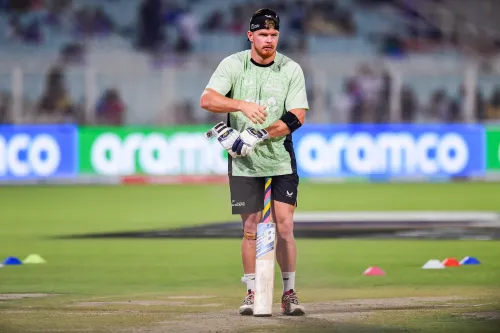
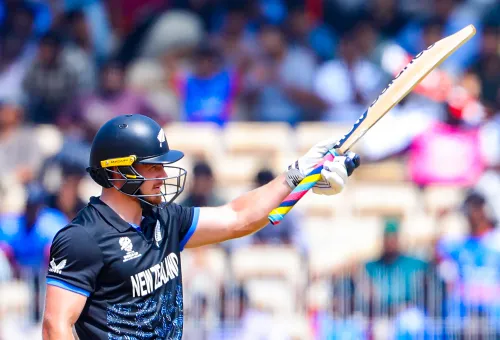
Auckland, Jan 6 (NationPress) New Zealand all-rounder Glenn Phillips revealed that his periodic transition to left-handed batting is a strategic decision aimed at long-term development, rather than a fleeting trial. He expressed his enjoyment of batting left-handed during training sessions.
In the recent Super Smash T20 match against the Vols, Phillips caught spectators off guard by unexpectedly changing his batting stance. He clarified that this shift is part of his regular training, which he has been undertaking for quite some time.
"I’ve always had the capability to bat left-handed. It’s something I’ve practiced since childhood. At around 10 years old, I contemplated switching to left-handed batting but ultimately opted to remain a right-hander. Nowadays, I focus on batting left-handed for two key reasons: to keep both hands and both hemispheres of my brain engaged, and to effectively counter left-arm spin," Phillips stated to New Zealand Cricket.
"Recently, I’ve intensified my practice, facing pace bowlers left-handed in the nets alongside spinners. Initially, I saw it as a future endeavor, but when the opportunity arose in a match situation, I was thrilled to successfully execute it," he added.
He emphasized that this approach is a component of his long-term game plan, to be utilized in specific match conditions. “It’s about having faith in my training and recognizing that I’ve prepared for this, so there’s no reason it shouldn’t be effective. My focus is to watch the ball closely,” he mentioned.
Phillips is gearing up for New Zealand’s upcoming white-ball tour of India, which includes three ODIs and five T20Is. This series is crucial for both teams as they prepare for the T20 World Cup in February.
The all-rounder expressed enthusiasm for the tour and looks forward to the warm reception from Indian fans, although he is uncertain about the pitch conditions.
“The preparations will be spot on,” Phillips remarked. “Conditions might differ from what we’ll encounter in the World Cup. You can never be sure what kind of pitches will be prepared, particularly in the subcontinent, where spin-friendly surfaces are common. However, pitches in T20 and ODI tours are generally favorable,” he concluded.
Point of View
I find Glenn Phillips’ approach to batting both innovative and strategic. His willingness to diversify his skills reflects the evolving nature of cricket, where adaptability is key. It’s essential to see how this will play out in his upcoming matches, particularly against formidable opponents like India.
NationPress
22 Oct 2026
Frequently Asked Questions
Why does Glenn Phillips switch to left-handed batting?
Glenn Phillips switches to left-handed batting as part of a long-term strategy to enhance his skills and counter left-arm spin.
How long has Phillips been training for left-handed batting?
Phillips has been training as a left-hander regularly for quite some time, preparing for the potential switch.
What is Phillips' upcoming schedule?
He is part of New Zealand's squad for a white-ball tour of India, featuring three ODIs and five T20Is.
What does Phillips say about the pitches in India?
Phillips anticipates varied pitch conditions and acknowledges that they may differ from those in the World Cup.
What are the reasons behind training left-handed?
He trains left-handed to keep both hands and sides of the brain engaged and to effectively counter left-arm spin.