HAWS: The Driving Force Behind India's Winter Sports Triumph at KIWG
Synopsis
Discover how the High Altitude Warfare School (HAWS) has become the cornerstone of India's winter sports success, transforming lives and fostering champions during the Khelo India Winter Games.
Key Takeaways
HAWS is crucial for winter sports athlete development in India.
It offers world-class training facilities and expert coaching.
Many athletes credit HAWS for their success and transformation.
The school integrates military discipline with sports training.
HAWS actively contributes to the elevation of winter sports standards in India.
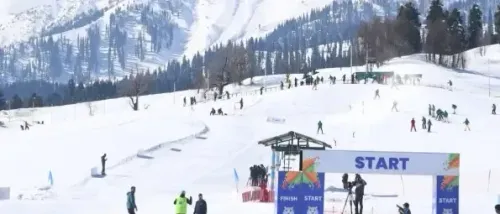
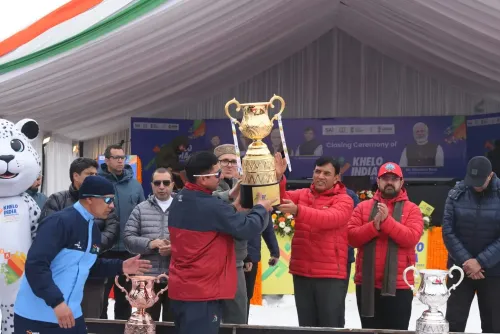
Gulmarg, Mar 1 (NationPress) The medals gleamed under the soft mountain sunlight, but when questioned about where their true value was forged, athletes pointed not to the podium, but to the snow-laden peaks of Gulmarg and the rigorous, unwavering environment of the High Altitude Warfare School (HAWS).
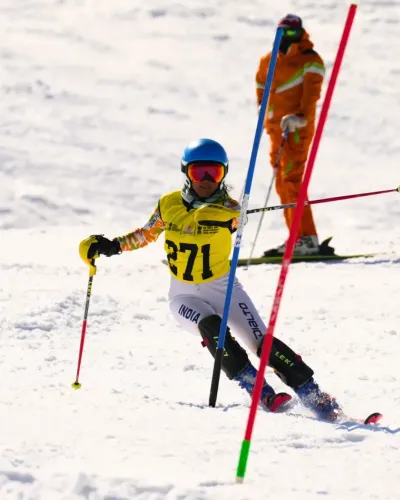
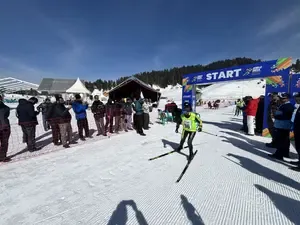
During the sixth Khelo India Winter Games, which occurred from February 23 to 26, athletes from across India, representing various states, Union Territories, and prominent organizations like the Indian Army, CRPF, and ITBP, echoed a shared sentiment: HAWS was pivotal to their accomplishments.
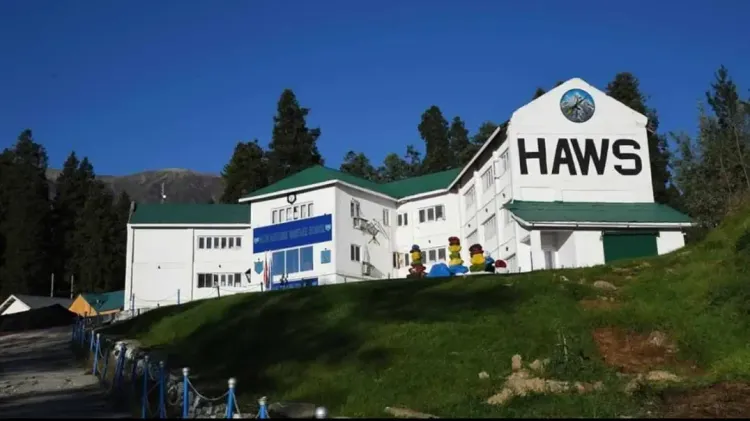
Established in December 1948 by Brigadier General K S Thimayya as the 19th Infantry Division Ski School, HAWS was created out of necessity. Situated in an avalanche-prone region, it eventually evolved into the Winter Warfare School. On April 8, 1962, it was promoted to a Category A Training Establishment and adopted its current name, with an enhanced focus on mastering mountain skills.
HAWS excels in snowcraft and winter warfare, providing elite Mountain Warfare and Winter Warfare courses that integrate high-altitude combat abilities with survival strategies and intelligence training. Over time, a new group emerged on its slopes—athletes. These individuals are not just casual enthusiasts or tourists, but serious competitors.
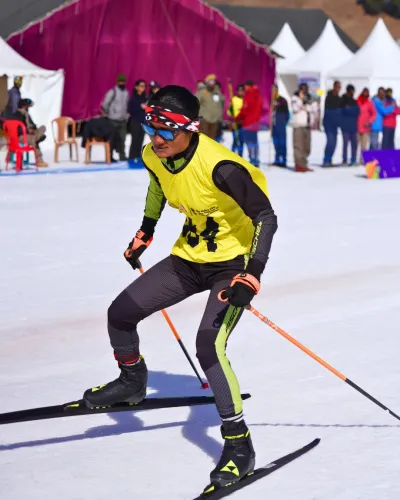
Kajal Kumari Rai, a 25-year-old from Shillong, had never encountered snow before 2024. By the end of that year, she had become a champion, clinching gold in the Nordic women’s 15 km and 10 km sprints, marking an extraordinary and poetic transformation. She credits her success to a 15-day skiing immersion at HAWS that altered her trajectory.
“Enlisting in the CRPF provided me with direction,” Kajal stated. “HAWS and the Army instilled belief in me.”
This belief serves as a vital currency here, exchanged amidst arduous climbs and biting cold, and in the serene moments before a downhill descent.
Bhavani T N, who secured gold in the Nordic women’s 1.5 km sprint and bronze in both the 15 km and 10 km events this season, also experienced snow later in life. At 23, she had never touched it prior. She refined her edges, balance, and grip at the Indian Institute of Skiing and Mountaineering (IISM) and HAWS, where the seasoned competitor from Karnataka's coffee hills sharpened her skills.
In the men’s Nordic 10 km event, the Army triumphed, with Padma Namgail taking gold, Aman earning silver, and Manjeet claiming bronze. In the 1.5 km sprint, Sunny Singh, Shubam Parihar, and Majeet also swept the medals. They all acknowledged HAWS not merely as a facility, but as a forge that shaped their achievements.
“HAWS plays a crucial role in nurturing winter sports athletes not only from the Army but also from other forces and states,” Namgail remarked. “There are no obstacles regarding funding, training, coaching, or competition. The top athletes are even sent to Europe. The tracks are challenging, the ice is tough, but we are always prepared because of HAWS.”
This readiness is systematically developed. Indian Army team manager Col. Kumar Singh Negi describes it as methodical. “Expert trainers from Italy, Norway, Sweden, and Kazakhstan refine techniques to meet international standards,” he explained.
According to Indian Army team coach Rameez Ahmad, HAWS oversees a pipeline of 250 to 300 Army winter athletes each year, along with five to ten civilian trainees.
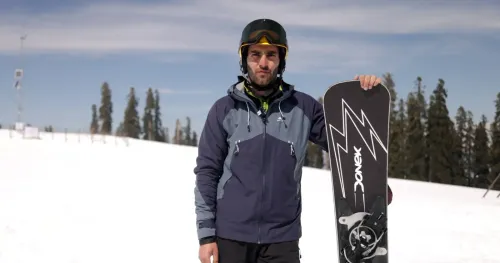
“Currently, 24 athletes are training in Alpine skiing, 16 in snowboarding, and 20 in Nordic skiing. Some also focus on mountain skiing. They accumulate at least 600 training hours annually,” Ahmad shared.
“There are ski simulators for Alpine skiing, the only ones in India, roller skis for summer cross-training, a cutting-edge gymnasium, and an indoor sports complex that buzzes with basketball, volleyball, and badminton even when Gulmarg is cloaked in white silence. It is uninterrupted conditioning. Nutrition is meticulously planned, with a dietician overseeing protein and carbohydrate intake; energy bars and gels are standard provisions. The kits reflect those used in the Olympics.”
Physio Vivek Kaktwan characterizes the infrastructure as “world-class.” “Funding is consistent, and the altitude itself is an advantage. By training in Gulmarg, our athletes can train more effectively,” he noted.
The impact extends beyond the Army. CRPF team manager Magesh K acknowledged HAWS’ role in elevating his team from mere equipment providers to elite coaching figures.
“Army coach Nadeem Iqbal, an Olympian himself, has closely collaborated with CRPF athletes over the past three years, honing techniques and elevating performance levels. The outcomes are starting to manifest,” Magesh stated.
Indeed, they are. In Gulmarg, while medals may adorn individual athletes, their narratives trace back to a singular location in the snow—a place where military training converged with winter sports, ultimately cultivating champions.
Point of View
The achievements of Indian athletes at the Khelo India Winter Games highlight the critical role of HAWS in nurturing talent. Their success is not merely a reflection of individual effort, but rather a testament to systematic training and unwavering support from military institutions, positioning India as a formidable player in winter sports.
NationPress
25 Sept 2026
Frequently Asked Questions
What is the role of HAWS in winter sports?
HAWS trains elite athletes in winter warfare and snowcraft, providing essential skills and techniques for competitive winter sports.
Who founded HAWS and when?
HAWS was founded in December 1948 by Brigadier General K S Thimayya as a ski school for the 19th Infantry Division.
How many athletes train at HAWS?
Annually, HAWS manages around 250 to 300 Army winter athletes, in addition to several civilian trainees.
What facilities does HAWS offer?
HAWS provides ski simulators, a state-of-the-art gymnasium, nutrition planning, and specialized training for various winter sports.
What are the achievements of athletes trained at HAWS?
Athletes trained at HAWS have won numerous medals in national competitions, including the Khelo India Winter Games.