How Will Gulmarg Showcase the Real Impact of Khelo Bharat Niti During KIWG 2026?
Synopsis
The Khelo India Winter Games in Gulmarg, set for February 23-26, will serve as a testament to the transformative potential of the Khelo Bharat Niti, evidenced by a spike in tourism and economic activity, highlighting the event's significance for local communities and national sports culture.
Key Takeaways
Significant boost in tourism and local business activity.
Khelo Bharat Niti aims to enhance India’s sporting framework.
The 2026 Games will feature four medal disciplines .
Local economy benefiting from sports tourism.
Gulmarg solidifying its position as India’s winter sports capital .
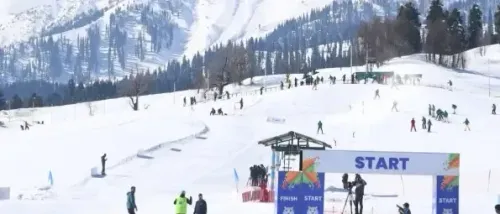
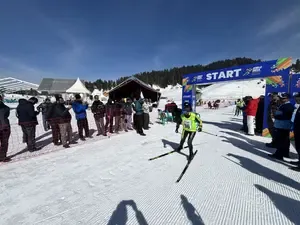
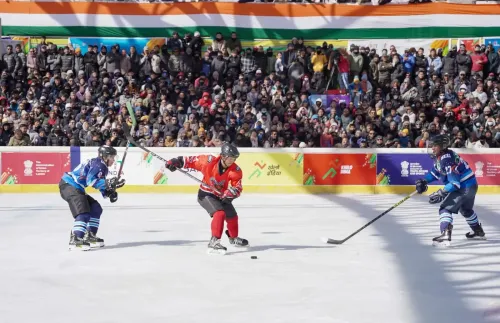
Gulmarg, Feb 19 (NationPress) The forthcoming Khelo India Winter Games in Gulmarg is set to exemplify the real-world impact of the government’s ambitious Khelo Bharat Niti, showcasing a significant increase in tourism, local economic activity, and national participation in the lead-up to the competition from February 23-26.
Introduced by the Union Sports Ministry in July of the previous year, the Khelo Bharat Niti seeks to enhance India’s sporting framework while utilizing major events to stimulate economic development. It emphasizes infrastructure advancement, talent recognition, and international competitiveness, aiming to uplift associated sectors including tourism, manufacturing, and sports technology.
This vision is already becoming a reality in Gulmarg, a premier winter getaway in Kashmir, where interest from tourists has significantly risen as the Games approach. With India’s elite skiers, including Winter Olympians, ready to compete, excitement is palpable across the region, particularly among those whose livelihoods hinge on sports tourism.
Local enterprises are witnessing a noticeable boost. Abeed, who manages Sheen Woods Tangmarg, reported a surge in bookings well ahead of the event.
“For us, this transcends tourism. It embodies our identity. When the Games are on, Gulmarg feels like the soul of the nation,” he explains, pointing to the lobby bustling with athletes from Madhya Pradesh, Haryana, Kerala, Telangana, and Jammu & Kashmir.
“You can hear a medley of languages at breakfast,” he adds. “It’s like a microcosm of the country in one space.”
The growth trajectory of the Winter Games in Gulmarg is evident. The inaugural event in 2020 attracted 1,123 athletes across 13 disciplines, with Jammu & Kashmir leading the medal count. Participation grew to 1,208 athletes in 2021, yielding 18 gold medals for the host region. The 2023 edition peaked with 1,395 athletes, as Jammu & Kashmir clinched 26 gold, 25 silver, and 25 bronze medals. Although the 2024 and 2025 editions featured fewer events and participants, the competition level rose, with teams like the Army, Himachal Pradesh, and Karnataka showcasing strong performances.
As the sixth edition approaches, the emphasis is shifting from experimentation to legacy-building, particularly in reviving tourism after challenging times. Following the April 22, 2025 terror attack in Pahalgam, the number of domestic tourists in Kashmir fell drastically to about 10.47 lakh in 2025, down from around 26 lakh in 2024. Nonetheless, tourism officials report a rebound in visitor numbers this year, fueled by the New Year rush and the growing excitement surrounding the Winter Games. Gulmarg’s 2,300 hotel and hut accommodations are already over 50% booked for the event.
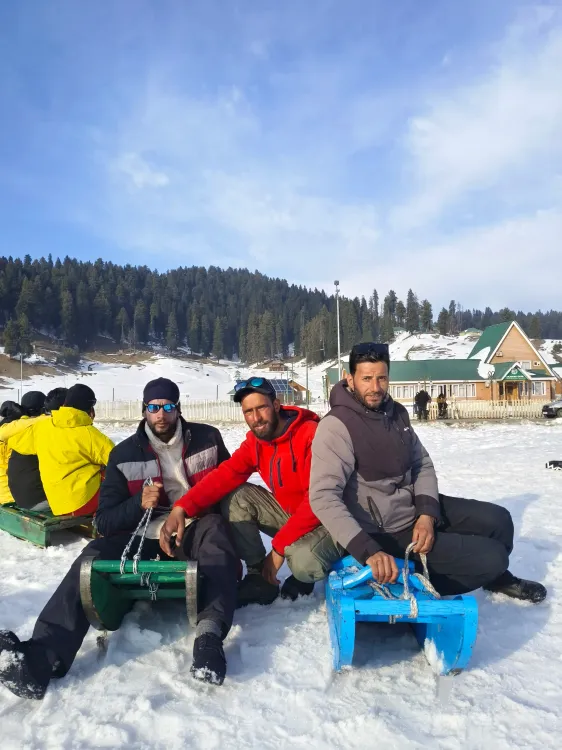
In addition to hotels and resorts, the Games are creating vital income opportunities for seasonal workers. On the slopes of Kongdoori, sledge pullers Altaf Hussain and Muhammad Rafiq are gearing up for the expected influx of visitors.
“This is our peak season,” Hussain shares, adjusting the ropes over his shoulders. “When the Games commence, Gulmarg truly comes alive.”
The pair typically earn between Rs 500 and Rs 1,500 per tourist, depending on the distance and time, with daily earnings soaring to between Rs 1,500 and Rs 3,000 during peak times, a stark contrast to off-peak days when tourist numbers dwindle.
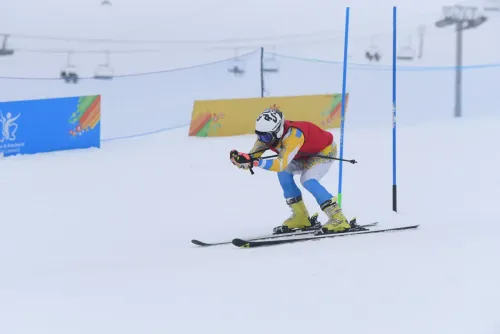
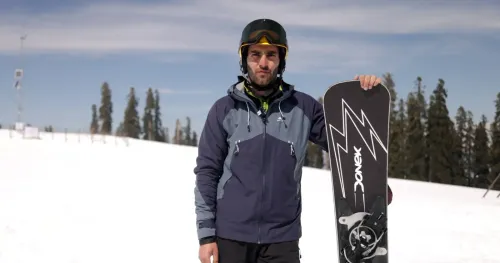
The 2026 edition will feature four medal disciplines: ski mountaineering, alpine skiing, Nordic skiing (cross-country), and snowboarding, drawing athletes and spectators nationwide.
As Gulmarg gets ready to host another significant winter sports event, the Khelo India Winter Games are evolving into more than just a competition. They symbolize a concrete illustration of how sports policies can invigorate local economies, bolster national sporting culture, and reaffirm Gulmarg's status as India’s winter sports capital.
Point of View
It's essential to recognize that the Khelo India Winter Games in Gulmarg illustrate the government's commitment to fostering sports while revitalizing local economies. This event exemplifies the profound impact of sports policies on communities and reinforces the importance of sustained investment in our national sporting infrastructure.
NationPress
26 Sept 2026
Frequently Asked Questions
What is the Khelo Bharat Niti?
The Khelo Bharat Niti is a government initiative launched by the Union Sports Ministry aimed at strengthening India's sporting ecosystem and driving economic growth through major sports events.
When are the Khelo India Winter Games scheduled?
The Khelo India Winter Games are scheduled to take place from February 23 to 26, 2026.
How has tourism been affected by the Winter Games?
Tourism has seen a significant boost in Gulmarg, with local businesses reporting increased bookings and economic activity ahead of the Winter Games.
What disciplines will be featured in the 2026 Winter Games?
The 2026 edition will include ski mountaineering, alpine skiing, Nordic skiing (cross-country), and snowboarding.
How many athletes participated in previous editions?
Participation has grown from 1,123 athletes in 2020 to 1,395 in 2023, showcasing the increasing popularity of the Games.