CWG 2026: India's CMO warns 90% of OTC supplements carry doping risk
Synopsis
India's top sports doctor at CWG 2026 has flagged a startling finding: 90% of over-the-counter supplements carry contaminants that can end careers without athletes even knowing they cheated. Set against 78 doping cases already recorded in 2026 and a three-year upward trend, Dr. Pardiwala's warnings are less a caution and more an alarm bell for Indian sport's clean-up challenge.
Key Takeaways
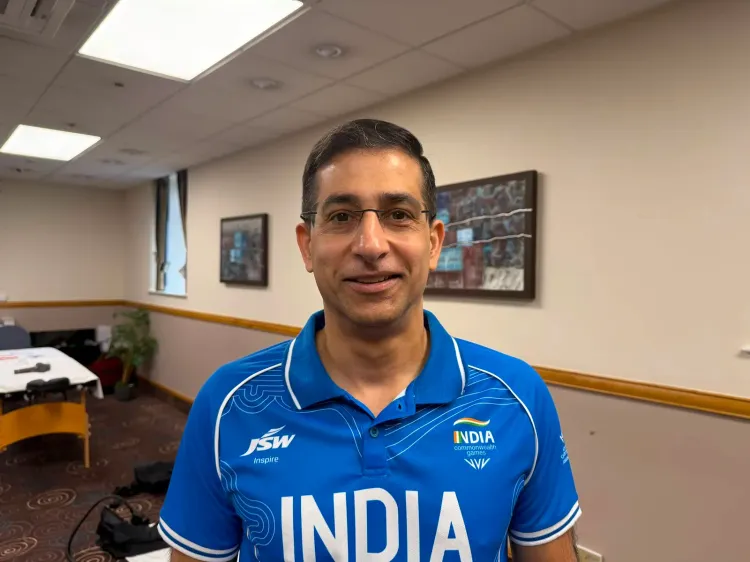
India's CWG 2026 chief medical officer Dr.
Pardiwala called doping a 'menace' threatening the country's global sporting image.
A recent study found 90% of over-the-counter supplements contain contaminants, raising inadvertent doping risk.
India recorded 78 doping violations as of 15 July 2026 , with Uttar Pradesh and Punjab topping the list at 13 cases each .
Annual doping cases: 213 in 2023 , 260 in 2024 , 131 in 2025 , and 78 in the first half of 2026 .
The Indian Olympic Association (IOA) signed an MoU with the Neeraj Chopra Foundation to advance clean sport education.
Pardiwala urged athletes to seek medical clearance before consuming any supplement or medication.
India's chief medical officer at the Commonwealth Games 2026, Dr. Pardiwala, has called doping a 'menace' that threatens the country's global sporting reputation, while sounding a sharp warning that 90% of over-the-counter supplements contain contaminants that can trigger inadvertent anti-doping violations. Speaking from Glasgow on 25 July 2026, Pardiwala urged athletes to rely exclusively on medically approved substances and to treat self-prescription as a career-ending risk.
India's Doping Record in Numbers
The CMO's remarks arrive against a sobering statistical backdrop. Sports Minister Mansukh Mandaviya recently disclosed in a written reply to the Lok Sabha that India had already recorded 78 doping violations as of 15 July 2026, with Uttar Pradesh and Punjab leading the tally at 13 cases each. The figure follows 131 total violations in 2025, 260 in 2024, and 213 in 2023 — a pattern that points to a systemic challenge rather than isolated incidents.
Two Routes Into the Doping Trap
Dr. Pardiwala drew a clear line between deliberate cheating and accidental contamination. On the deliberate side, he argued that athletes chasing quick financial rewards and government jobs are gambling with careers that modern detection technology makes increasingly difficult to protect. 'If you're taking it and you think that you're going to escape, the chances are very, very low that you're going to escape,' he said.
On inadvertent doping, the CMO pointed to a recent study finding that 90% of commercially available supplements carry some form of contaminant. 'You're not doing it knowingly, but inadvertently you're taking something that is then spoiling your entire sports career and spoiling the reputation of a country,' he said.
Education and Medical Oversight as the Fix
The CMO identified education as the primary defence, stressing that athletes, coaches, support staff, and sports nutrition consultants must all understand what substances are approved in and out of competition. His second prescription was institutional oversight: no supplement or medication should be consumed without clearance from the athlete's medical team or federation doctor. 'Make sure that no matter what you take, someone approves it,' he said.
Pardiwala was equally direct on the temptation of shortcuts. 'Most athletes need to recognise that there is no shortcut to success. It's going to be years and years and years of hard work,' he said, adding that the technology for catching dopers has never been more advanced.
IOA–Neeraj Chopra Foundation Partnership
On the institutional front, the Indian Olympic Association (IOA) has signed a Memorandum of Understanding (MoU) with the Neeraj Chopra Foundation to promote clean sport. Dr. Pardiwala welcomed the alliance, saying it 'is going to make a big difference over the next year or two.' The partnership is expected to expand athlete awareness programmes ahead of future multi-sport events.
With India's doping caseload rising sharply over three consecutive years, the pressure on the CWG 2026 contingent's medical infrastructure — and on national anti-doping governance more broadly — will only intensify as the Games progress.
Point of View
260 in 2024, 131 in 2025, and already 78 in the first half of 2026 — does not suggest a problem being solved; it suggests one being managed at best. The IOA–Neeraj Chopra Foundation MoU is a welcome signal, but awareness campaigns alone cannot substitute for a robust, independent testing infrastructure and meaningful athlete sanctions. The CMO's 90% supplement contamination figure also exposes a regulatory gap: if the market is that polluted, the answer cannot rest solely on individual athletes doing their due diligence. What is missing from this conversation is accountability upstream — on manufacturers, on sports federations that allow unvetted supplement deals, and on a national anti-doping architecture that is still playing catch-up with the scale of the problem.
NationPress
24 Oct 2026
Frequently Asked Questions
What did India's CWG 2026 CMO Dr. Pardiwala say about doping?
Dr. Pardiwala called doping a 'menace' that must be rooted out to protect India's global sporting reputation. He identified both deliberate cheating and inadvertent supplement contamination as key risks, and urged athletes to get medical clearance before consuming any supplement or medication.
How many doping cases has India recorded in 2026?
India recorded 78 doping violations as of 15 July 2026, according to Sports Minister Mansukh Mandaviya's written reply to the Lok Sabha. Uttar Pradesh and Punjab led with 13 cases each.
Why are over-the-counter supplements a doping risk for athletes?
A recent study cited by Dr. Pardiwala found that 90% of over-the-counter supplements contain some form of contaminant that could trigger a positive anti-doping test. Athletes may consume these unknowingly, resulting in inadvertent violations that can end careers.
What is the IOA–Neeraj Chopra Foundation MoU about?
The Indian Olympic Association (IOA) signed a Memorandum of Understanding with the Neeraj Chopra Foundation to promote clean sport in India. Dr. Pardiwala said the initiative 'is going to make a big difference over the next year or two' in educating athletes about anti-doping.
How has India's doping caseload trended in recent years?
India's annual doping violations rose from 213 in 2023 to 260 in 2024, before falling to 131 in 2025. With 78 cases already logged in the first half of 2026, the full-year figure will depend on enforcement activity in the months ahead.