India finish 4th at Asian Games 2026 with 85 medals, historic firsts
Synopsis
India's 500-strong contingent returned from Aichi-Nagoya with 85 medals — second only to their own Hangzhou record — and a clutch of historic firsts: the nation's first women's golf gold, the first women's individual recurve gold, and the end of a 44-year drought in women's hockey. Crucially, they also locked in LA 2028 Olympic quotas in archery and hockey, turning a strong continental performance into a long-range Olympic investment.
Key Takeaways
India finished 4th at the Asian Games 2026 in Aichi-Nagoya with 85 medals — 21 gold, 27 silver, 37 bronze .
The haul is the second-highest ever for India at the Asian Games, behind the record 106 medals at Hangzhou 2023 .
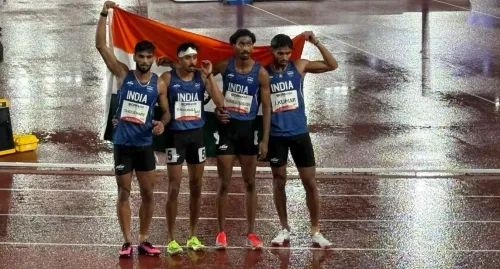
Athletics led with 24 medals ; archery topped in gold with five ; shooting contributed 15 medals .
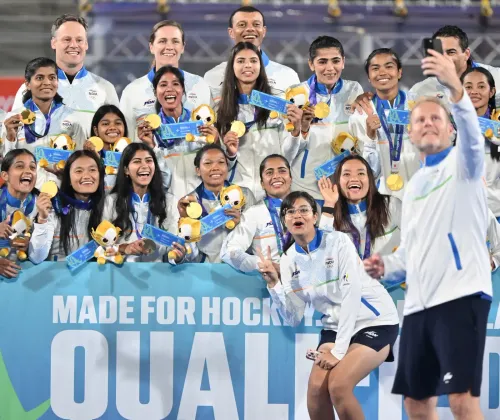
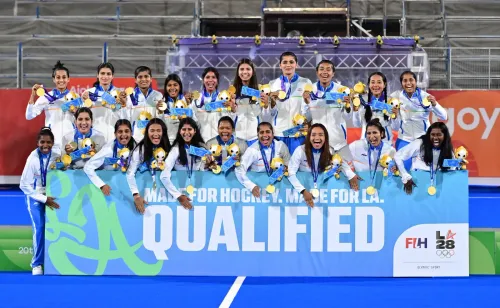
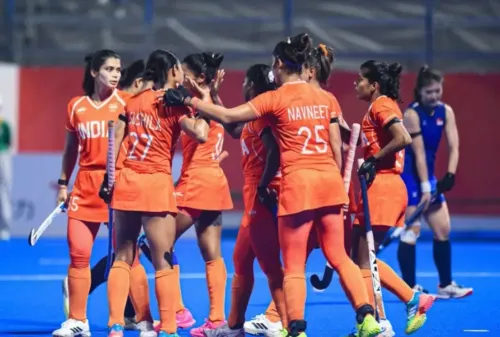
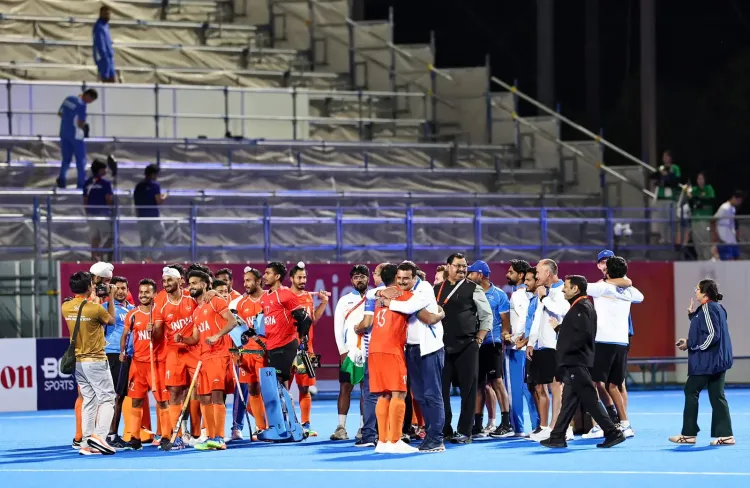
Women's hockey ended a 44-year wait for Asian Games gold; men's and women's cricket and kabaddi teams all won gold.
Historic firsts for Pranavi Urs (golf), Kumkum Mohod (individual recurve archery), Lovlina Borgohain (boxing), and Sarvesh Kushare (high jump, ending a 56-year drought).
India secured LA 2028 Olympic quotas in men's and women's hockey and in compound mixed team and women's individual recurve archery.
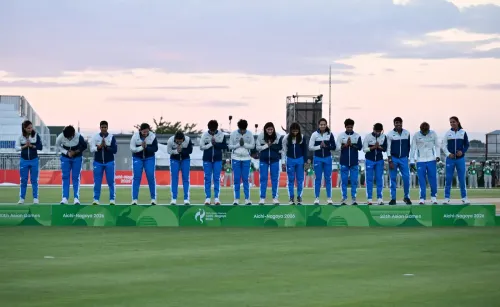
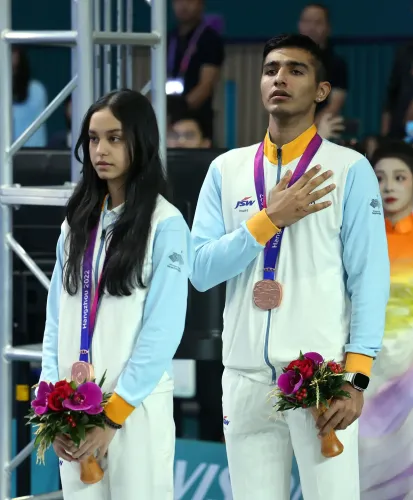
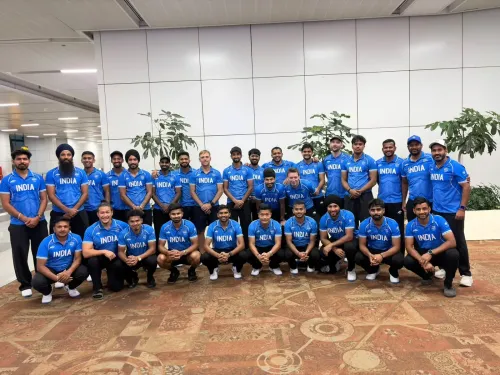
India concluded their Asian Games 2026 campaign in Aichi-Nagoya, Japan with 85 medals — 21 gold, 27 silver and 37 bronze — finishing fourth on the overall medals table on 3 October 2026. The haul, delivered by a contingent of roughly 500 athletes, is the second-highest in Indian Asian Games history, eclipsed only by the record 106 medals won at Hangzhou 2023.
India's Medal Breakdown
Athletics was India's single largest contributor, accounting for 24 medals in total. Shooting followed with 15 medals, including three gold. Archery led all disciplines in gold medals with five, while boxing claimed three golds. India's best single day came on the penultimate Friday of competition, when the team amassed 12 medals, among them six gold — three from boxing alone.
In team sports, both the men's and women's cricket teams defended their continental titles: the men beat Pakistan by 19 runs in the final, while the women topped Sri Lanka. Both the men's and women's kabaddi teams claimed gold, and the women's hockey team ended a 44-year wait for an Asian Games title.
Historic Firsts and Record Performances
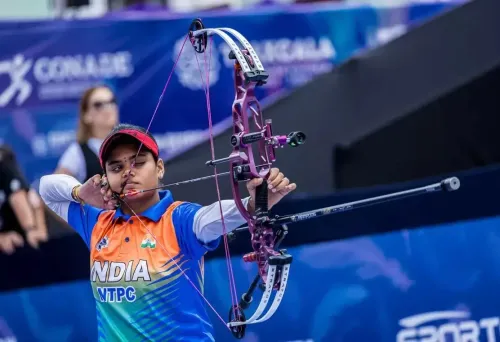
The Games were marked by a string of landmark achievements. Pranavi Sharath Urs became the first Indian woman to win gold in golf at the Asian Games. Kumkum Anil Mohod, just 17 years old, became the first Indian woman to claim individual recurve gold at the continental championships, and was also part of the women's recurve team — alongside Ankita Bhakat and Kirti Sharma — that won the team title, a historic first for Indian women.
Neeru Dhanda won the event's first individual gold in the women's trap shooting. Kumkum Mohod and Suruchi Singh equalled Asian records to secure gold in the mixed team 10m air pistol event. Lovlina Borgohain won boxing gold, becoming only the second Indian woman to achieve that feat at the Asian Games after Mary Kom at the 2014 Incheon edition.
Sawan Barwal secured India's first marathon medal since 1982, setting a national record in the process. Sarvesh Kushare ended a 56-year wait for a men's high jump medal. Baranica Elangovan became the first Indian pole vaulter to medal at the Asian Games. Vithya Ramraj broke a 42-year-old national record in the women's 400 metres hurdles to claim bronze.
In wrestling, Aman Sehrawat and Sujeet Kalkal won gold, Antim Panghal claimed silver, and Deepak Punia added bronze. Yash Vir Singh took silver and Rohit Yadav bronze in the men's javelin — a strong showing even without the injured Neeraj Chopra.
Other notable firsts: Mirabai Chanu won silver in women's 49kg weightlifting, India's first Asian Games medal in that sport since 1998 in Bangkok. Anahat Singh became the first Indian woman to win a silver in the squash singles. Suchika Tariyal earned India's first-ever Asian Games medal in mixed martial arts, and Jay Meena reached the mixed martial arts semifinals in soft tennis, another first.
Olympic Quotas Secured
Beyond the medals, India secured crucial LA 2028 Olympic quotas in archery and hockey. Of the seven sports granting Olympic qualification spots at Aichi-Nagoya — archery, hockey, sailing, squash, surfing, tennis, and triathlon — India qualified in both the men's and women's hockey events, as well as in compound mixed team and women's individual recurve archery, giving the campaign an added dimension beyond the continental podium.
How 2026 Compares with Hangzhou 2023
At Hangzhou 2023, a larger squad of 650 athletes won 28 gold, 38 silver and 40 bronze for a record 106 medals. The 2026 contingent of ~500 came away with 21 gold, 27 silver and 37 bronze — a smaller team, fewer medals overall, but a richer vein of historic firsts and Olympic qualification slots that point toward long-term depth. India's fourth-place finish places them solidly among Asia's top sporting nations, behind only the traditional powerhouses.
With Olympic quotas secured and a generation of emerging athletes blooded on the continental stage, India's sports ecosystem will look to convert Aichi-Nagoya's momentum into a stronger showing at the 2028 Los Angeles Olympics.
Point of View
But the headline number obscures the story underneath: a smaller contingent, a richer seam of historic firsts, and — most consequentially — Olympic quotas in archery and hockey that Hangzhou did not yield. The real test of Indian sport is not how many medals it wins at regional Games but how many of those athletes translate continental form into Olympic podium finishes. Aichi-Nagoya offers genuine reasons for optimism on that front, even as the gap to Hangzhou's tally is a reminder that depth across all disciplines remains uneven.
NationPress
3 Oct 2026
Frequently Asked Questions
How many medals did India win at the Asian Games 2026?
India won 85 medals — 21 gold, 27 silver, and 37 bronze — at the Asian Games 2026 in Aichi-Nagoya, Japan, finishing fourth on the overall medals table. This is the second-highest medal haul in Indian Asian Games history.
How does India's 2026 Asian Games performance compare to Hangzhou 2023?
At Hangzhou 2023, India set a record of 106 medals (28 gold, 38 silver, 40 bronze) with a squad of 650 athletes. The 2026 contingent of around 500 athletes won 85 medals — fewer in total but with several historic firsts and crucial Olympic qualification slots that Hangzhou did not deliver.
Which sports gave India the most medals at Asian Games 2026?
Athletics contributed the most with 24 medals, followed by shooting with 15. Archery led in gold medals with five, while boxing claimed three golds. Cricket, kabaddi, and hockey all produced gold-medal winning teams.
What historic firsts did India achieve at the Asian Games 2026?
India achieved multiple firsts, including Pranavi Urs becoming the first Indian woman to win golf gold, 17-year-old Kumkum Mohod becoming the first Indian woman to win individual recurve archery gold, the women's hockey team ending a 44-year Asian Games title drought, and Sarvesh Kushare ending a 56-year wait for a men's high jump medal.
Did India qualify for the LA 2028 Olympics at the Asian Games 2026?
Yes, India secured Olympic quotas for the 2028 Los Angeles Olympics in men's and women's hockey and in compound mixed team and women's individual recurve archery. Aichi-Nagoya offered Olympic qualification spots across seven sports, and India capitalised in two disciplines.