CM Himanta: Assam shrinks AFSPA cover from entire state to 3 districts

Synopsis
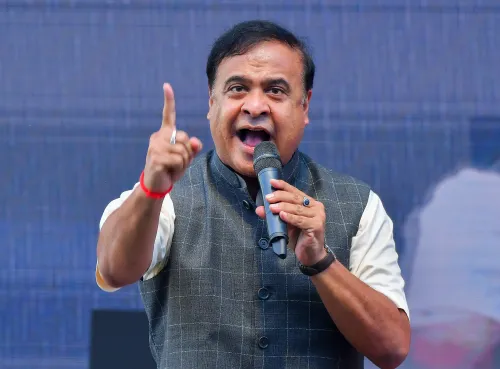
Assam CM Himanta Biswa Sarma on October 3, 2026 highlighted that AFSPA — once applied across all of Assam — now covers only 3 districts, calling it proof of an uncompromising stand against crime and terror in the state.
Key Takeaways
AFSPA , once in force across the entire state of Assam, now applies to only 3 districts as of October 2026.
Chief Minister Himanta Biswa Sarma attributed the reduction to an 'uncompromising stand against crime and terror.' The Armed Forces (Special Powers) Act grants security forces sweeping powers in areas declared 'disturbed,' and its rollback signals a significant improvement in ground security conditions.
Assam has seen large-scale insurgent surrenders and sustained counter-insurgency operations over the past several years.
Three districts in Assam remain under AFSPA, meaning complete normalisation of civilian legal protections is not yet achieved statewide.
What was once a state blanketed entirely by one of India's most controversial security laws has, district by district, clawed its way back toward normalcy. Assam Chief Minister Himanta Biswa Sarma on Saturday, October 3, 2026, pointed to a stark before-and-after: the Armed Forces (Special Powers) Act (AFSPA) — once covering every corner of Assam — now applies to just three districts, a milestone he called the direct fruit of an 'uncompromising stand against crime and terror.'
From statewide coverage to three districts: the AFSPA arc in Assam
AFSPA grants the armed forces sweeping powers — search, arrest, and use of lethal force without prior civilian sanction — in areas declared 'disturbed.' For decades, the entire state of Assam carried that designation, a legacy of insurgency movements that made the Brahmaputra valley one of the most heavily securitised zones in South Asia. The shrinkage of that footprint to three districts, as Sarma now highlights, marks a dramatic reversal of that geography of conflict.
The law has long been a flashpoint between security imperatives and civil-liberties concerns. Human rights groups and opposition parties across the Northeast have for years demanded its repeal, arguing it enables impunity. The reduction of its ambit — even if short of full withdrawal — represents the kind of ground-level change that successive governments promised but rarely delivered at this scale.
What the three-district figure signals for Northeast security
Sarma's framing is deliberate: this is not a political gift but a security outcome, earned by sustained pressure on militant outfits. Over the past several years, Assam saw a wave of surrenders by cadres of groups that had long waged insurgency in the state, alongside intensified operations that steadily pushed organised armed groups out of their traditional strongholds. The shrinking AFSPA map is, in that reading, a scoreboard — and today's number is three.
The Chief Minister, who also serves as convenor of the North-East Democratic Alliance (NEDA), has made internal security a signature theme of his tenure. The implicit argument embedded in his post is that hard, unrelenting counter-insurgency — not negotiation alone — is what moved the needle. Whether that framing holds up to scrutiny in the remaining three districts will define the next chapter of this story.
The three districts still under AFSPA
While Sarma did not name the three districts in his post, the continued designation means residents there still live under a legal framework that suspends ordinary civilian protections. That distinction matters: celebrating the reduction is legitimate; ignoring the reality in the remaining districts would be incomplete. The benchmark for full normalcy in Assam remains the day that number reaches zero.
Point of View
Effectively turning a civil-liberties debate into a law-and-order success story. The unanswered question is whether the remaining three districts reflect genuine operational difficulty or a strategic reserve of the 'disturbed area' tag. For the BJP's Northeast calculus, a further rollback — or a full withdrawal — before the next election would be a potent closing argument.
NationPress
3 Oct 2026
Frequently Asked Questions
What is AFSPA and why does it matter in Assam?
The Armed Forces (Special Powers) Act (AFSPA) gives security forces the authority to search, arrest, and use lethal force without prior civilian court approval in areas declared 'disturbed.' In Assam, it was historically applied statewide due to decades of insurgency, making its gradual rollback a significant marker of returning stability.
How many districts in Assam are currently under AFSPA?
As of October 2026, according to CM Himanta Biswa Sarma, only 3 districts in Assam remain under AFSPA, down from a situation where the entire state was covered.
Why is Assam's AFSPA coverage being reduced?
The Assam government attributes the reduction to sustained counter-insurgency operations, a wave of militant surrenders, and what CM Sarma describes as an 'uncompromising stand against crime and terror' over recent years.
Was AFSPA ever applied to all of Assam?
Yes. For a significant period during the height of insurgency movements in the state, all of Assam was designated a 'disturbed area' under AFSPA, which is the baseline CM Sarma is contrasting the current three-district coverage against.
What happens in districts still under AFSPA?
In the three districts still designated as disturbed under AFSPA, the armed forces retain special powers and ordinary civilian legal protections are partially suspended — meaning full legal normalcy for residents there has not yet been restored.