India's 3 best Asian Games results in 12 years: Mandaviya credits Modi
Synopsis
India finished fourth at the 2026 Aichi-Nagoya Asian Games with 85 medals, and Sports Minister Mandaviya used the felicitation event to make a pointed argument: all three of India's best-ever Asian Games results have come under Modi's watch. With 310 debutants, a world record, and a ₹36,000-crore Khelo India outlay approved, the claim carries numbers — though independent scrutiny of the governance reforms will define its legacy.
Key Takeaways
India finished fourth at the 2026 Aichi-Nagoya Asian Games with 85 medals — 21 gold , 27 silver , 37 bronze .
Mansukh Mandaviya stated India's three best Asian Games performances have all come in the last 12 years .
310 of 501 contingent members were debutants; 106 of them won a combined 41 medals .
Athletes set 7 national records , 6 Asian records , and 1 world record at the Games.
The government approved a ₹36,000-crore Khelo India scheme for the next five years .
India has secured hosting rights for the 2030 Commonwealth Games and 2029 Police and Fire Games , with a 2036 Olympics bid ongoing.
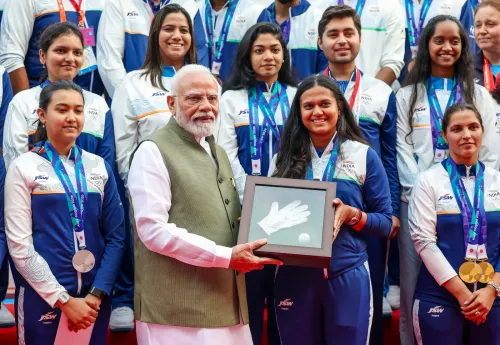
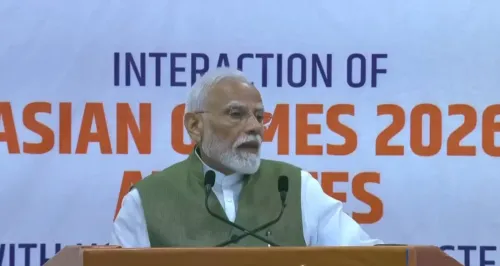
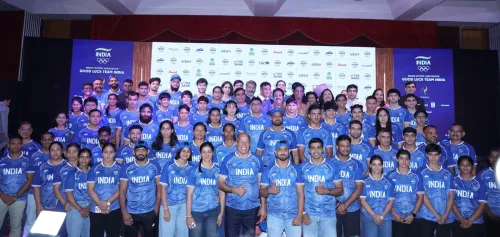
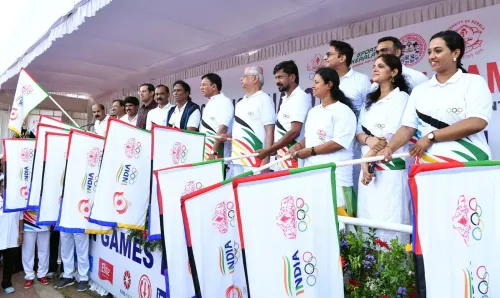
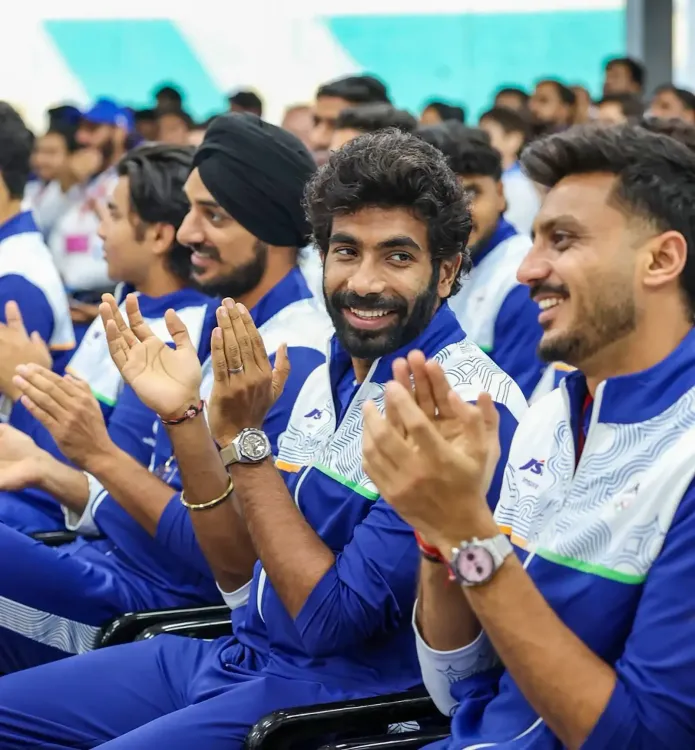
Union Sports Minister Dr. Mansukh Mandaviya on Thursday, 15 October 2026, credited Prime Minister Narendra Modi's leadership for India's sporting resurgence, stating that the country's three best performances at the Asian Games had all come within the last 12 years. The remarks were made during a felicitation event for the Indian contingent returning from the 2026 Asian Games at Aichi-Nagoya, Japan, held at the Major Dhyan Chand National Stadium in New Delhi.
India's Historic Showing at Aichi-Nagoya
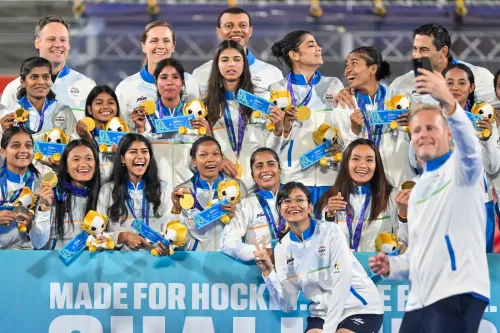
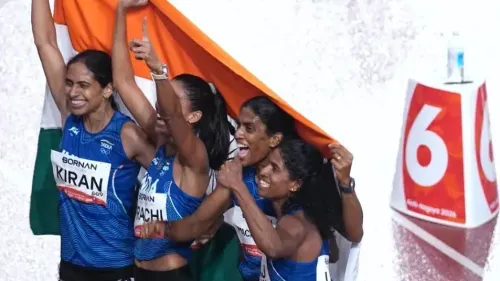
India finished fourth in the overall medal standings at the 2026 Aichi-Nagoya Asian Games with a total of 85 medals — comprising 21 gold, 27 silver, and 37 bronze. Athletes set seven national records, six Asian records, and one world record during the competition.
Notably, India won 22 medals across 14 sports in which it had never previously claimed a medal at the Asian Games, signalling significant breadth in the country's sporting development. The women's contingent contributed 47 medals in total, underscoring the growing depth of female athletic participation.
A Generation of Debutants Steps Up
Of India's 501-strong contingent, 310 athletes were making their debut at the continental event. Remarkably, 106 of those debutants won a combined 41 medals. The contingent carried an average age of just 25 years, reflecting what Mandaviya described as the emergence of a new generation of Indian athletic talent.
'These achievements reflect the strength of our emerging young talent and the progress being made in Indian sports,' Mandaviya said during the interaction with PM Modi.
Policy Push: Khelo India, Fit India and Governance Reform
Mandaviya attributed the transformation to a cluster of government initiatives launched under Modi's watch, including the Fit India Movement, the Khelo India policy, and the National Sports Governance Act. He also referenced the recent approval of a ₹36,000-crore Khelo India scheme for the next five years, describing it as a reflection of sport's growing centrality in the government's vision for a developed India.
'Over the past 12 years, you have established sports not merely as a sector but as a national movement,' Mandaviya told Modi, adding that the ecosystem had transformed, opportunities had increased, and the confidence of young Indian athletes had grown considerably.
Transparent Selection and Institutional Coordination
Mandaviya highlighted improvements in athlete selection, saying the process was now conducted openly, on camera, and in the presence of observers. He noted that the National Sports Federations (NSFs) and the Indian Olympic Association (IOA) were increasingly working in concert with the government to advance Indian sport, a coordination that he credited with improving outcomes at the international level.
India as a Global Sports Host
Beyond medals, Mandaviya pointed to India's expanding role as a venue for global sporting events. The country hosted 40 international sporting events over the preceding 18 months and is scheduled to organise 10 more in the coming months. India has also secured hosting rights for the 2029 Police and Fire Games and the 2030 Commonwealth Games, while its bid to host the 2036 Olympic Games remains active.
With record medal tallies, a young and diverse contingent, and an ambitious events pipeline, India's sporting ambitions appear to be moving well beyond the medal table — though the test of long-term institutional depth will come when the policy momentum is stress-tested by future cycles.
Point of View
Such as the National Sports Governance Act and transparent selection, versus the sheer expansion of competitive categories at the Asian Games. The ₹36,000-crore Khelo India outlay is substantial, but past sports funding in India has struggled with last-mile delivery to grassroots athletes. The real proof will come when India fields the same depth at an Olympic Games — where it has historically punched well below its weight despite the continental surges.
NationPress
15 Oct 2026
Frequently Asked Questions
How did India perform at the 2026 Asian Games in Aichi-Nagoya?
India finished fourth in the overall medal standings at the 2026 Aichi-Nagoya Asian Games with 85 medals — 21 gold, 27 silver, and 37 bronze. Athletes also set seven national records, six Asian records, and one world record during the competition.
What did Sports Minister Mandaviya say about India's Asian Games history?
Mandaviya stated that India's three best performances at the Asian Games have all come in the last 12 years, crediting Prime Minister Modi's leadership and government initiatives such as Khelo India and the Fit India Movement for the transformation.
What is the ₹36,000-crore Khelo India scheme?
The ₹36,000-crore Khelo India scheme is a five-year government investment in sports development, recently approved by the Centre. It builds on the existing Khelo India policy and is aimed at strengthening the sporting ecosystem across the country.
How many debutants were in India's 2026 Asian Games contingent?
Of India's 501-member contingent at the 2026 Asian Games, 310 athletes were competing at the continental event for the first time. Of those debutants, 106 won a combined 41 medals.
Which major international sporting events has India secured hosting rights for?
India has secured hosting rights for the 2029 Police and Fire Games and the 2030 Commonwealth Games. The country is also actively pursuing its bid to host the 2036 Olympic Games.