Why Does India Continue its 'No Handshake' Stance Against Pakistan in the U19 Asia Cup?
Synopsis
In a gripping U19 Men's Asia Cup encounter, Indian captain Ayush Mhatre maintained the controversial 'no handshake' policy against Pakistan. This stance, rooted in recent tensions, continues to draw attention. As the match unfolds, both teams aim for victory while upholding their principles.
Key Takeaways
India continues its 'no handshake' policy against Pakistan.
Ayush Mhatre led the team during a crucial match.
India scored a record total of 433/6 in the tournament.
Pakistan also had a strong start with a 297-run victory over Malaysia.
The ongoing rivalry impacts sportsmanship and diplomacy.
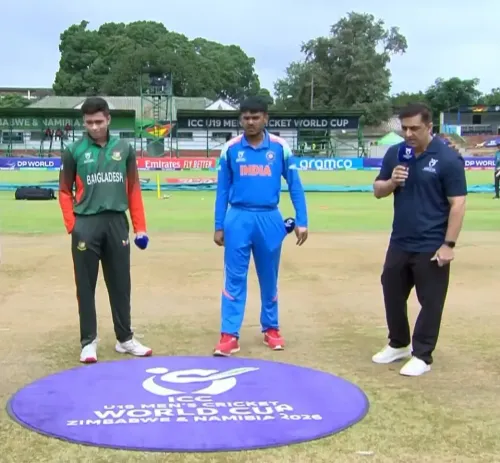
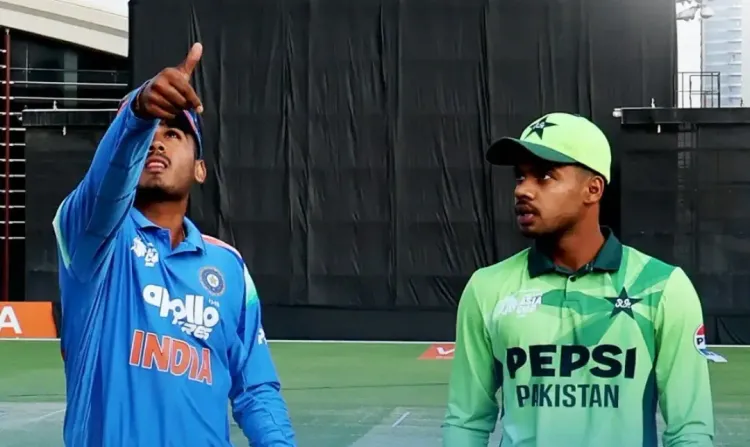
Dubai, Dec 14 (NationPress) As India and Pakistan clashed once more on the cricket pitch during the U19 Men's Asia Cup, Indian captain Ayush Mhatre adhered to the 'no handshake' policy in the group stage encounter at the ICC Academy Ground on Sunday.
At the toss, neither Mhatre nor Farhan Yousaf, the captain of Pakistan, took the step to perform the traditional handshake. After Pakistan opted to bowl first following their toss victory, the two captains avoided eye contact, conducted their interviews, and then proceeded to their respective dressing rooms.
This practice is a continuation of the no-handshake protocol that the Indian men's team began during the recent Asia Cup 2025, where they refrained from handshakes with their Pakistani opponents in all three matches of the tournament while also declining to accept the trophy from Mohsin Naqvi, President of the Asian Cricket Council and Interior Minister of Pakistan.
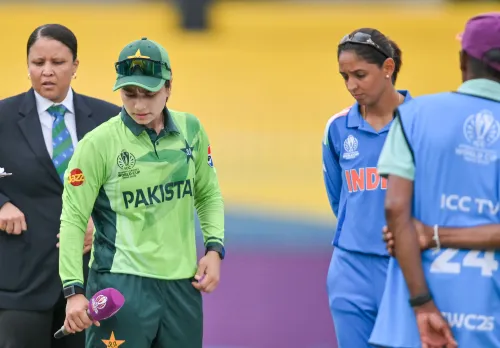
In a later encounter during the ICC Women’s ODI World Cup, Indian captain Harmanpreet Kaur upheld the 'no handshake' policy.
As for the match itself, Yousaf won the toss and opted to bowl first against India in a game shortened to 49 overs per side due to rainfall. Batting first, India currently struggles at 114-4 after 20 overs.
In their tournament opener, India achieved a remarkable victory over the UAE, winning by 234 runs after setting a record score in the Men's U19 Asia Cup.
Teenage sensation Vaibhav Suryavanshi scored an impressive 171, with Aaron George (69) and Vihaan Malhotra (69) also playing crucial roles. Vedant Trivedi (38), Abhigyan Kundu (32), and Kanishk Chouhan (28) rounded off the record total of 433/6.
India surpassed their previous U19 ODI record of 425/3, set against Scotland in 2004. The total of 433 is now the third-highest score ever recorded by any team in a men’s U19 one-day match.
Conversely, Pakistan secured a resounding victory over Malaysia U19, triumphing by 297 runs in their opening match.
Point of View
It's crucial to understand the broader context of the ongoing rivalry between India and Pakistan. The 'no handshake' policy signifies more than just a gesture; it reflects the complex political dynamics between the two nations. While sportsmanship is essential in cricket, the reality of these nations' history must be acknowledged.
NationPress
24 Sept 2026
Frequently Asked Questions
What is the 'no handshake' policy?
The 'no handshake' policy refers to the refusal of players from the Indian cricket team to shake hands with their Pakistani counterparts during matches, symbolizing ongoing political tensions.
Why did Ayush Mhatre enforce this policy?
Ayush Mhatre continued the 'no handshake' policy to maintain unity within the team and uphold the stance taken during previous tournaments, reflecting the current political climate.
How has this policy affected cricket relations between the two countries?
The policy has sparked discussions about sportsmanship and political influences in sports, potentially straining cricket relations but also highlighting the significance of national pride.
What were India's recent performances in the tournament?
India started the tournament strongly with a record-breaking victory over the UAE, showcasing their batting prowess and setting a high standard for their matches.
What are the implications of this ongoing rivalry?
The rivalry not only affects the cricketing field but also reflects deeper socio-political issues, influencing how sports are perceived in both nations.