Iran's World Cup ticket allocation revoked 3 days before tournament
Synopsis
Iran's football federation claims the US revoked its official FIFA World Cup ticket quota with just three days to go — leaving Iranian fans locked out of their team's group-stage matches in Los Angeles and Seattle. If the allegation holds, it marks one of the starkest cases of political interference in World Cup history, and puts FIFA's neutrality obligations squarely in the spotlight.
Key Takeaways
FFIRI alleges its 8 per cent FIFA-mandated ticket quota for the 2026 World Cup was revoked just three days before the tournament's start.
Iran are scheduled to face New Zealand ( 15 June , Los Angeles), Belgium ( 21 June , Los Angeles), and Egypt ( 26 June , Seattle) in the group stage.
FFIRI directly accused the United States of obstructing Iranian supporters' access to stadiums.
The federation called the move contrary to 'the principle of equality among participating countries' and flagged 'political interference' in the event's organisation.
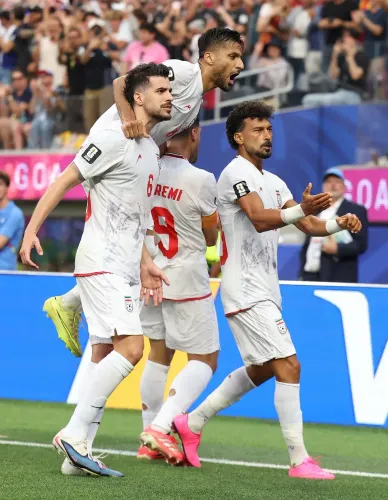
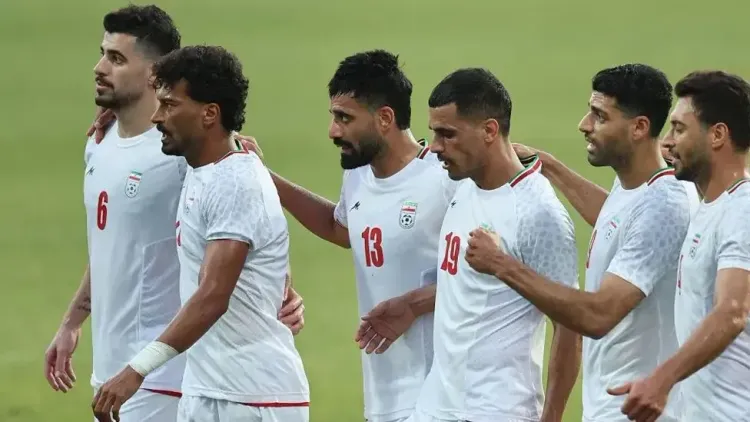
Iran's squad arrived in Tijuana, Mexico on Sunday and is set to play all three matches on US soil.
FIFA had not publicly responded to FFIRI's allegations at the time of reporting.
Iran's football federation (FFIRI) has alleged that its official ticket quota for the 2026 FIFA World Cup group stage was revoked just three days before the tournament's start, in a move it directly attributes to political interference by the United States. The World Cup, co-hosted by Canada, Mexico, and the United States, is set to kick off on Thursday, 12 June 2026.
What FFIRI Alleged
According to FIFA regulations, 8 per cent of each match's ticket capacity is allocated to the participating federation, enabling fans to purchase tickets through official channels. FFIRI had begun selling tickets for Iran's three group-stage fixtures — against New Zealand on 15 June, Belgium on 21 June in Los Angeles, and Egypt on 26 June in Seattle — through its official website after receiving the relevant quota.
The federation subsequently alleged that this quota was unilaterally withdrawn, making it impossible to sell even a single ticket to Iranian supporters through official federation mechanisms.
Iran's Statement: 'Political Obstruction'
'With less than three days remaining until the start of the 2026 World Cup… the United States has once again acted to obstruct the presence of Iranian supporters at the stadiums hosting the national team's three group stage matches,' FFIRI said in a statement on Tuesday.
The federation added that 'depriving Iranian supporters of access to their lawful and official allocation of tickets is an action contrary to the spirit of governing international competitions and the principle of equality among participating countries.' It further stated the move 'raises serious questions about the interference of non-sporting and political considerations in the organisation of the world's biggest football event.'
Iran's Team Already in North America
Despite the ticket dispute, Iran's national squad arrived in Tijuana, Mexico, early on Sunday ahead of their scheduled fixtures in the United States. The team's group-stage matches are all set to be played on US soil, adding a layer of diplomatic complexity to the situation.
Broader Context
This is not the first time geopolitics has cast a shadow over Iran's participation in major sporting events held in or involving the United States. The US and Iran have had no formal diplomatic relations since 1980, and tensions over visas, travel restrictions, and access have historically complicated the movement of Iranian athletes and fans. Notably, this incident comes amid already heightened US-Iran tensions on multiple fronts. Critics argue that if the ticket revocation was indeed directed by US authorities, it sets a troubling precedent for the politicisation of World Cup hosting rights. FIFA has not issued a public response to FFIRI's allegations as of the time of this report.
The episode raises urgent questions about the responsibilities of host nations under FIFA's hosting agreements, and whether adequate protections exist for participating federations from all countries — regardless of the host government's political relationships.
Point of View
If substantiated, would represent an extraordinary breach of FIFA's foundational principle of political neutrality in football. The timing — three days before kickoff, with Iran's squad already on the ground in North America — suggests this is not an administrative error. FIFA awarded the 2026 hosting rights to a US-led consortium knowing full well the geopolitical complications that would arise with nations like Iran; the absence of a pre-agreed protective framework for such federations now looks like a serious governance failure. The real accountability question is not just what the US did, but what FIFA agreed to — and whether the governing body has the institutional courage to respond publicly when a host government acts against a participating federation.
NationPress
24 Oct 2026
Frequently Asked Questions
What happened to Iran's FIFA World Cup 2026 ticket allocation?
Iran's football federation FFIRI says its official ticket quota — equal to 8 per cent of capacity per match under FIFA regulations — was revoked just three days before the 2026 World Cup began. The federation alleges the United States is responsible for withdrawing the allocation, leaving Iranian fans unable to purchase tickets through official channels.
Which matches is Iran playing at the 2026 World Cup?
Iran are scheduled to play New Zealand on 15 June and Belgium on 21 June in Los Angeles, before facing Egypt on 26 June in Seattle — all three group-stage matches on US soil.
Why does FFIRI blame the United States?
FFIRI stated that 'the United States has once again acted to obstruct the presence of Iranian supporters at the stadiums,' framing the ticket revocation as politically motivated. The US and Iran have had no formal diplomatic relations since 1980, and the federation cited interference of 'non-sporting and political considerations' in the tournament's organisation.
Has FIFA responded to Iran's ticket dispute?
As of the time of reporting, FIFA had not issued a public response to FFIRI's allegations. The governing body's silence is itself drawing scrutiny, given that its own regulations guarantee participating federations an 8 per cent ticket allocation per match.
Where is Iran's team based ahead of the World Cup?
Iran's national squad arrived in Tijuana, Mexico, early on Sunday ahead of their group-stage fixtures. Despite the ticket dispute, the team is present in North America and is set to play all three matches in the United States.