FIFA to pay Somali referee Artan full World Cup fee after US entry denial
Synopsis
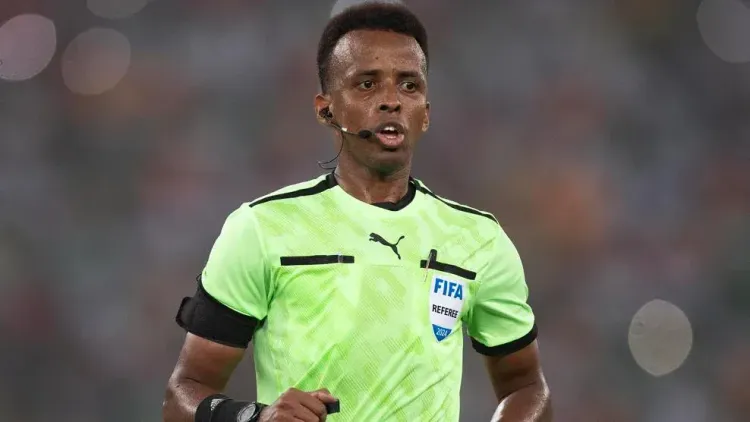
A Somali referee set to make history as the first from his country to officiate at a FIFA World Cup was turned away at Miami International Airport despite holding a valid visa. FIFA has confirmed he won't participate — and will reportedly pay him in full anyway. The case puts a sharp spotlight on the friction between US immigration policy and the global reach of the 2026 World Cup.
Key Takeaways
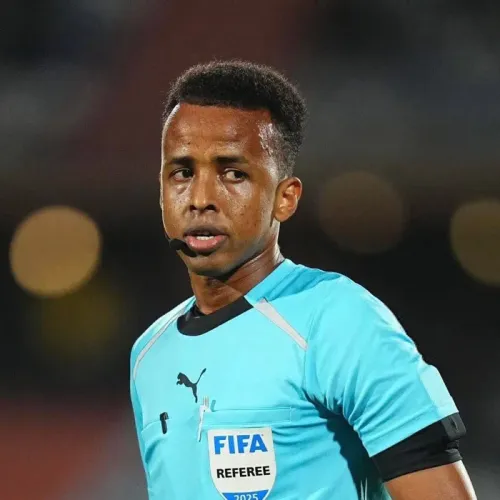
FIFA will reportedly pay Omar Abdulkadir Artan his full tournament fee for the 2026 FIFA World Cup despite his exclusion from the event.
Artan, 34 , was denied entry by US immigration authorities at Miami International Airport despite holding a valid visa.
He was set to become the first Somali referee to officiate at a FIFA World Cup — one of 52 referees selected for the tournament.
FIFA stated it is 'not involved in host country immigration processes' and that the host government determines who is admitted.
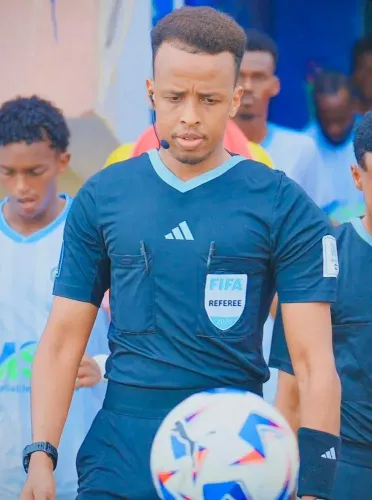
Artan became a FIFA-listed referee in 2018 and has officiated at the Africa Cup of Nations (AFCON) , among other major competitions.
FIFA will reportedly pay Somali referee Omar Abdulkadir Artan his full tournament fee for the 2026 FIFA World Cup, despite his inability to officiate at the competition after being denied entry into the United States. The world governing body has decided to ensure Artan is not financially penalised by circumstances beyond his control, according to a BBC report.
What Happened at Miami Airport
Artan, 34, was among 52 referees selected by FIFA to officiate at the World Cup, jointly hosted by Canada, Mexico, and the United States from 11 June to 19 July. He was poised to become the first Somali referee to take charge of a match at a FIFA World Cup — a historic milestone that was abruptly cut short.
Despite holding a valid entry visa, Artan was stopped by US immigration authorities at Miami International Airport upon arrival and refused admission into the country. He was subsequently returned to Istanbul before travelling back to Somalia, according to reports. Cisse Aden Abshir, an adviser to Somalia's Ministry of Youth and Sports, confirmed that Artan was detained by immigration officials at Miami and was unable to proceed.
FIFA's Official Position
FIFA formally confirmed Artan's exclusion from the tournament in an official statement. 'FIFA can confirm that match official Omar Abdulkadir Artan will be unable to train and officiate at the FIFA World Cup 2026 after he was denied entry into the United States,' the statement read.
The governing body was careful to distance itself from the immigration decision, stating: 'FIFA is not involved in host country immigration processes, including visa adjudications, and has been informed by authorities that Mr Artan's status will not be changed at present.' FIFA further noted that, in line with its previous tournaments, 'a host government ultimately determines who receives a visa and who is admitted into their country.'
Artan's Background and Career
A senior official in Somalia's national football league, Artan became a FIFA-listed referee in 2018 and has built a credible continental record, having officiated at several major competitions including the Africa Cup of Nations (AFCON). His selection for the World Cup had been widely celebrated in Somalia as a landmark achievement for the country's football community.
Broader Context and What It Means
Artan's case has drawn attention to the intersection of US immigration policy and the administration of a global sporting event. This is not the first time host-country visa decisions have affected World Cup participants, but the denial of a FIFA-appointed match official — holding a valid visa — marks a particularly sharp instance of the friction. Notably, the 2026 World Cup is the first edition to feature 48 teams, making the referee pool and its diversity all the more significant to FIFA's credibility as a global institution.
With FIFA committing to his full remuneration, the financial impact on Artan is reportedly contained — but the reputational and historic cost of missing what would have been a career-defining tournament cannot be offset by a fee.
Point of View
Not a solution. The deeper question is whether FIFA built adequate diplomatic safeguards into its host-country agreements for the 2026 edition, and whether the US-Canada-Mexico tri-host model creates uneven access risks for officials from certain passport profiles. That is a structural issue that one tournament fee does not resolve.
NationPress
13 Sept 2026
Frequently Asked Questions
Why was Somali referee Omar Abdulkadir Artan denied entry into the United States?
Artan was stopped by US immigration authorities at Miami International Airport despite holding a valid entry visa, and was refused admission into the country. The specific reasons for the denial have not been publicly disclosed by US authorities; Somalia's Ministry of Youth and Sports confirmed he was detained upon arrival and unable to enter.
Will FIFA pay Omar Artan despite him not officiating at the World Cup?
Yes, according to reports citing the BBC, FIFA has decided to pay Artan his full tournament remuneration, ensuring he is not financially disadvantaged by the circumstances that prevented him from participating in the 2026 FIFA World Cup.
What was Omar Artan's significance at the 2026 FIFA World Cup?
Artan, 34, was set to become the first Somali referee to officiate at a FIFA World Cup — a historic milestone for Somali football. He was one of 52 referees selected by FIFA for the tournament, co-hosted by the United States, Canada, and Mexico.
What did FIFA say about Artan's visa denial?
FIFA confirmed in an official statement that Artan would be unable to train or officiate at the 2026 World Cup. It stated it is 'not involved in host country immigration processes' and that the host government ultimately determines who is admitted, distancing itself from the immigration decision.
What is Omar Artan's refereeing background?
Artan became a FIFA-listed referee in 2018 and has officiated at several major continental competitions, including the Africa Cup of Nations (AFCON). He also holds a senior role in Somalia's national football league.