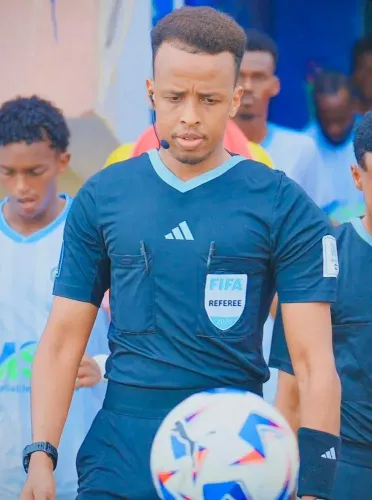
Somali referee Artan denied US entry for FIFA World Cup 2026 despite valid visa
Synopsis
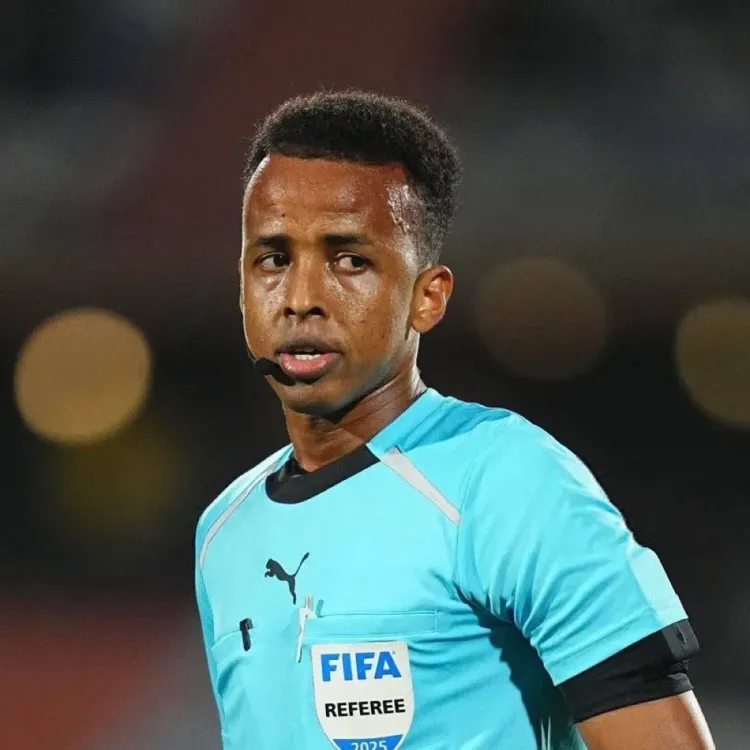
Omar Abdulkadir Artan had the visa, the papers, and history within reach — he would have been Somalia's first-ever World Cup referee. Instead, after an 11-hour interrogation at Miami airport, he was detained and deported. With no official reason given, his case puts a human face on the collision between Trump's travel restrictions and the FIFA World Cup 2026 on US soil.
Key Takeaways
Omar Abdulkadir Artan was denied entry at Miami International Airport and removed from FIFA 's official list of World Cup 2026 match officials.
He would have been the first Somali referee to officiate at a FIFA World Cup finals.
Artan underwent an immigration interview lasting 11 hours before being detained and deported to Istanbul, Turkey .
Somalia is among countries subject to travel restrictions under President Donald Trump 's administration; no official reason for the denial was provided.
FIFA confirmed it is not involved in host-country immigration processes and stated Artan's status 'will not change at this time.' A senior adviser to Somalia's Ministry of Youth and Sports confirmed Artan was travelling with valid documents.
Somali referee Omar Abdulkadir Artan has been barred from officiating at the FIFA World Cup 2026 after US immigration authorities denied him entry at Miami International Airport, shattering what he described as the biggest dream of his life. Artan had been set to become the first Somali referee to officiate at a World Cup finals before his removal from FIFA's official list of tournament officials on Monday, 9 June 2025.
What Happened at Miami Airport
Artan arrived at Miami International Airport carrying what he described as valid travel documents and a proper visa, only to be subjected to an immigration interview lasting 11 hours. He was subsequently detained in a holding cell for several additional hours before being placed on a return flight to Istanbul, Turkey.
'I am very, very disappointed,' Artan told the New York Times. 'I'm just simply a referee who's trying to live his dream — the biggest dream of my life, to come to the World Cup.' He added: 'I had the right papers and everything. I had the right visa.'
No Official Reason Given
No formal explanation has been provided by US immigration authorities for the denial. Notably, Somalia is among the countries subject to travel restrictions introduced under President Donald Trump's administration, which critics argue has created a chilling effect on legitimate travellers holding valid documentation.
A senior adviser to Somalia's Ministry of Youth and Sports confirmed that Artan was denied entry despite travelling with valid documents, underscoring the absence of any procedural irregularity on his part.
FIFA's Response
FIFA confirmed Artan's exclusion in an official statement: 'FIFA can confirm that match official Omar Abdulkadir Artan will be unable to train and officiate at the FIFA World Cup 2026 after he was denied entry into the United States.' The governing body added: 'FIFA is not involved in host country immigration processes, including visa decisions, and has been informed by authorities that Mr. Artan's status will not change at this time.'
Wider Context and What It Means
Artan's case has drawn attention to the intersection of US immigration policy and international sporting events, with the 2026 World Cup — co-hosted by the United States, Canada, and Mexico — already facing scrutiny over access for players, officials, and fans from countries on US travel restriction lists. This is not the first instance of a World Cup participant facing immigration hurdles ahead of the tournament.
For Somalia, Artan's exclusion represents a significant symbolic loss — he would have been a historic first for the nation on football's grandest stage. The incident is likely to intensify calls for FIFA to negotiate clearer entry guarantees for all accredited officials and participants in future host-country agreements.
Point of View
Players, and staff from multiple restricted nations still to travel, Artan's deportation is a warning, not an isolated incident.
NationPress
25 Oct 2026
Frequently Asked Questions
Why was Somali referee Omar Abdulkadir Artan denied entry to the US?
No official reason has been given by US immigration authorities. Artan arrived at Miami International Airport with what he and Somalia's Ministry of Youth and Sports described as valid documents and a proper visa, but was denied entry after an 11-hour immigration interview. Somalia is among the countries subject to travel restrictions under President Donald Trump's administration.
What is Omar Abdulkadir Artan's significance in football history?
Artan was set to become the first Somali referee to officiate at a FIFA World Cup finals. His removal from the tournament's official list of match officials means that historic milestone will not be achieved at the 2026 edition.
What did FIFA say about Artan's exclusion?
FIFA confirmed in a statement that Artan 'will be unable to train and officiate at the FIFA World Cup 2026 after he was denied entry into the United States.' The governing body stated it is not involved in host-country immigration or visa decisions, and that authorities have indicated Artan's status will not change.
What happened to Artan after he was denied entry at Miami airport?
After an 11-hour immigration interview, Artan was taken to a holding cell where he was detained for several more hours. He was then placed on a flight back to Istanbul, Turkey.
Does Trump's travel ban affect FIFA World Cup 2026 participants?
Somalia is one of the countries affected by travel restrictions introduced by the Trump administration. Artan's case has highlighted concerns about whether accredited FIFA officials and players from restricted nations can freely enter the United States for the 2026 World Cup, which is co-hosted by the US, Canada, and Mexico.