Jwala Gutta questions Padma Shri denial: 'Had I known PR mattered, I'd have made reels'
Synopsis
Jwala Gutta says she was denied the Padma Shri not because of her record — 14 national titles, a 2006 Commonwealth Games medal — but because she refused to play the PR game. Her broadside against Indian badminton's power structure, and the government's silence toward her 14-court Hyderabad academy, raises hard questions about how Indian sport treats its most outspoken women.
Key Takeaways
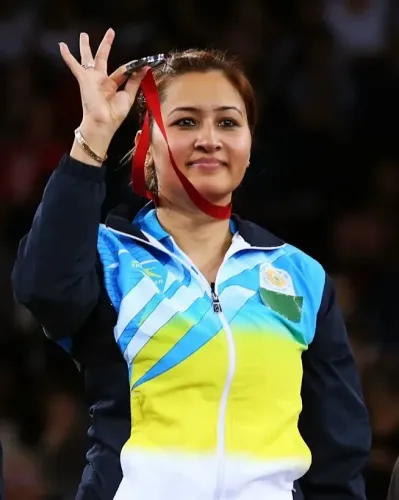
Jwala Gutta alleges she has been denied the Padma Shri despite being a 14-time national champion and 2006 Commonwealth Games gold medallist.
She claims Indian badminton is 'completely monopolised' by a single decision-maker who has blocked her from coaching U-13 and U-15 players.
Her Hyderabad academy has 14 courts across 50,000 square feet , built without institutional support.
Gutta says players who train at her academy are informally labelled 'rebellious' because of her public image.
She argues that female athletes who speak plainly face a double standard not applied to their male counterparts.
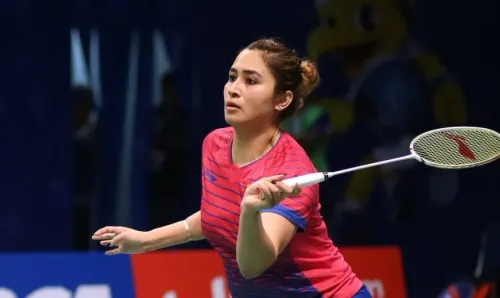
Former India doubles badminton star Jwala Gutta has launched a pointed critique of the Indian badminton establishment, alleging monopolisation of decision-making, systemic favouritism, and the sidelining of athletes who speak plainly — while also questioning why her two-decade contribution to the sport has not earned her the Padma Shri.
The Padma Shri Question
Gutta was unsparing on the subject of state recognition. 'I did not get my Padma Shri. If I send you my achievements, you will be shocked that I did not get a Padma Shri. Why am I not getting a Padma Shri? Because I didn't do PR, I didn't cry about poverty and struggle even though I went through all of it,' she said. She argued that public image management and media visibility are rewarded over athletic merit, adding: 'I worked hard, I trained for 10 hours, but no one believes it because of the way I look.' Reflecting on her generation's approach, Gutta stated: 'We came from a generation where we believed everything else would fall into place if you performed well. I didn't know PR was that important. Had I known, I would have danced to songs and made reels.'
Allegations of a Monopolised System
The 14-time national champion alleged that control over Indian badminton is concentrated in too few hands. 'The whole system is a problem. It's completely monopolised. Only one person decides everything. I have been saying for four years that I also have an academy. Don't give me U-19 or senior camps — give me U-13 or U-15 players. Include me also. The kids will play well, then they will represent India,' she said. Gutta claimed that players who train at her Hyderabad-based academy are informally labelled as troublemakers because of her outspoken reputation. 'Whoever trains in Jwala Gutta Academy becomes 'rebellious'. That's the reputation they have made of mine,' she remarked.
Running an Academy Without Institutional Support
Gutta described the financial and logistical burden of maintaining a world-class facility without government or association backing. 'My academy in Hyderabad is one of the biggest academies in the country. I have 14 courts spread across 50,000 square feet and I built it all alone. Still, I am not getting support,' she said. She added that an initial approach to the Sports Ministry yielded little. 'I did initially, but their attitude is not that great. I'm infamous,' she claimed.
The Doubles Legacy She Says Is Being Overlooked
Gutta argued that the current generation of Indian doubles players benefits directly from the visibility she created. 'In 2006, if I hadn't won a medal at the Commonwealth Games, badminton players would not have been on the priority list. Whatever exposure trips juniors are enjoying today is because of the path I led as a doubles player,' she said. Despite India's improved doubles results in recent years, she maintained that the discipline still lacks structural attention. 'Nobody is interested because they are just going about playing. They are not talking about how to improve the system,' she said.
Gender and Perception in Indian Sport
Born to a Chinese mother and a Telugu father, Gutta also addressed how appearance-based assumptions affect how female athletes are perceived. 'If I like to colour my hair and have pedicures and manicures, it translates to me not being a serious athlete. This is not my fault, but it is true,' she said. She argued that directness, which is accepted from male athletes, invites controversy when it comes from women. 'If I say I'm straightforward, it becomes controversial. There is a difference between a man and a woman. If I say it, it becomes controversial, and people don't like it,' she added. The remarks surface a wider debate about double standards in how Indian sporting institutions and media engage with outspoken women athletes.
Point of View
And her case fits a pattern: athletes who built disciplines from scratch, in less glamorous formats, rarely receive the same recognition as those who inherited thriving ecosystems. The doubles game in India is more competitive today partly because of the trail she blazed, yet the establishment she helped build appears to have no place for her. The Padma Shri question also exposes a PR paradox: the government's civilian honours are supposed to reward merit, but Gutta's own account suggests that media management and institutional diplomacy quietly shape the shortlists. That is a credibility problem for the awards, not just a personal setback for one athlete.
NationPress
23 Sept 2026
Frequently Asked Questions
Why has Jwala Gutta not received the Padma Shri?
Jwala Gutta says she has not received the Padma Shri because she did not engage in public relations or project a narrative of struggle, despite being a 14-time national champion and 2006 Commonwealth Games medallist. She argues that image management and media visibility quietly influence award decisions more than sporting merit.
What is Jwala Gutta's academy and where is it located?
Jwala Gutta runs a badminton academy in Hyderabad with 14 courts spread across 50,000 square feet, which she says she built entirely without government or association support. She has repeatedly requested that the badminton establishment assign her U-13 and U-15 players for training, but claims those requests have been ignored.
What specific allegations has Jwala Gutta made against Indian badminton?
Gutta alleges that the Indian badminton system is monopolised by a single decision-maker, that players at her academy are informally branded as rebellious because of her outspoken reputation, and that the doubles discipline receives inadequate structural attention despite improved results at the national level.
How did Jwala Gutta contribute to doubles badminton in India?
Gutta argues that her 2006 Commonwealth Games medal was a turning point that placed badminton players on the national sports priority list. She contends that the exposure and opportunities available to today's junior doubles players are a direct result of the visibility she created during her career.
What did Jwala Gutta say about gender and perception in Indian sport?
Gutta said that appearance-based assumptions — such as colouring her hair or getting manicures — lead people to question her seriousness as an athlete. She also argued that directness which is accepted from male athletes becomes 'controversial' when expressed by a woman, pointing to a double standard in how Indian sporting institutions engage with outspoken women.