Danish Kaneria questions Pakistan U-19 age, blasts bowling in Asia Cup final loss
Synopsis
Danish Kaneria didn't just criticise Pakistan's loss — he questioned whether its U-19 players were even the right age, called the final-over bowling choice 'pathetic,' and drew an uncomfortable BCCI-vs-PCB contrast. Coming from a former Pakistan international, the remarks land harder than any external critique could.
Key Takeaways
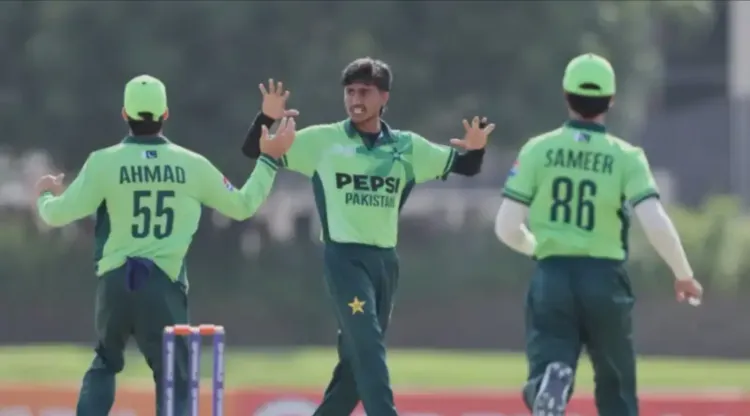
Former Pakistan leg-spinner Danish Kaneria questioned the age of Pakistan's U-19 players, saying they 'looked quite older' than expected.
Kaneria called Pakistan's decision to bowl a spinner in the final over 'pathetic,' asking why fast bowlers were not used with the last wicket standing.
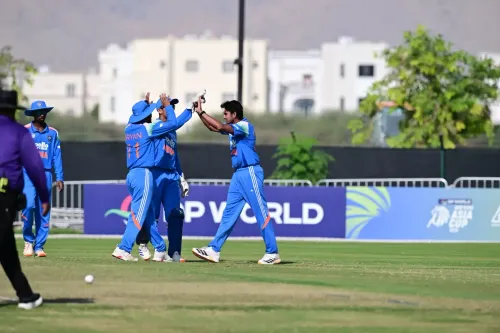
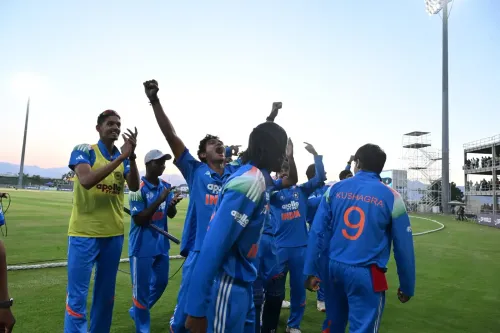
India won the U-19 Asia Cup final in Al Amerat by one wicket , chasing 338 off the last ball to claim a record ninth title .
Mohit Ulva (49* off 26) and Manal Chauhan (47 off 32) shared a decisive 57-run stand off 35 deliveries to rescue India from 252/8 .
Kaneria defended India's on-field celebrations, saying Pakistan players had 'provoked' first and must 'learn to tolerate' a response.
He attributed Pakistan's systemic decline to neglect of domestic cricket and contrasted the PCB's player welfare with the BCCI's structured support system.
Former Pakistan leg-spinner Danish Kaneria has launched a sharp critique of Pakistan's U-19 team, questioning the age profile of its players and lambasting the bowling strategy deployed in the U-19 Asia Cup final against India in Al Amerat on 20 November 2026. Kaneria said the defeat should serve as an urgent wake-up call for Pakistan Cricket Board (PCB) officials and the country's cricket establishment.
Kaneria Doubts Pakistan Players' Ages
Kaneria raised eyebrows with a pointed observation about the physical appearance of the Pakistani players. 'I was watching the highlights during the day. My mother also watches cricket when I play. She said, 'This Indian team, so many kids are playing. Is this Pakistan's national team playing U-19?' It looked like they were quietly older. It didn't look like that, right?' he said.
The remark, while informal, feeds into a long-running debate about age verification in subcontinental age-group cricket — an issue that governing bodies have periodically flagged but struggled to enforce consistently.
Bowling Tactics Condemned as 'Pathetic'
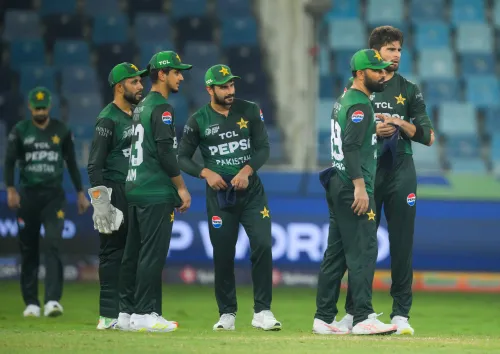
Kaneria reserved his harshest words for Pakistan's bowling management in the closing overs of India's chase. He questioned the decision to hand the final over to a spinner who, by his account, was unable to generate turn.
'India were playing the last wicket. They needed 50 runs, but what is this bowling? Pathetic bowling. You give the last over to a spinner whose ball doesn't turn. The one who doesn't know how to turn, you get him to bowl. How did he come into the team? Who picked him? Didn't you have fast bowlers to bowl the last over? What did the captain do? The calculation was wrong,' Kaneria said.
He added: 'You say Pakistan produces fast bowlers, but where are they?' — a question that cuts directly at a proud cricketing tradition built on the likes of Wasim Akram, Waqar Younis, and Shoaib Akhtar.
India's Celebrations Defended
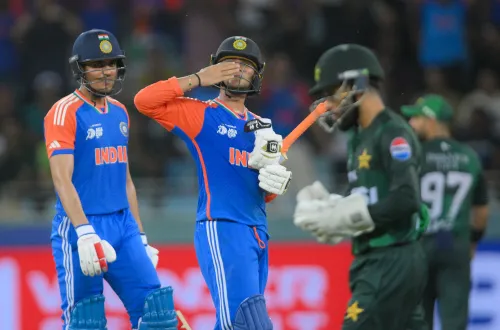
Kaneria also pushed back against criticism of India's on-field celebrations following the victory, arguing that Pakistani players had provoked their opponents mid-match and should have been prepared for a reciprocal response.
'Pakistan showed aggression earlier. The match wasn't over yet. What happens there is that you provoke them. You started everything. And when it was your turn to take a return, you couldn't tolerate it. So you should learn to tolerate,' he said.
He drew a pointed contrast in timing: 'India showed aggression at the right time after winning. Pakistan showed aggression at the wrong time, even while the game was going on.' Kaneria noted that ICC rules do not prohibit displaying aggression and that India's players had not directed abuse at opponents.
Systemic Decline and BCCI vs PCB Contrast
Stepping back from the final itself, Kaneria argued that Pakistan cricket's problems run deeper than a single match. He contrasted the structured player-development ecosystem at the Board of Control for Cricket in India (BCCI) with what he characterised as neglect at the PCB.
'In India, players are being produced because they have a system. The way the BCCI takes care of its players and protects them, even if there is a question, they are there. But here, if there is a question, the PCB says, 'Who are you? You are on your own,'' he said.
He also criticised the coaching credentials of Pakistan's support staff, though he was careful to separate professional critique from personal animosity: 'He is a friend. I have great respect for them. But they don't know how to make a strategy. Does the Indian team have a coach who is sensible and mature and has played 70-80 Tests?'
Kaneria acknowledged that Pakistan batted well — Usman Khan's 107 off 111 balls and Abdul Qadir's 80 off 54 deliveries helped Pakistan post 337/9 — but said the bowling effort erased whatever credit the batting had earned.
How the Final Unfolded
India chased down a daunting 338 off the last ball to win by one wicket, completing a dramatic run-chase in Al Amerat. An opening stand of 95 runs between captain Lakshya Raichandani (80 off 101) and Aaryavir Sehwag (58 off 61) set the platform. Pakistan reduced India to 252/8, threatening a stunning reversal, before Manal Chauhan (47 off 32) and Mohit Ulva (49* off 26, with five fours and three sixes) added a match-winning 57 runs off just 35 deliveries. Ulva's boundary off the final ball sealed the win and handed India a record-extending ninth U-19 Asia Cup title.
With this victory, India's stranglehold on the age-group tournament only tightens — and, if Kaneria's assessment is correct, Pakistan's pathway back to relevance at this level will require structural reform, not just fresh faces.
Point of View
But openly suggesting that opponents' age-group players 'looked quite older' — with his mother as the witness — is an allegation that the PCB and ACC cannot simply ignore. Age fraud in subcontinental age-group cricket has a documented history, and a credible former international making even an informal observation gives it oxygen. Separately, his BCCI-vs-PCB contrast is not new, but it is unusually blunt from someone who played for Pakistan: the argument that PCB's institutional indifference is producing cricketers who 'don't feel safe' maps closely to what several current and former Pakistan players have said in more guarded terms. The question mainstream coverage glosses over is whether the PCB has the institutional will — or the financial independence — to fix a pipeline problem that has been acknowledged for years without being addressed.
NationPress
20 Nov 2026
Frequently Asked Questions
What did Danish Kaneria say about Pakistan's U-19 players' ages?
Kaneria suggested the Pakistani players 'looked quite older' than a typical U-19 side, recounting how even his mother, while watching the match, asked whether it was Pakistan's senior national team. The remark implicitly raises age-verification concerns about Pakistan's squad.
Why did Kaneria criticise Pakistan's bowling in the U-19 Asia Cup final?
Kaneria was particularly critical of the decision to bowl a spinner in the final over when India needed approximately 50 runs with their last wicket standing. He said the spinner 'doesn't know how to turn' the ball and questioned why faster bowlers were not used, calling the planning 'pathetic' and the captain's calculation 'wrong.'
How did India win the U-19 Asia Cup final against Pakistan?
India chased down 338 in Al Amerat, winning by one wicket off the final delivery. Mohit Ulva hit a boundary on the last ball to seal the win after a 57-run stand with Manal Chauhan rescued India from a precarious 252/8. It was India's record-extending ninth U-19 Asia Cup title.
Why did Kaneria defend India's on-field celebrations?
Kaneria argued that Pakistani players showed aggression mid-match, before the result was decided, and effectively provoked India's players first. He said India's celebration came after winning and did not violate any ICC rule, adding that Pakistan's reaction failed to acknowledge its own players' prior behaviour.
What broader point did Kaneria make about Pakistan cricket's decline?
Kaneria said the decline stems from neglect of domestic cricket and a lack of institutional support for players, contrasting the BCCI's structured player-care system with the PCB's approach. He added that Pakistan is no longer producing players of sufficient quality to represent the national team consistently over five to ten years.