IPL founder Lalit Modi pushes for January or Oct-April window shift
Synopsis
Lalit Modi isn't just revisiting an old idea — he is making a structural argument that the IPL has outgrown the international cricket calendar and should dictate terms, not accept them. His push to shift to a January or October-April window, backed by an EPL comparison and a blunt warning to cricket administrators, signals a fresh fault line between IPL's commercial ambitions and the ICC's scheduling authority.
Key Takeaways
Lalit Modi has called for moving the IPL from its current March-April window to either a January start or an October-to-April calendar.
Modi argued the IPL 'does not need the ICC to give it a window' — the BCCI can decide scheduling independently.
He compared the IPL's commercial standing to the English Premier League (EPL) , calling it a 'global sporting and commercial powerhouse.' Modi opposed reviving the Champions League T20 , citing conflict-of-interest risks from common franchise ownership and an already stretched calendar.
He warned that the IPL cannot 'subsidise an outdated global calendar indefinitely' and urged the ICC and other boards to work constructively around IPL's commercial realities.
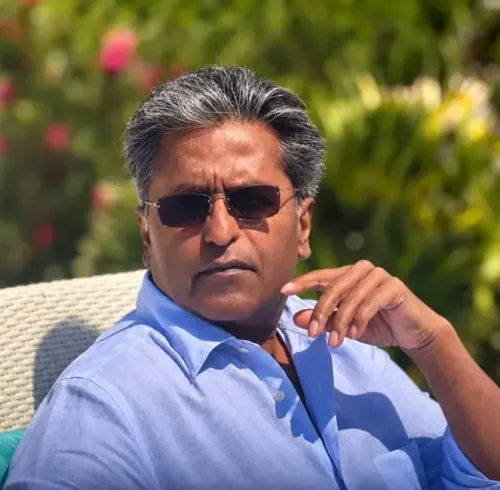
Lalit Modi, founder of the Indian Premier League (IPL), has renewed his push to move the tournament out of its current March-April heat window, proposing either a January start or a broader October-to-April competition calendar. Writing in a detailed social media post on 9 November 2026, the 62-year-old argued that the IPL no longer needs an ICC-sanctioned window — it is powerful enough to set its own terms.
The Core Argument: IPL Shapes the Calendar, Not the Other Way Around
'There seems to be a fundamental misunderstanding about the IPL and the international cricket calendar,' Modi wrote, adding that 'the IPL does not need the ICC to give it a window.' He was unambiguous that the Board of Control for Cricket in India (BCCI) retains full authority over the tournament's scheduling, with player releases and international commitments being a separate management question from seeking 'permission to exist in a particular part of the calendar.'
To illustrate his point, Modi recalled how the IPL reshaped India's entertainment industry upon its 2008 launch. 'Film releases were postponed, prime-time television was disrupted, and entertainment schedules were rewritten. The IPL didn't ask Bollywood for a window. Bollywood adjusted to the IPL,' he stated.
The EPL Comparison and Economic Gravity
Modi drew a direct parallel between the IPL and the English Premier League (EPL), describing both as 'global sporting and commercial powerhouses with the ability to shape the wider ecosystem.' He argued that for many international cricketers, an IPL contract already represents a substantial share of annual earnings, creating an 'economic gravity' that rival tournaments cannot simply wish away.
'The world's leading cricketers understand where the financial opportunities are,' he said. 'That economic gravity is not going away.' He added that the IPL's strength derives from its product, clubs, supporters, talent, and commercial model — not from asking rival competitions to clear the calendar.
Why Modi Opposes a Champions League T20 Revival
Modi also used the post to firmly rule out his support for reviving the Champions League T20, the now-defunct club tournament he helped create in the early 2010s. His reasoning was two-fold. First, IPL franchise ownership groups have since expanded into several international T20 leagues, raising 'obvious governance and conflict-of-interest questions' if teams under common ownership competed against each other. Second, he argued there is little point in creating another competition for the same players, broadcasters, and sponsors on an already stretched calendar.
'We don't need another competition. We need to strengthen the competition that already works,' he wrote.
The Proposed Window Change and Long-Term Vision
At the heart of Modi's post is a concrete scheduling proposal. He called on the BCCI to 'seriously examine' moving the IPL away from the 'increasingly punishing April–May heat,' offering two alternatives: a January start or a structured October-to-April calendar. His stated goals are better playing conditions, more valuable broadcasting inventory, and a stronger long-term economic foundation for Indian cricket.
He also issued a pointed warning to those resistant to change. 'You cannot run tomorrow's cricket on yesterday's economics,' he said, adding that 'the writing has been on the wall' and that 'some people only read it when it appears on a balance sheet.' The ICC and other cricket boards, in his view, should 'recognise the economic reality and work constructively around it' rather than expect the IPL to 'subsidise an outdated global calendar indefinitely.'
Whether the BCCI acts on the proposal remains to be seen, but Modi's intervention is likely to reignite debate within international cricket administration about the balance of power between the IPL and the global cricket calendar.
Point of View
But its framing this time is notably more assertive — he is not requesting a window, he is declaring the IPL does not need one. That is a significant rhetorical escalation, and it reflects a real commercial truth: the IPL's financial gravity has outpaced the institutional structures built around it. The more interesting question is whether the BCCI has the political appetite to act on it, given that any October-April shift would collide with the domestic and bilateral calendar of multiple Full Member boards. The EPL parallel is seductive but imperfect — football's club-country divide is far more settled than cricket's; the ICC still controls marquee events that drive bilateral revenue for smaller boards. Modi's proposal, if pursued, would force that tension into the open sooner rather than later.
NationPress
9 Nov 2026
Frequently Asked Questions
What change is Lalit Modi proposing for the IPL schedule?
Lalit Modi is proposing that the IPL move out of its current March-April heat window to either a January start or a structured October-to-April competition calendar. He argues this would improve playing conditions, expand broadcasting value, and strengthen the long-term economics of Indian cricket.
Why does Lalit Modi say the IPL does not need an ICC window?
Modi's position is that the IPL is a domestic tournament owned and operated by the BCCI, which has the authority to schedule it independently. He distinguishes between managing international player releases — which he acknowledges must be handled — and seeking permission from the ICC to occupy a specific part of the global cricket calendar.
Why is Lalit Modi against reviving the Champions League T20?
Modi opposes the revival primarily because IPL franchise ownership groups have now expanded into multiple international T20 leagues, creating conflict-of-interest risks if teams under common ownership compete against each other. He also argues that adding another tournament would only stretch an already congested calendar and compete for the same players, sponsors, and broadcasters.
How does Lalit Modi compare the IPL to the English Premier League?
Modi describes the IPL as 'what the English Premier League is to football: a global sporting and commercial powerhouse with the ability to shape the wider ecosystem.' He argues that, like the EPL, the IPL's strength comes from its product and commercial model — not from seeking rival competitions to clear the calendar for it.
What is the significance of Modi's warning to cricket administrators?
Modi cautioned that those resistant to reform 'only read the writing on the wall when it appears on a balance sheet.' He argued that the ICC and other cricket boards must recognise the IPL's economic reality and adapt constructively, rather than expecting the league to indefinitely accommodate an outdated global scheduling structure.