VVS Laxman: BCCI CoE is more than rehab, injuries part of elite cricket
Synopsis
With seven senior Indian cricketers — including Jasprit Bumrah and Hardik Pandya — currently rehabbing at the BCCI Centre of Excellence, head VVS Laxman went on the front foot: injuries are not a system failure, the CoE is not just a hospital, and the coordination between selectors, coaches, and support staff is seamless. The Sri Lanka Tests will be the first real audit of that claim.
Key Takeaways
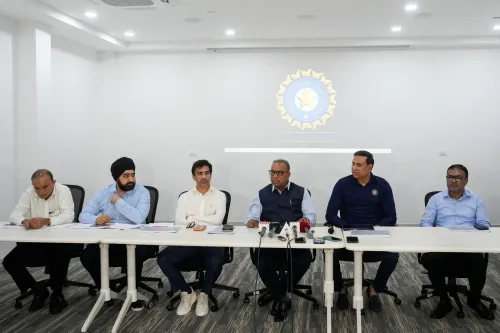
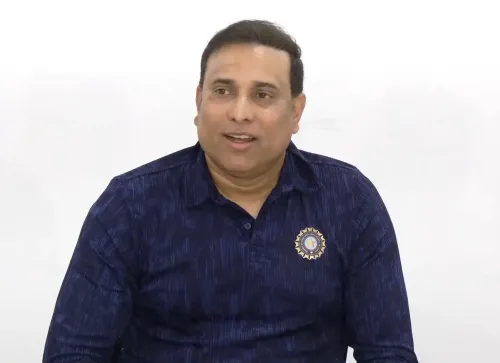
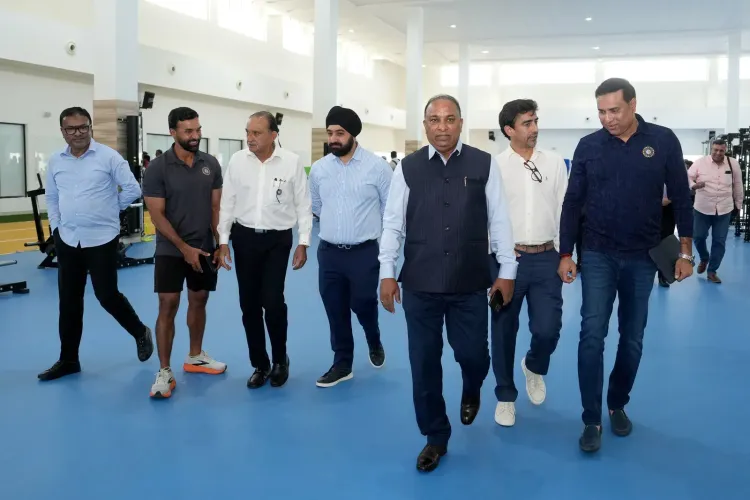
VVS Laxman addressed a press conference at the BCCI Centre of Excellence in Bengaluru on 9 August , flanked by BCCI's top four office-bearers.
The CoE spans nearly 40 acres and, according to Laxman, carries a mandate well beyond injury rehabilitation.
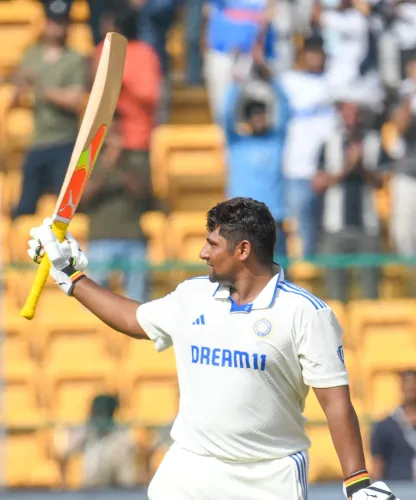
Seven players — including Jasprit Bumrah , Hardik Pandya , B Sai Sudharsan , Nitish Kumar Reddy , Akash Deep , Prince Yadav , and Varun Chakravarthy — are currently rehabbing at the facility.
Both Bumrah and Sudharsan are reportedly unlikely to feature in the upcoming two-Test series against Sri Lanka .
BCCI secretary Devajit Saikia explained that selection meetings occur 3-4 weeks before departure, making the 'subject to fitness' asterisk a necessary transparency measure.
Laxman insisted coordination between the CoE, selectors, and team management is 'brilliant' and dismissed any suggestion of blame-shifting.
VVS Laxman, head of the BCCI Centre of Excellence (CoE) in Bengaluru, on Sunday, 9 August pushed back against the perception that the high-performance facility functions primarily as an injury rehabilitation centre, asserting that its mandate spans the full spectrum of cricketing excellence. Laxman's remarks came amid growing scrutiny over a mounting injury list that has disrupted both the senior men's and women's national squads.
CoE's Broader Mandate
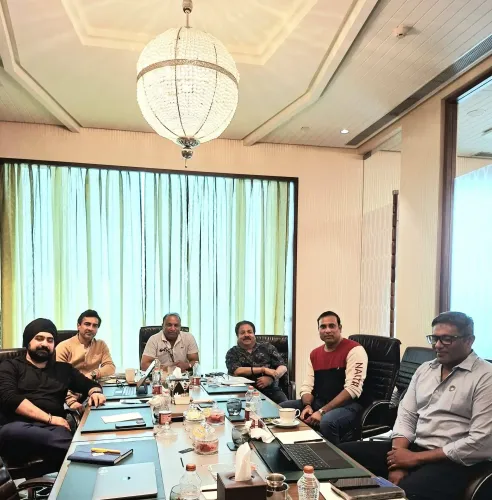
Speaking at a press conference alongside BCCI President Mithun Manhas, secretary Devajit Saikia, treasurer Raghuram Bhatt, and joint secretary Prabhtej Singh Bhatia, Laxman was unequivocal. 'CoE is not merely a rehab centre. There are bigger roles to play for it in helping cricketers achieve excellence,' he said. The quartet had convened a meeting with Laxman specifically to address escalating injury concerns at the facility, which spans nearly 40 acres on the outskirts of Bengaluru.
Laxman acknowledged the significantly higher workload facing modern players, attributing it to the proliferation of formats. 'There's no doubt that the modern generation of players has to play a lot more cricket than probably when I used to play the game,' he said, referencing the demands of competing across Test, ODI, and T20 formats simultaneously.
Injuries Are Inevitable, Not a Red Flag
Laxman argued that physical setbacks are an unavoidable consequence of competing at the highest level, and that the framing of injuries as institutional failures misses the point. 'If you're thinking about not to get injured, then you're not playing to the best of your ability,' he said. He added that the more critical question is how the system responds — through monitoring, communication, and progressive rehabilitation — rather than whether injuries occur at all.
He specifically cited the CoE's Sports Science and Medicine (SSM) staff, naming support personnel he referred to as 'Adrian and Nick' and 'Kamlesh and Rakhi' as central to the monitoring process. 'The monitoring system is very, very critical,' he said, adding that injuries are 'part and parcel of playing international cricket with the intensity you expect them to play.'
Current Injury List and the Sri Lanka Test Series
Several high-profile players are currently rehabbing at the CoE, including Jasprit Bumrah, B Sai Sudharsan, Hardik Pandya, Nitish Kumar Reddy, Akash Deep, Prince Yadav, and Varun Chakravarthy. Both Bumrah and Sudharsan are reportedly not expected to be available for India's upcoming two-Test series against Sri Lanka.
Laxman explained that both players were conditionally selected — a practice denoted by an asterisk in official BCCI squad releases — meaning their inclusion was 'subject to fitness.' He detailed the information chain: the selection committee chairman requests a fitness status report from the CoE, which is then shared with the head coach and the BCCI. 'Bumrah and Sai Sudarshan were going to be picked to Sri Lanka subject to fitness clearance,' he confirmed.
No Blame Game, Seamless Coordination
Laxman dismissed reports of internal friction or miscommunication between the CoE, team management, and selectors. 'I don't like to use the name blame because when you're using the blame, then you're finding someone as a scapegoat,' he said. He described the coordination between the CoE, both teams' management, SSM staff, and the selection committee as 'brilliant.'
Secretary Devajit Saikia added administrative context, explaining that selection meetings are held three to four weeks before a team departs, making exact fitness predictions impossible. 'It is very uncertain that within 21 days he will get picked or not. Nobody can predict that as it is a human body, not a machine,' Saikia said, defending the 'subject to fitness' clause as a mechanism that protects both the team's planning and the player's opportunity.
What This Means Going Forward
The CoE's defence of its processes comes at a sensitive moment for Indian cricket, with the injury frequency drawing comparisons to similar concerns raised during the 2023-24 home and away cycles. Laxman indicated that the facility's protocols will continue to evolve, and that benefits will extend beyond contracted national players to state-level cricketers as well. Whether the current crop of injured players returns to full fitness in time for the Sri Lanka series — and the subsequent international calendar — will be the clearest test of the system Laxman is defending.
Point of View
And the BCCI's own 'subject to fitness' asterisk, while administratively logical, has become so routine that it raises questions about workload management upstream, not just rehabilitation downstream. The CoE may well be doing everything right once a player arrives injured — the harder question is whether the scheduling and workload agreements between the BCCI, IPL franchises, and the ICC are producing injuries at a rate that no rehabilitation centre, however well-resourced, can fully absorb.
NationPress
23 Sept 2026
Frequently Asked Questions
What did VVS Laxman say about the BCCI Centre of Excellence?
Laxman said the CoE is not merely a rehabilitation centre but carries a broader mandate of helping cricketers achieve excellence. He made these remarks at a press conference in Bengaluru on 9 August, alongside top BCCI office-bearers, amid concerns over a growing injury list in the Indian squad.
Which Indian players are currently injured and rehabbing at the CoE?
Seven players are currently undergoing rehabilitation at the BCCI Centre of Excellence in Bengaluru: Jasprit Bumrah, B Sai Sudharsan, Hardik Pandya, Nitish Kumar Reddy, Akash Deep, Prince Yadav, and Varun Chakravarthy. Both Bumrah and Sudharsan are reportedly unlikely to be available for the Sri Lanka Test series.
What does the 'subject to fitness' asterisk in BCCI squad announcements mean?
It means a selected player's inclusion is conditional on clearing a fitness test before the team departs. BCCI secretary Devajit Saikia explained that since selection meetings happen three to four weeks before departure, the asterisk protects the player's spot while acknowledging that their recovery timeline cannot be precisely predicted.
Is there a communication breakdown between the CoE, selectors, and team management?
Laxman firmly denied any such breakdown, describing coordination between the CoE, team management, SSM staff, and the selection committee as 'brilliant.' He said fitness status reports are sent from the CoE to the selection committee chairman, with copies to the head coach and the BCCI, ensuring all stakeholders are informed simultaneously.
How does the CoE's role extend beyond injured players?
According to Laxman, the CoE's programmes benefit not only contracted or targeted national players but also state-level cricketers. The facility focuses on overall performance enhancement — fitness, skills, and sports science — rather than functioning solely as a medical recovery unit.