India basketball: School system key to grassroots growth, says ex-coach Veselin Matic
Synopsis
Former India basketball head coach Veselin Matic has made a striking case: India's schools, not its clubs, are the country's best bet for producing elite basketball talent. With a FIBA-backed educator programme now underway, the real question is whether Indian basketball's administrators will build the sustained competitive structures Matic says are non-negotiable for growth.
Key Takeaways
Veselin Matic , who coached the Indian men's basketball team from 2019 to 2025 , says India's school system is structurally stronger than its club system for sports development.
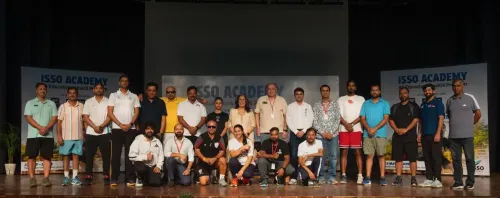
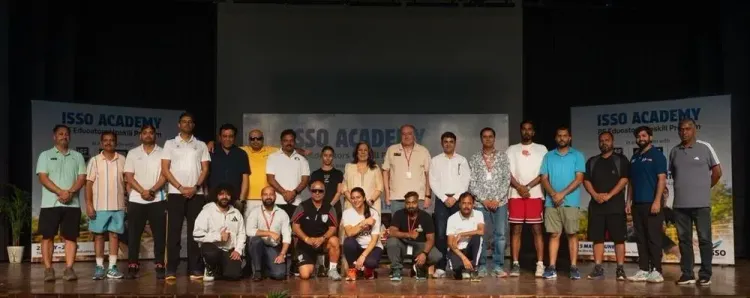
The PE Educators Upskill Program , running 25 May to 2 June , has selected 15 PE educators from across India under a collaboration between ISSO Academy , FIBA , and the International School Sport Federation .
Matic identifies the lack of a second-stage development pathway for players aged 16–19 as a critical gap in Indian basketball.
He recommends mini-basketball programmes starting at ages 6–7 , with a selective second stage kicking in after age 15 .
Matic flagged age-fraud and a results-over-development culture in junior competitions as structural problems that must be addressed.
ISSO Director Akanksha Thapak described basketball as one of India's fastest-growing sports among children and announced follow-up programmes to ensure continuity.
Former head coach of the Indian men's basketball team, Veselin Matic, has argued that India's school ecosystem holds greater promise for long-term basketball development than the country's club structure — provided schools invest in structured coaching, sustained competitions, and a robust grassroots framework. Matic made the remarks in New Delhi on the sidelines of the PE Educators Upskill Program, a seven-day initiative running from 25 May to 2 June, jointly organised by the International Schools Sports Organisation (ISSO) Academy in collaboration with the International Basketball Federation (FIBA) and the International School Sport Federation.
Why Schools, Not Clubs
Drawing on his experience coaching across Europe and Asia, Matic noted a fundamental structural difference between India and top basketball-playing nations. 'In most top basketball nations in Europe, especially in the Balkans, including Serbia, Slovenia, Croatia, Bosnia, Montenegro, and Macedonia, development mainly happens through clubs and private academies rather than schools,' he said. 'But in India, I feel the school system is much stronger than the club system. The club structure here is weak, while schools have a far better setup.'
Matic pointed to the presence of specialist sports teachers across disciplines — basketball, football, cricket, and athletics — as a structural advantage that Indian schools hold over clubs. He also noted that school facilities generally surpass those available at club level in India.
The Case for Regular Competition
Matic, who coached the Indian men's national basketball team from 2019 to 2025, was emphatic that training programmes alone cannot drive development without consistent match exposure. 'Many good schools already have basketball coaches, but without regular games and competitions, development is impossible. Training alone is not enough. Properly organised tournaments and competitions are essential for growth,' he said.
He outlined a model where schools organise weekly inter-school matches over a sustained period of three to five months. 'When students get selected to represent their school, they feel proud. If schools can organise weekly matches over a period of three, four, or five months, where students regularly compete against other schools, it can gradually take school sports to the next level,' he added.
The Missing Second Stage
One of Matic's sharpest observations concerned the absence of a structured development pathway for players aged 16 to 19. He recommended that talent identification begin early — ideally between the ages of six and seven — with dedicated mini-basketball programmes running through age 12. However, he stressed that a second, more selective stage must follow.
'What India is missing is this second-stage development system after the age of 15. Out of 12 or 15 players in a youth team, maybe only two or three will eventually reach the next level. The best talents must be identified, brought together, and developed properly,' he said. He also flagged concerns about age-fraud in junior competitions and a results-over-development mentality among some coaches — a problem he linked to the role that certificates and titles play in securing employment in India.
ISSO's Broader Vision
The PE Educators Upskill Program has selected 15 PE educators from across India for the initiative, which covers not only technical coaching but also athlete welfare and mental development. Akanksha Thapak, Director of ISSO, said the programme addresses a systemic gap. 'PE education in India is still lagging behind international standards, and that is one reason why growth at the grassroots level is not happening as it should,' she said.
Thapak described basketball as one of the fastest-growing sports among children in India, and highlighted that ISSO has run similar collaborations with the Badminton World Federation earlier this year. She also noted a shift in parental attitudes toward sports careers, citing growing opportunities in analytics, management, and sports administration. Follow-up programmes are planned to ensure continuity beyond the initial training, she added.
Matic's tenure with India coincided with a period of gradual improvement for the national side, and his assessment — that the school system, not the club circuit, is India's most viable launchpad — offers a clear, if demanding, roadmap for the sport's administrators to consider.
Point of View
And no amount of coaching workshops will fix that. The more uncomfortable implication — which neither ISSO nor FIBA has addressed publicly — is that India's basketball federations have historically under-invested in exactly the 16-to-19 age band Matic identifies as the critical gap. The age-fraud problem he flags is not unique to basketball; it is a systemic credibility issue across Indian junior sport, rooted in the jobs-and-certificates incentive structure. Until selection integrity is enforced independently of coaches who benefit from winning age-group titles, even the best school-based pipeline risks being distorted at the point of transition to elite competition.
NationPress
26 Sept 2026
Frequently Asked Questions
What is the PE Educators Upskill Program launched by ISSO and FIBA?
It is a seven-day training initiative running from 25 May to 2 June, organised by ISSO Academy in collaboration with FIBA and the International School Sport Federation. The programme has selected 15 PE educators from across India and covers technical coaching, athlete welfare, and mental development to improve grassroots sports education.
Why does Veselin Matic believe India's school system is better than its club system for basketball?
Matic argues that Indian schools have specialist sports teachers across multiple disciplines, better facilities than most clubs, and an existing organisational structure that clubs lack. He sees this as a natural foundation for sustained basketball development, unlike in Europe where clubs and private academies drive the pathway.
What development gap has Matic identified in Indian basketball?
Matic says India lacks a structured second-stage development system for players between the ages of 16 and 19. While early talent identification from ages 6–12 through mini-basketball is important, he stresses that a selective, well-organised pathway must exist after age 15 to take the most promising players to the next level.
What concerns did Matic raise about junior competitions in India?
Matic expressed concern over age-fraud in junior competitions and a culture where coaches prioritise winning titles over genuine player development. He linked this to India's job market, where certificates and titles carry career value, creating a misaligned incentive for coaches.
Who is Veselin Matic and what is his coaching background?
Veselin Matic is a Serbian basketball coach who led the Indian men's national basketball team from 2019 to 2025. He was also part of the coaching staff that guided FR Yugoslavia to the EuroBasket 2001 and 2002 FIBA World Championship titles.