Mayank Yadav's coach on 2-18 return: 'I told him to read the batter'
Synopsis
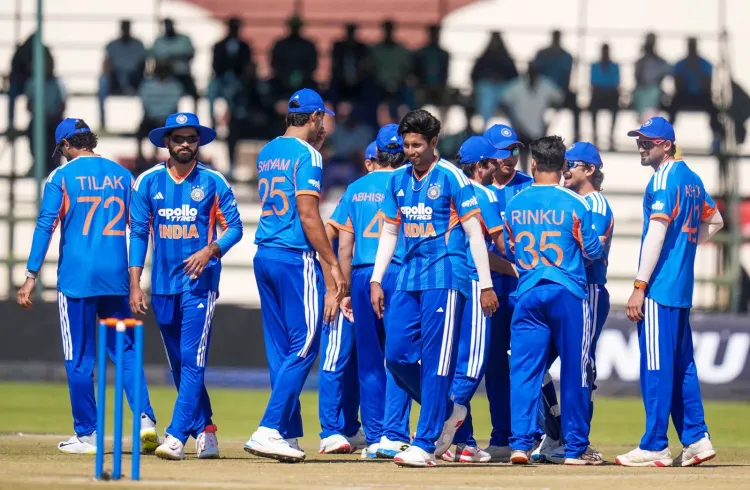
After 21 months away from international cricket — surgery, multiple setbacks, and a long stint at the BCCI Centre of Excellence — Mayank Yadav returned with a 2-18 spell clocking 149 kmph against Zimbabwe. His childhood coach reveals the one tactical shift that made the difference: stop bowling short, read the batter.
Key Takeaways
Mayank Yadav took 2 for 18 in the first T20I against Zimbabwe at Harare Sports Club , winning the Player of the Match award on his international comeback.
The pacer had been sidelined for 21 months following a stress fracture in the back that required surgery in Christchurch, New Zealand in July 2025 .
Coach Devendra Sharma advised Mayank to 'read the batter's footwork' rather than defaulting to short balls — an adjustment that proved effective in the match.
10 of his first 12 deliveries were clocked in the mid-to-high 140 kmph range; his fastest touched 149 kmph .
The long-term plan includes building workload capacity to 25 overs per day and preparing for ODI and Test cricket .
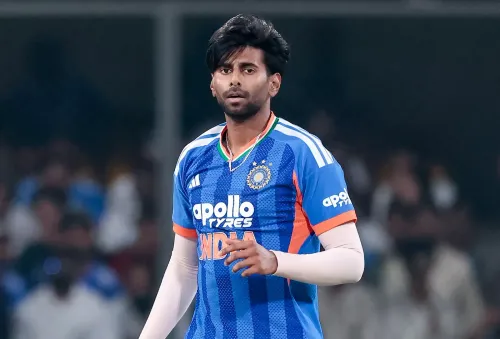
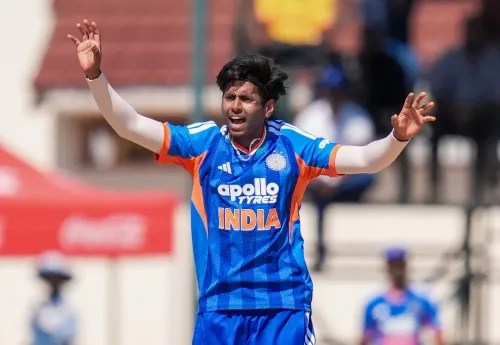
Mayank Yadav marked his return to international cricket with a Player of the Match performance — a spell of 2 for 18 in the first T20I against Zimbabwe at the Harare Sports Club — but for those who know the Delhi-based pacer best, the moment carries weight far beyond a single match. It is the culmination of a 21-month battle through injury, surgery, and psychological uncertainty.
The Coach's Relief
Devendra Sharma, Mayank's childhood coach at the Sonnet Club in New Delhi, described watching the speedster trouble Zimbabwe's batters with raw heat as a moment of 'immense relief and satisfaction.' Sharma said the advice he gave Mayank before the pacer departed for Zimbabwe on 20 July proved decisive.
'Before he left for Zimbabwe, I advised him to not stick much to bowling short balls all the time. I told him, "Just see the footwork of the batter and bowl as per that," and that advice worked really well. It was also wonderful to see him get the backing from the likes of VVS Laxman,' Sharma said.
What the Numbers Showed
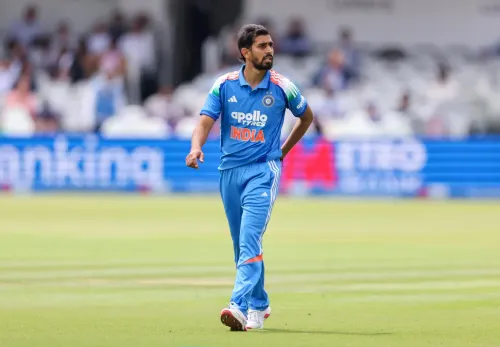
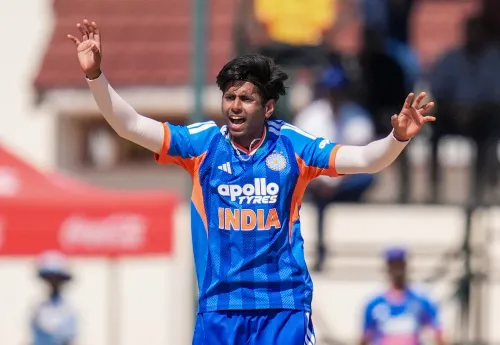
Ten of Mayank's first 12 deliveries were clocked in the mid-to-high 140 kmph range, with his fastest delivery touching 149 kmph. A total of 21 of his 24 deliveries were pitched either short-of-a-length or in the good-length area, extracting sharp zip and bounce that repeatedly squared up Zimbabwe's batters and hit them high on the handle.
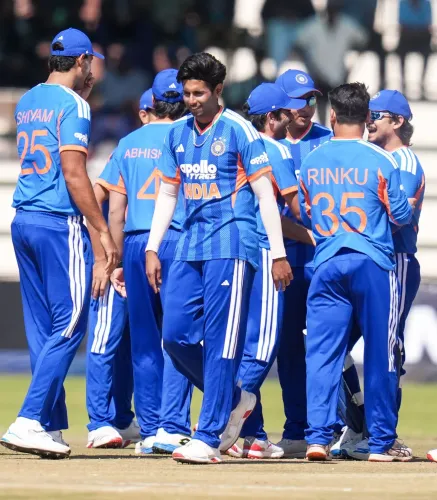
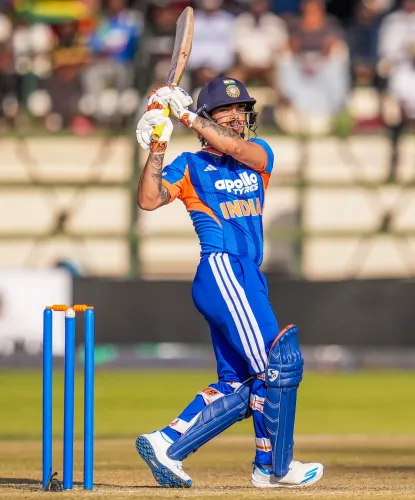
His first wicket came when a steep delivery squared up Brian Bennett, drawing a faint edge caught behind by wicketkeeper Ishan Kishan. The second followed as Dion Myers, made tentative by the pacer's relentless pace, eventually fell to him as well.
A Long Road Back
Mayank's recovery from a stress fracture in the back — requiring surgery in Christchurch, New Zealand in July 2025 — was complicated further by a series of setbacks including an elbow issue, side strain, and a toe infection. He spent an extended period at the BCCI Centre of Excellence (CoE) in Bengaluru, gradually building from daily exercises to bowling 15–20 overs a day.
Sharma was candid about the psychological toll of that period. 'When a player goes through an injury and has to do rehab, there are lots of ups and downs in the mind. Like whether I will play or not and even if I play, will it be the same as before? Credit to him — he did his rehab with a lot of shiddat (dedication),' he said.
Sharma also credited the facilities and staff at the CoE for accelerating Mayank's recovery. 'The machines and equipment needed for him to get better at the CoE — such facilities aren't here in Delhi. Being at the CoE has helped him become better in all aspects,' he said.
Tactical Evolution
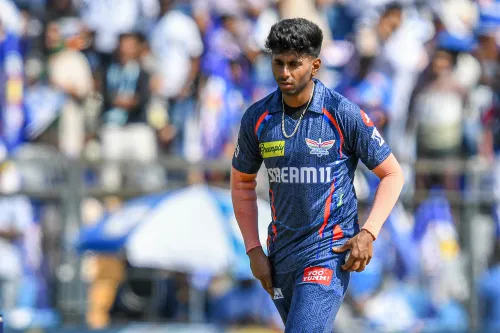
A key part of Mayank's preparation was a tactical recalibration. Sharma noted that an over-reliance on short balls during IPL 2025 — where Mayank took no wickets — had been identified as a weakness that needed addressing.
'He bowled more short balls in the IPL and I told him that time not to do so as the batter is standing on the back foot and has time to hit the ball. So, you have to give less room. I urged him to think well before bowling,' said Sharma. The adjustment was visible in the Zimbabwe match, where Mayank varied his lengths far more effectively.
What Comes Next
Sharma outlined a longer-term roadmap that extends well beyond T20Is. 'Our next step is to improve his fitness and prepare for playing ODIs and Tests. He shouldn't get injured now considering he had the surgery which Bumrah went through. He will increase his stamina gradually — after putting 15–20 overs at the CoE, he will soon aim to put 25 overs in a day and try to play Tests,' he said.
Mayank had already been kept in the scheme of things during his recovery, including a net bowling stint during the one-off Test against Afghanistan in New Chandigarh in June and selection for the India A team in T20 World Cup warm-up games. With a strong start now behind him, the path to cementing a long-term place in the Indian setup has opened up — but the hard work, as Sharma puts it, is only beginning.
Point of View
But the more important detail is the tactical correction that made it possible. An over-reliance on short balls had already cost him in IPL 2025 — his coach spotted it, flagged it, and the pacer responded. The bigger question is workload management: Mayank has now had surgery identical to Bumrah's, and India's history of mismanaging express pacers is well-documented. A debut T20I series against Zimbabwe is the right re-entry point, but the pressure to fast-track him into Tests — given India's pace depth concerns — could test the medical staff's patience as much as Mayank's own.
NationPress
23 Oct 2026
Frequently Asked Questions
How did Mayank Yadav perform on his international comeback against Zimbabwe?
Mayank Yadav claimed 2 for 18 in the first T20I against Zimbabwe at the Harare Sports Club, winning the Player of the Match award. He bowled at speeds reaching 149 kmph , with 21 of his 24 deliveries hitting either short-of-a-length or good-length areas.
What injury kept Mayank Yadav out of international cricket for 21 months?
Mayank suffered a stress fracture in the back that required surgery in Christchurch, New Zealand in July 2025 . His recovery was further complicated by an elbow issue, side strain, and a toe infection, keeping him sidelined for 21 months in total.
What advice did coach Devendra Sharma give Mayank before the Zimbabwe series?
Sharma advised Mayank to stop defaulting to short balls and instead read each batter's footwork before choosing his delivery. 'Just see the footwork of the batter and bowl as per that,' Sharma told him — an adjustment that was visibly effective in the first T20I.
What is the long-term plan for Mayank Yadav after his comeback?
According to coach Sharma, the goal is to gradually increase Mayank's workload from 15–20 overs per day to 25 overs per day, with the eventual aim of preparing him for ODI and Test cricket . The priority is avoiding re-injury following his back surgery.
Who is Devendra Sharma and what is his connection to Mayank Yadav?
Devendra Sharma is Mayank Yadav's childhood coach at the Sonnet Club in New Delhi . He is also the childhood coach of India wicketkeeper-batter Rishabh Pant and has been a consistent source of guidance and motivation for Mayank throughout his injury rehabilitation.