FIA confirms no extra ADUO tokens for any F1 manufacturer in 2026 final review
Synopsis
The FIA's third and final ADUO review of the 2026 F1 season has closed without granting a single additional upgrade token — meaning the homologations handed out after Canada remain the only ones of the year. Red Bull-Ford, the ICE benchmark, heads into 2027 with no extra development room, while Audi, Ferrari, and Honda retain the two-upgrade advantage they secured in the opening assessment.
Key Takeaways
The FIA completed its third and final ADUO review of the 2026 F1 season , covering Races 12 to 18 .
No additional homologations were granted — the second consecutive review with that outcome.
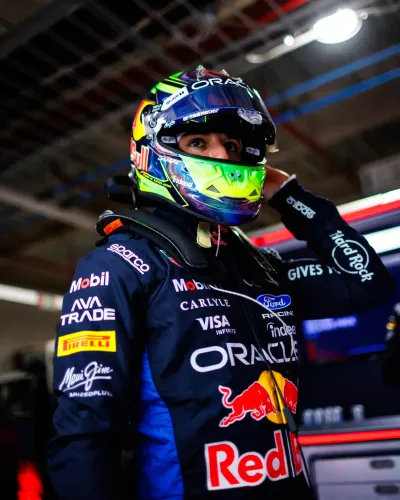
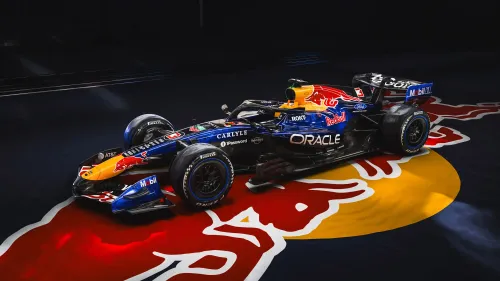
Red Bull-Ford , the designated ICE benchmark , will not receive extra development allowances heading into 2027 .
Mercedes received one additional homologation in 2026 and one in 2027 after the first review; Audi , Ferrari , and Honda each received two in both seasons.
FIA Director Nikolas Tombazis confirmed the body is working with manufacturers on ADUO methodology refinements for future seasons.
The Fédération Internationale de l'Automobile (FIA) has concluded its third and final Additional Development and Upgrade Opportunities (ADUO) review of the 2026 Formula 1 season, confirming that no power unit manufacturer will receive additional homologated upgrades following the assessment covering Races 12 to 18. The findings have been communicated to all power unit manufacturers.
What the Final ADUO Review Found
Despite shifts in the performance gaps between manufacturers during the third review period — which concluded after the United States Grand Prix — the FIA determined those changes fell short of the thresholds required to trigger new upgrade allowances.
'For the third period, the relative performance gaps to the leading ICE evolved, but these changes did not result in any additional homologations being granted to the Power Unit Manufacturers,' the FIA said in an official statement.
The outcome mirrors the second review period, which also yielded no additional homologations, meaning the upgrade allocation framework established after the first review remains the operative baseline for the remainder of the season and into 2027.
How ADUO Works and Why It Matters
The ADUO mechanism, embedded in Article C4 of the 2026 Formula 1 Technical Regulations, allows power unit manufacturers whose internal combustion engine (ICE) performance trails the best-performing ICE by at least 2% across defined review windows to introduce additional homologated upgrades — both within the current season and the following one. Manufacturers in that bracket also benefit from expanded cost cap allowances and additional dyno testing time.
Three review periods govern each season: the first concluded after the Canadian Grand Prix, the second after the Hungarian Grand Prix, and the third after the United States Grand Prix.
What Happened in the First Review
The first assessment, conducted post-Canada, was the only one to trigger additional homologations. Mercedes were found to sit within the 2–4% performance gap window and were granted one additional homologation in 2026 and one in 2027, along with corresponding cost cap and dyno testing increases.
Audi, Ferrari, and Honda were assessed as more than 4% adrift of the benchmark and were each awarded two additional homologations in the current season and two more in 2027, with equivalent allowance increases.
Notably, Red Bull-Ford was designated the ICE benchmark at that stage, despite Mercedes emerging as arguably the strongest package in the opening half of the 2026 season on overall car performance. That classification has practical implications: Red Bull-Ford will enter 2027 without additional development headroom from the ADUO process.
FIA's Confidence in the Process
FIA Director of Single Seater Nikolas Tombazis defended the rigour of the methodology. 'The FIA has undertaken extensive analysis as part of the review of ADUO this year. Based on the quality of the data and the robustness of the assessment process, we are confident in our findings and the conclusions reached,' he said.
Tombazis also signalled that refinements to the system are already in discussion. 'The first year of implementation has also reinforced our belief that the ADUO concept is the right one for Formula 1. However, it is important that the system continues to evolve to ensure it remains efficient, relevant and fit for purpose. To that end, we have been working closely with the Power Unit Manufacturers and teams to explore refinements to the methodology that will support the continued effectiveness of ADUO in future seasons,' he added.
What This Means Going Into 2027
With the final ADUO review now complete, the upgrade picture for the 2026 season is frozen. Manufacturers that received homologations in the first review retain those allowances; no new ones have been added. The focus now shifts to how the FIA and manufacturers jointly refine the ADUO framework before it is applied again in the next campaign, with Tombazis indicating that methodological changes are actively being explored.
Point of View
After Canada, leaving the field's competitive order largely locked by mid-year. The more consequential question is whether Red Bull-Ford's designation as the ICE benchmark — set when Mercedes was visibly faster on track — accurately captured true engine performance or was distorted by chassis variables. If the methodology cannot reliably isolate ICE output from overall car pace, the refinements Tombazis has promised are not optional housekeeping but a structural fix the credibility of the system depends on.
NationPress
11 Nov 2026
Frequently Asked Questions
What is the FIA's ADUO mechanism in Formula 1?
ADUO — Additional Development and Upgrade Opportunities — is a rule under Article C4 of the 2026 F1 Technical Regulations that allows power unit manufacturers whose ICE performance is at least 2% below the benchmark to introduce additional homologated upgrades in the current and following season, along with extra cost cap and dyno testing allowances. The mechanism is assessed across three defined review periods each season.
Why did no manufacturer receive extra tokens in the final ADUO review?
The FIA found that while performance gaps between manufacturers shifted during Races 12–18, the changes were not large enough to cross the 2% or 4% thresholds that trigger additional homologations. The same outcome occurred in the second review period after the Hungarian Grand Prix.
Which manufacturers received extra upgrades earlier in the 2026 season?
After the first review — concluded post-Canadian Grand Prix — Mercedes was granted one additional homologation in 2026 and one in 2027, while Audi, Ferrari, and Honda each received two in both seasons. No manufacturer received extra homologations in the second or third review periods.
Why is Red Bull-Ford's status significant?
Red Bull-Ford was set as the ICE performance benchmark during the 2026 season, meaning it was the reference point against which other manufacturers' deficits were measured. As a result, Red Bull-Ford was ineligible for additional upgrade allowances and will enter the 2027 season without extra ADUO-derived development headroom.
Will the ADUO system change for future seasons?
FIA Director of Single Seater Nikolas Tombazis confirmed the governing body is actively working with power unit manufacturers and teams to refine the ADUO methodology, aiming to ensure it remains effective and fit for purpose in coming seasons. No specific changes have been announced yet.