OCA: Aichi-Nagoya Asian Games' distributed model a viable template for future hosts

Synopsis
The Aichi-Nagoya Asian Games wrapped up with the OCA defending its boldest logistical gamble yet — ditching the traditional athletes' village for containers, cruise ships, and hotels. Record-breaking performances on the field, officials argue, prove the model worked. If the OCA formalises this as a template, it could reshape how Asia hosts major games for decades.
Key Takeaways
The Aichi-Nagoya Asian Games 2026 concluded on 4 October 2026 after running from 19 September across 43 disciplines .
OCA Coordination Committee chair Mohammad Tayyab Ikram acknowledged operational complaints but said the focus should be on how challenges were resolved, not that they occurred.
The Games used a distributed accommodation model — housing athletes in containers, cruise ships, and hotels — instead of a traditional purpose-built athletes' village.
OCA Director General Husain Al Musallam cited a high number of world and Asian records set at the Games as proof athletes had adequate conditions.
Both officials suggested the model could serve as a template to prevent large infrastructure from becoming 'white elephants' after future Games.
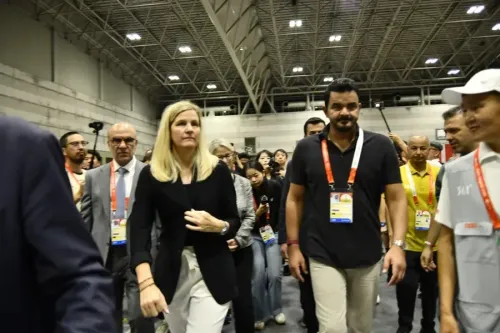
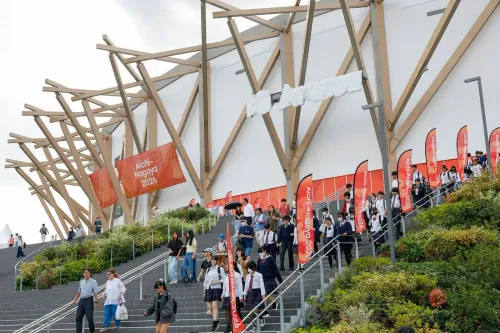
The Olympic Council of Asia (OCA) acknowledged on Sunday, 4 October 2026 that the Aichi-Nagoya Asian Games had encountered significant operational hurdles, but affirmed that athletes had ultimately been given the conditions necessary to compete and excel. The closing-day assessment came as the Games — which began on 19 September and brought together thousands of athletes across 43 disciplines — drew to a close in Nagoya, Japan.
Challenges Acknowledged, Response Praised
Mohammad Tayyab Ikram, chair of the OCA Coordination Committee for the 2026 Asian Games, told reporters at a closing press conference that the OCA had received concerns and complaints about certain aspects of the Games' operations. He was, however, emphatic that the manner in which those issues were resolved matters more than the problems themselves.
'There is no Games without challenges. The way we handled the challenges should be more important to highlight,' Ikram said. He reiterated that the OCA's guiding principle throughout was an athlete-first approach, with continuous improvement of logistics and support services.
The Distributed Accommodation Model Explained
A defining — and initially contentious — feature of the Aichi-Nagoya edition was the deliberate decision not to construct a traditional athletes' village. Instead, participants were housed across a combination of container units, cruise ships, and hotels in what organisers described as a distributed accommodation model. Ikram conceded the concept was difficult to grasp when first proposed, but said the Games had now established a credible precedent.
'This edition of Games was different. It was a different model,' Ikram said. 'It was difficult to understand when this model was proposed, but we now have a good practice. Maybe other Games will look at it.' The remark signals that the OCA views the model as potentially exportable to future Asian or regional sporting events.
Record Performances as Proof of Conditions
OCA Director General Husain Al Musallam pointed to the volume of world and Asian records set during the Games as evidence that athletes had been provided a suitable competition environment. 'Numbers are facts,' he said, arguing that peak athletic achievement is impossible without adequate sleep, nutrition, healthcare, and transport.
'These achievements do not come without the best environment that the organising committee created for the athletes,' Al Musallam said. His remarks served as a direct rebuttal to critics who had questioned whether the non-traditional accommodation arrangements were up to standard.
Sustainability Argument for Future Host Cities
Al Musallam also advanced an infrastructure-sustainability case for the model, arguing that distributed housing arrangements could spare host cities from the burden of constructing and maintaining large dedicated villages that risk becoming 'white elephants' after the Games. Both officials extended praise to the organising committee, local authorities, and volunteers, crediting their coordination as essential in navigating the event's operational complexities.
What Comes Next
With the Aichi-Nagoya 2026 edition now concluded, attention in Asian sports governance will likely shift to how future host cities and the OCA incorporate lessons from this experiment. If the distributed model is formally adopted as a framework option, it could meaningfully reduce the financial and logistical threshold for aspiring Games hosts across the region.
Point of View
Officials are pre-emptively building the case for future hosts to adopt the template — a move that conveniently lowers the infrastructure bar and broadens the pool of cities that could bid. The harder question, left largely unaddressed, is whether athlete satisfaction data — not just medal and record tallies — supports the glowing assessment. Records can be set despite suboptimal conditions, not necessarily because of ideal ones. Independent athlete feedback, if it exists, was conspicuously absent from the closing press conference.
NationPress
4 Oct 2026
Frequently Asked Questions
What was different about the Aichi-Nagoya Asian Games 2026?
The Aichi-Nagoya Asian Games 2026 opted against building a traditional athletes' village, instead housing participants in container units, cruise ships, and hotels under a distributed accommodation model. OCA officials described this as a new approach that could serve as a template for future major sporting events.
Did the OCA admit to problems at the 2026 Asian Games?
Yes. OCA Coordination Committee chair Mohammad Tayyab Ikram acknowledged that concerns and complaints about operational aspects of the Games had been received. He argued, however, that the manner in which those challenges were resolved was the more important metric.
How did the OCA justify the Games' success despite the challenges?
OCA Director General Husain Al Musallam pointed to the large number of world and Asian records set during the Games, arguing that athletes could not achieve such performances without adequate sleep, nutrition, transport, and healthcare. He credited the organising committee with creating the right environment.
Why might the distributed accommodation model matter for future host cities?
The model could significantly reduce the cost and infrastructure burden on host cities by eliminating the need to build and later maintain a large dedicated athletes' village. Al Musallam specifically warned against facilities becoming 'white elephants' and suggested the Nagoya approach offers a sustainable alternative.
When did the Aichi-Nagoya Asian Games 2026 begin and end?
The Aichi-Nagoya Asian Games 2026 began on 19 September 2026 and concluded on Sunday, 4 October 2026, covering 43 disciplines.