Asian Games 2026: IOC chief Coventry puts athlete experience at centre of event planning
Synopsis
No traditional athletes' village, beds too short, rooms too few — the 2026 Aichi-Nagoya Asian Games have exposed a growing fault line in major event hosting. IOC President Kirsty Coventry's on-site visit and call for formal minimum accommodation standards signals the IOC is no longer willing to let cost-cutting come at athletes' expense — a stance that will shape how future hosts plan their Games.
Key Takeaways
IOC President Kirsty Coventry visited athletes' accommodation at Garden Pier, Nagoya Port on Sunday, 20 September 2026 .
The 2026 Aichi-Nagoya Asian Games replaced a traditional athletes' village with a cruise ship , container huts, and hotels — drawing complaints over bed sizes and room shortages.
Coventry defended organisers but insisted athlete basics — 'a really comfortable bed,' 'really good food,' and reliable transport — must be guaranteed.
The IOC will work with organising committees and future hosts to set minimum standards for accommodation and services.
OCA Director General Husain Al-Musallam said a traditional athletes' village remains preferred, but flexibility is 'necessary.' The IOC is in talks with international sports federations on venue-sharing to reduce infrastructure costs at future events.
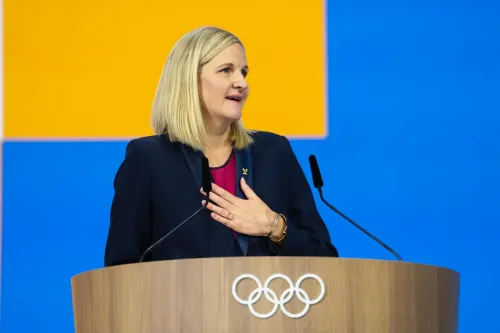
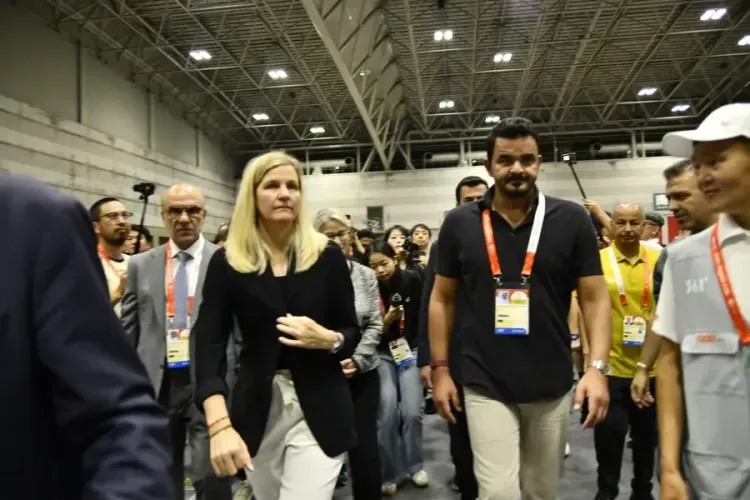
International Olympic Committee (IOC) President Kirsty Coventry on Sunday said that the experience of athletes must be a central consideration when planning and executing major sporting events, speaking on the sidelines of the 2026 Aichi-Nagoya Asian Games in Nagoya, Japan. Her remarks came after a personal visit to the athletes' accommodation zone at Garden Pier, Nagoya Port, where she met competitors taking part in the Games.
Accommodation Controversy at Aichi-Nagoya 2026
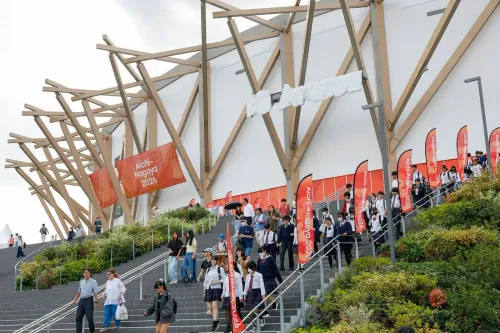
The 2026 Asian Games have drawn scrutiny for their unconventional housing arrangements. In a bid to cut costs, organisers chose not to build a traditional athletes' village — opting instead for a combination of a cruise ship, container-style huts, and hotels spread across multiple locations. The arrangements have sparked complaints from several athlete delegations, including reports of beds that were too short and a shortage of rooms in certain zones.
Coventry, however, defended the organisers' approach, saying she was 'impressed' with what she saw and described the cabins as 'really nice.' She was careful to balance that assessment with a firm emphasis on non-negotiable basics.
What Athletes Actually Need, According to Coventry
Drawing on her own background as a competitive swimmer and Olympic medallist, Coventry said athletes typically prioritise function over aesthetics. Her three benchmarks: 'a really comfortable bed,' 'really good food,' and transportation that 'ran really well.' She stressed that as long as these fundamentals are met, the physical look of accommodation is secondary to most athletes.
She confirmed that the IOC will place greater formal weight on athlete experience going forward, working with organising committees and future host cities to establish minimum standards for accommodation, transport, and catering services.
OCA Weighs Flexibility vs. Tradition
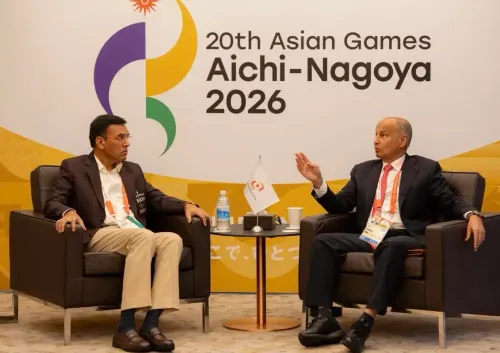
Olympic Council of Asia (OCA) Director General Husain Al-Musallam addressed the issue at a press conference on Friday, acknowledging that a conventional athletes' village remains the preferred model but that practical constraints demand adaptability. 'We wish that we have an athlete village, number one. But, number two, we also have to be flexible,' Al-Musallam said.
His remarks reflect a broader tension in major multi-sport event hosting — balancing the tradition of a unified village with the financial and logistical realities facing modern host cities.
Broader Implications: Venues, Costs, and Federation Talks
Coventry noted that the accommodation question cannot be separated from the wider issue of event scale. The number of venues required directly drives costs across transport, housing, and food. The IOC is currently in discussions with international sports federations on venue-sharing strategies — including scheduling multiple disciplines at the same facility — to reduce the need to construct or lease additional infrastructure.
With the 2028 Los Angeles Olympics and subsequent cycles on the horizon, the standards established or challenged at Aichi-Nagoya could have lasting influence on how multi-sport events are designed and evaluated worldwide.
Point of View
Or whether 'working with organising committees' remains aspirational language. If the latter, athlete welfare will continue to be traded off against fiscal convenience whenever a host city faces budget pressure.
NationPress
20 Sept 2026
Frequently Asked Questions
Why is accommodation at the 2026 Asian Games controversial?
Organisers of the 2026 Aichi-Nagoya Asian Games opted not to build a traditional athletes' village, instead housing athletes across a cruise ship, container-style huts, and hotels in different locations to reduce costs. Several delegations complained about beds being too short and a shortage of rooms, prompting scrutiny from the IOC and OCA.
What did IOC President Kirsty Coventry say about the Asian Games athlete accommodation?
Coventry said she was 'impressed' with the facilities after visiting Garden Pier in Nagoya Port, but stressed that athlete basics — a comfortable bed, good food, and reliable transport — must be the non-negotiable priority. She announced the IOC would work with future hosts to establish formal minimum standards.
What minimum standards is the IOC planning for athlete accommodation?
The IOC has not yet published specific thresholds, but Coventry indicated the organisation will work with organising committees and future host cities to define baseline requirements covering accommodation, catering, and transportation. The process is ongoing and no timeline has been publicly confirmed.
What did the OCA say about a traditional athletes' village?
OCA Director General Husain Al-Musallam said on Friday that a conventional athletes' village remains the preferred option for organisers, but acknowledged that flexibility is also necessary given financial and logistical realities facing host cities.
How does venue planning relate to the accommodation issue at major games?
IOC President Coventry explained that the scale of an event determines the number of venues needed, which in turn drives accommodation, transport, and catering costs. The IOC is discussing venue-sharing arrangements with international sports federations to reduce the infrastructure burden on future hosts.