Sandpapergate probe should reopen if Australians want answers: Irfan Pathan
Synopsis
Irfan Pathan has reignited the Sandpapergate debate with a pointed observation: if bowlers felt the ball reversing, they knew. His defence of Cameron Bancroft — who played just two Tests after his ban while Smith captained again and Warner played on — cuts to the heart of a scandal whose punishments were never truly equal.
Key Takeaways
Irfan Pathan said the Sandpapergate investigation should restart if 'Australian media and people want answers.' Cameron Bancroft played only two Tests after his nine-month ban , while Steve Smith and David Warner both revived their careers.
Pathan argued it is 'not possible' for bowlers to be unaware when a ball is being deliberately altered to reverse swing.
Usman Khawaja 's book 'Sabr' claims the entire Australian team knew about the sandpaper use at Cape Town and Port Elizabeth in 2018 .
Current captain Pat Cummins called Khawaja's claims 'complete and utter nonsense'; Warner reportedly backed them.
Cricket Australia 's original inquiry lasted just four days before being closed.
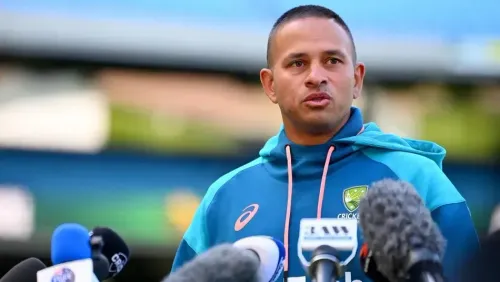
Former India all-rounder Irfan Pathan has called for the Sandpapergate investigation to be reopened if Australian fans and media are still seeking answers, while expressing sympathy for Cameron Bancroft, whose international career was effectively derailed by the 2018 ball-tampering scandal. Pathan made the remarks on JioStar's programme 'Sandpapergate: The Unsettled Debate', engaging with the controversy freshly reignited by Usman Khawaja's claims in his autobiography.
Pathan's Sympathy for Bancroft
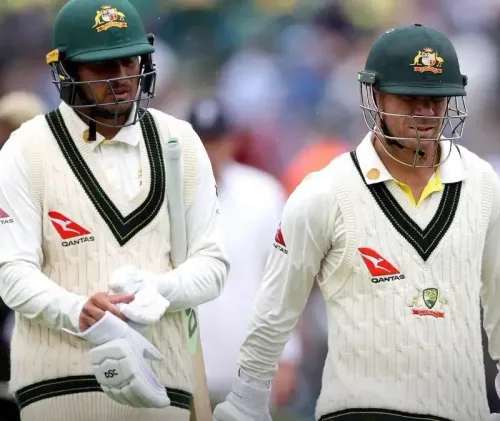
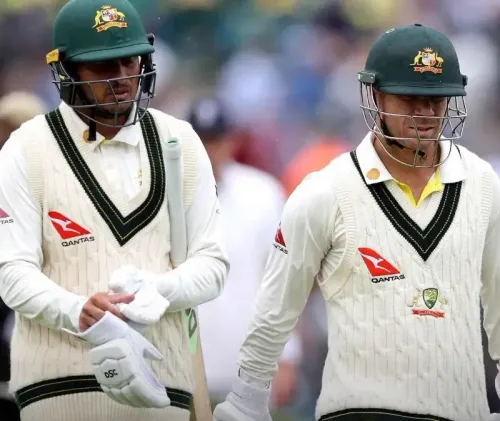
Bancroft received a nine-month ban for his role in the scandal during the 2018 Cape Town Test against South Africa. While former captain Steve Smith and vice-captain David Warner each served one-year bans and went on to revive their careers, Bancroft returned to play just two Tests for Australia after serving his suspension.
'I really feel bad for Cameron Bancroft because he lost everything. He played only two Test matches after serving a nine-month ban. It's always the youngsters, the weaker ones, who get punished the most,' Pathan said. He pointed out that Smith eventually captained Australia again in Pat Cummins's absence, and Warner played a substantial number of international matches before retiring — while Bancroft's story remained largely ignored.
Should the Investigation Be Reopened?
Pathan acknowledged that Cricket Australia's original inquiry lasted just four days before being concluded. While he stopped short of demanding a fresh probe, he said circumstances warranted one if public demand existed. 'What has happened, happened. There was a four-day investigation by Cricket Australia, and it was done and dusted. I understand Usman Khawaja's point of view because everyone deserves to write their book,' he said. 'But if something has happened, and if Australian media and people want answers, then the investigation should start again,' Pathan added.
Pathan Questions Bowlers' Claimed Ignorance
Pathan also raised pointed questions about whether Australian bowlers could genuinely have been unaware of the tampering. 'It's not possible that, if the ball is reverse swinging and as a bowler, I won't know if something has been done to the ball. I'll know straight away,' he said.
Drawing on personal experience, he noted that the only time he encountered unexplained reverse swing in his career was during a Duleep Trophy match in Rajkot, where extremely dry conditions naturally produced the effect from as early as the 8th or 10th over. 'But if you put something on the ball around the 30th or 40th over, when its colour has changed, you will know as a bowler. The entire team knows what's happening with the ball at any given time,' he said.
Khawaja's Claims and the Wider Fallout
The debate was reignited after Usman Khawaja alleged in his book 'Sabr' that the entire Australian team was aware of the sandpaper being used on the ball during the Cape Town Test, and that similar tactics had been employed in the preceding Test at Port Elizabeth. Warner reportedly backed Khawaja's claims, while current Australian captain Pat Cummins dismissed them as 'complete and utter nonsense.'
Smith was also handed a two-year leadership ban at the time, while Warner's lifetime leadership ban was partially lifted — he was permitted to apply for leadership roles from 2024 onward, following a review. The diverging career trajectories of the three punished players, and the sharp disagreement among current and former Australian players, suggest the scandal's legacy remains far from settled.
What Comes Next
With Khawaja's book continuing to generate reaction across the cricket world, pressure on Cricket Australia to revisit its findings — or at least clarify the scope of the original inquiry — is likely to grow. How the governing body responds, and whether the Australian public demands greater accountability, could determine whether Sandpapergate finally reaches a definitive conclusion.
Point of View
As a bowler, would have immediately known the ball was being tampered with, the 'we didn't know' defence looks structurally implausible. The real accountability gap is Bancroft's — a young player handed the sandpaper and then largely abandoned by a system that allowed his seniors to rehabilitate while his career quietly expired. Khawaja's book is a symptom, not the cause; the cause is a four-day investigation that was always too brief to be credible.
NationPress
17 Nov 2026
Frequently Asked Questions
What did Irfan Pathan say about Sandpapergate?
Pathan said that if Australian media and the public want answers, the Sandpapergate investigation should be reopened. He also expressed sympathy for Cameron Bancroft, who played just two Tests after serving his ban, while Smith and Warner went on to revive their careers.
What are Usman Khawaja's claims about Sandpapergate?
In his autobiography 'Sabr', Khawaja claims the entire Australian team was aware that sandpaper was being used to alter the ball during the 2018 Cape Town Test, and that similar ball-tampering had occurred in the preceding Test at Port Elizabeth. Warner reportedly backed these claims; Pat Cummins called them 'complete and utter nonsense.'
What bans did Smith, Warner, and Bancroft receive for Sandpapergate?
Cameron Bancroft was banned for nine months, while Steve Smith and David Warner each received one-year bans. Smith was also handed a two-year leadership ban, and Warner received a lifetime leadership ban that was later lifted in 2024.
Why does Pathan believe Australian bowlers would have known the ball was being tampered with?
Pathan argued that any experienced bowler can immediately tell when a ball is reverse swinging due to tampering, as opposed to natural conditions. He said the entire team is always aware of what is happening with the ball at any given time, making claims of ignorance implausible.
How did Cameron Bancroft's career compare to Smith's and Warner's after their bans?
Bancroft played only two Tests after completing his nine-month ban and never re-established himself in the Australian side. By contrast, Warner returned to play many international matches, and Smith was given the captaincy again when Pat Cummins was unavailable.